सुशumna को जमीन की ओर फैलाएं और इसे एक एंकर बनाएं, और ग्राउंडिंग करें।
हाल ही में, मैंने उन पुस्तकों की तलाश की जिनमें यह बताया गया हो कि आकाश और पृथ्वी की ऊर्जा को ऊपर और नीचे की ओर फैलाने के बाद क्या करना चाहिए, और मुझे यह विवरण मिला:
"चेतना को जल्दी से शरीर के भीतर के 'प्रणा नलिका' में स्थानांतरित करें, और इसे कल्पना में पृथ्वी के केंद्र तक फैलाएं।" (छोड़ दिया गया) "पृथ्वी की गहराई में स्थिर होने का इरादा करके, आप 'प्रणा नलिका' को पृथ्वी के केंद्र में 'ग्राउंड' कर सकते हैं।" - "हथोर्ज़ की पुस्तक" (टॉम केनियन द्वारा)।
ऐसा लगता है कि योग में 'सुषुम्ना' को उसी पुस्तक में 'प्रणा नलिका' कहा गया है।
मैंने इसे इरादे के साथ करने की कोशिश की, और यह आसानी से 'ग्राउंड' हो गया। यह अच्छा है।
हालांकि, पहले, जब मैंने इसी तरह 'ग्राउंड' करने की कोशिश की, तो पृथ्वी की ऊर्जा से एक अप्रिय, कीचड़ जैसा ऊर्जा ऊपर आ जाता था, इसलिए मैं 'ग्राउंड' होने के लिए उत्साहित नहीं था। मैं थोड़ी मात्रा में पृथ्वी की ऊर्जा को अवशोषित करता था, लेकिन आकाश की ऊर्जा को अवशोषित करके उस अप्रियता को संतुलित करने की कोशिश करता था।
लेकिन, आज, जब मैंने इस अभ्यास को किया, तो कोई अप्रियता नहीं थी, और यह आसानी से 'ग्राउंड' हो गया।
इस अंतर का क्या कारण है?
हाल ही में, आकाश की ऊर्जा आसानी से प्रवेश करने लगी है। मुझे लगता है कि यह एक महत्वपूर्ण कारक है।
पहले, आकाश की ऊर्जा रास्ते में अटक जाती थी और ठीक से नीचे नहीं आती थी, इसलिए पृथ्वी की ऊर्जा प्रबल थी। लेकिन, हाल ही में, जब से आकाश की ऊर्जा आसानी से नीचे आने लगी है, मुझे लगता है कि आकाश और पृथ्वी की ऊर्जा के बीच संतुलन आ गया है।
इस स्थिति में, पृथ्वी की ऊर्जा तक पहुंचने पर भी मुझे कोई अप्रियता महसूस नहीं होती है, और यह आसानी से 'ग्राउंड' हो जाता है।
यह अक्सर कहा जाता है कि 'ग्राउंडिंग' महत्वपूर्ण है, लेकिन मुझे लगता है कि 'ग्राउंडिंग' के लिए न केवल पृथ्वी की ऊर्जा, बल्कि आकाश की ऊर्जा भी आश्चर्यजनक रूप से महत्वपूर्ण है।
अंदर के बादल छँट गए, अब अवलोकन की ओर।
हाल के समय में, ध्यान के दौरान, मेरे भीतर की "बादल" छँट गई हैं, और मुझे सुबह की रोशनी की तरह प्रकाश का अनुभव होने लगा है।
क्या यह लंबी रात का अंत है?
पहले, ध्यान में "अवलोकन" केवल एक चीज पर केंद्रित होता था। जब मैं शरीर की संवेदनाओं का निरीक्षण करता था, तो मैं केवल संवेदनाओं पर ध्यान केंद्रित करता था। जब मैं विचारों और नकारात्मक विचारों का निरीक्षण करता था, तो मैं मूल रूप से केवल उन पर ध्यान केंद्रित करता था।
हालांकि, हाल ही में, मेरा ध्यान दो या दो से अधिक अवलोकनों पर केंद्रित हो गया है।
उदाहरण के लिए, मैं शरीर की संवेदनाओं और विचारों दोनों का निरीक्षण करने में सक्षम हूं। चूंकि मैं जो भी आवाजें सुनता हूं, उनका भी निरीक्षण कर सकता हूं, इसलिए यह शायद तीन या उससे अधिक हैं। ध्यान के दौरान, मैं क्रॉस-लेग्ड बैठा होता हूं और मेरी आंखें बंद होती हैं, इसलिए कोई दृश्य जानकारी नहीं होती है।
ध्यान के दौरान, भले ही मैं पहले विपश्यना ध्यान कर रहा था, जब मैं शरीर की संवेदनाओं का निरीक्षण कर रहा था, तो मैं मूल रूप से केवल उसी पर ध्यान केंद्रित करता था, और जब मैं विचारों या नकारात्मक विचारों का निरीक्षण कर रहा था या नकारात्मक विचारों में फंसा हुआ था, तो मैं केवल उन पर ध्यान केंद्रित करता था।
अभी भी ऐसा नहीं है कि मैं कभी भी नकारात्मक विचारों से मुक्त होता हूं, लेकिन मूल रूप से, मैं विचारों, नकारात्मक विचारों और शरीर के निरीक्षण, साथ ही बाहरी आवाजों का निरीक्षण एक साथ कर पा रहा हूं।
मुझे लगता है कि यह संभवतः मेरे भीतर की स्पष्टता के कारण संभव हुआ है।
शायद विपश्यना ध्यान वास्तव में ऐसा ही होता है।
इस स्थिति को "तनावमुक्त" कहा जा सकता है, लेकिन यह ऊर्जा के मामले में एक उच्च स्तर की स्थिति है।
मुझे लगता है कि पहले, मैं तनाव में था और मेरी ऊर्जा कम थी, इसलिए मैं ठीक से निरीक्षण नहीं कर पा रहा था।
पहले और अब के बीच का अंतर यह है कि पहले, जब मैं शरीर की संवेदनाओं का निरीक्षण कर रहा था, तो विचार और नकारात्मक विचार समय के साथ प्रतिक्रियाशील रूप से आते थे, लेकिन अब, मैं दोनों को स्वतंत्र रूप से प्रतिक्रिया करते हुए देख पा रहा हूं। पहले, मैं शरीर की संवेदनाओं का निरीक्षण कर रहा था, जैसे कि त्वचा पर झनझनाहट या चुभन महसूस करना, और मैं पूरी तरह से उसमें व्यस्त था, और संवेदनाएं ट्रिगर बन जाती थीं, जिससे विचार और नकारात्मक विचार उत्पन्न होते थे, और मैं संवेदनाओं का निरीक्षण करने में सक्षम नहीं होता था, और मैं विचारों और नकारात्मक विचारों में फंस जाता था, और फिर मैं शरीर की संवेदनाओं के निरीक्षण पर वापस चला जाता था, और यह प्रक्रिया बार-बार दोहराई जाती थी। उस समय, मैं इसे निरीक्षण समझता था। अब, मैं शरीर की संवेदनाओं और विचारों और नकारात्मक विचारों के एक साथ मौजूद होने का निरीक्षण कर पा रहा हूं। घटना में शायद कोई बड़ा अंतर नहीं है, लेकिन निरीक्षण के तरीके में अंतर है। और मुझे लगता है कि यह संभव हुआ क्योंकि मैं उपरोक्त स्थिति में आ गया था।
महर्षि महेश योगी के शिष्य, बॉब फिक्स ने निम्नलिखित लिखा है:
"जैसे ही ध्यान गहरा होता जाता है और तनाव और कर्म के निशान गायब होने लगते हैं, आंतरिक आकाश बहुत स्पष्ट हो जाता है।" ("एक ध्यान साधक की यात्रा," बॉब फिक्स द्वारा)।
प्रकाश, आध्यात्मिक और योग में अक्सर उल्लेखित होता है, और कहा जाता है कि यह अंततः एक प्रकाश स्रोत अवस्था में बदल जाता है। हाल ही में, मैं अनाहत (Anahata) चक्र पर अधिक ध्यान केंद्रित कर रहा हूं, लेकिन प्रकाश के बारे में मुझे यह समझ में आ रहा है, फिर भी यह अस्पष्ट है। ऐसा लगता है कि शायद "आत्मा का विज्ञान" (Soul's Science) नामक पुस्तक में स्वामी योगेनवैलानंद (Swami Yogenanda) द्वारा वर्णित "प्रकाश की अवस्था की शुरुआत" शुरू हो रही है।
"आत्मा का विज्ञान" के अनुसार, कुंडलनी की जागृति के दो रूप होते हैं:
(1) प्राणोत्थान (Pranottana)
(2) प्रकाश की अवस्था की शुरुआत
पुस्तक के अनुसार, प्राणोत्थान का अर्थ है कि चक्रों में प्रकाश के बिना ऊर्जा का प्रवाह शुरू होता है, और जब यह जागृत होता है, तो यह चमकने लगता है।
मेरा अनुमान है कि शायद मैंने "प्राणोत्थान" के रूप में कुंडलनी की जागृति का अनुभव किया है, जिसके कारण मेरा आभा (aura) अनाहत चक्र पर केंद्रित है, लेकिन मैं अभी तक "प्रकाश की अवस्था" में नहीं पहुंचा हूं।
बॉब फिक्स (Bob Ficks) ने उपरोक्त उद्धरण के बाद निम्नलिखित लिखा है:
"संवेदनाओं के साथ, रंगों को अधिक स्पष्ट रूप से देखना शुरू हो जाता है। इस तरह के परिवर्तनों के परिणामस्वरूप, एक नए आयाम के द्वार खुलते हैं, और सभी चीजों को देखने और जानने की क्षमता खुल जाती है। इसे संवेदी संवेदनशीलता (sensory sensitization) भी कहा जा सकता है।"
आज, इसी अवलोकन अवस्था में ध्यान करते समय, अचानक मुझे एक छात्र के कपड़े पहने व्यक्ति की आकृति दिखाई दी, जो मेरी ओर बढ़ रहा था और मुझसे आगे निकल गया। यह सिर्फ इतना ही था। यह क्या है? यह शायद सिर्फ संयोग हो सकता है। इस पहलू के बारे में, मुझे अभी और देखना होगा। यह शायद सिर्फ कल्पना हो सकती है, लेकिन ऐसा लग रहा है कि कुछ गुजर गया।
हालांकि, बॉब फिक्स ने इस प्रकार लिखा है:
"लेकिन ध्यान में सबसे महत्वपूर्ण बात यह है कि विभिन्न बाधाओं को पार करते हुए, अनंत शांति में विलीन होने की क्षमता। (छोड़कर) 'शून्यता' (emptiness) ब्रह्मांड से परे है। यह पूरी तरह से जागरूक और पूरी तरह से जागृत है। जब हम शून्यता में होते हैं, तो हम ब्रह्मांड से परे, उस अनंत स्थान में होते हैं जो इसे घेरता है। जैसे-जैसे हम शून्यता के आदी होते जाते हैं, ऐसा लगता है कि हम ब्रह्मांड को बाहर से देख रहे हैं। (छोड़कर) यह अनुभव ही 'अवलोकन' है।"
वास्तव में, अब जब आप इसका उल्लेख करते हैं, तो आज का ध्यान 'अवलोकन' (इसकी शुरुआत) जैसा ही था। यह एक मामूली अनुभव है, लेकिन इसने मुझे फिर से यह सोचने पर मजबूर कर दिया कि ध्यान कितना गहरा है। मुझे कभी नहीं लगा था कि मैं इस तरह की अवस्था का अनुभव कर पाऊंगा।
"जब आंतरिक मन शुद्ध हो जाता है, तो बोध तीव्र होता है और एक उज्ज्वल अवस्था में प्रवेश होता है, जिसके परिणामस्वरूप आत्म-चिंतन होता है।"
मैंने इसे इसी तरह समझा।
तार्किक विचार स्वतंत्र रूप से कार्य करता है।
पिछले दिनों की चर्चा की अगली कड़ी।
जब आंतरिक बादल छँट जाते हैं, और शरीर की संवेदनाओं और विचारों को अलग-अलग रूप से देखा जा रहा होता है, तो ऐसा लगता है कि तार्किक विचार स्वतंत्र रूप से काम कर रहा है। यह तार्किक विचार योग में 'बुद्धि' हो सकता है, लेकिन इसकी पुष्टि नहीं है।
पहले, विचार, अनावश्यक विचार, या तार्किक विचार, या जिसे आमतौर पर "विचार" कहा जाता है, सब कुछ एक साथ मिला हुआ था, और "अवलोकन" के दृष्टिकोण से, अनावश्यक विचारों और "विचारों" के बीच का अंतर इतना स्पष्ट नहीं था।
निश्चित रूप से, अनावश्यक विचार अनियंत्रित होते हैं, और "विचार" तर्क पर आधारित होते हैं, इसलिए उनकी सामग्री अलग होती है, लेकिन "अवलोकन" के दृष्टिकोण से, दोनों को समान रूप से विचारों के रूप में देखा जाता था। अनावश्यक विचारों में गपशप, पुरानी कहानियाँ, या वर्तमान रुझानों के बारे में सोचा जाता है, और किसी समस्या को हल करते समय, क्रमबद्ध तरीके से निष्कर्ष निकालने के दौरान, आंतरिक संवेदना के रूप में उनमें बहुत कम अंतर होता था।
हाल ही में, ध्यान के दौरान, आंतरिक जगत स्पष्ट हो गया है, और यह स्पष्ट हो गया है कि अनावश्यक विचार और तार्किक विचार अलग-अलग काम कर रहे हैं।
आज के ध्यान में, एक ऐसी स्थिति उत्पन्न हुई जिसे मैं रूपक के रूप में व्यक्त करूँगा, जो इस प्रकार है: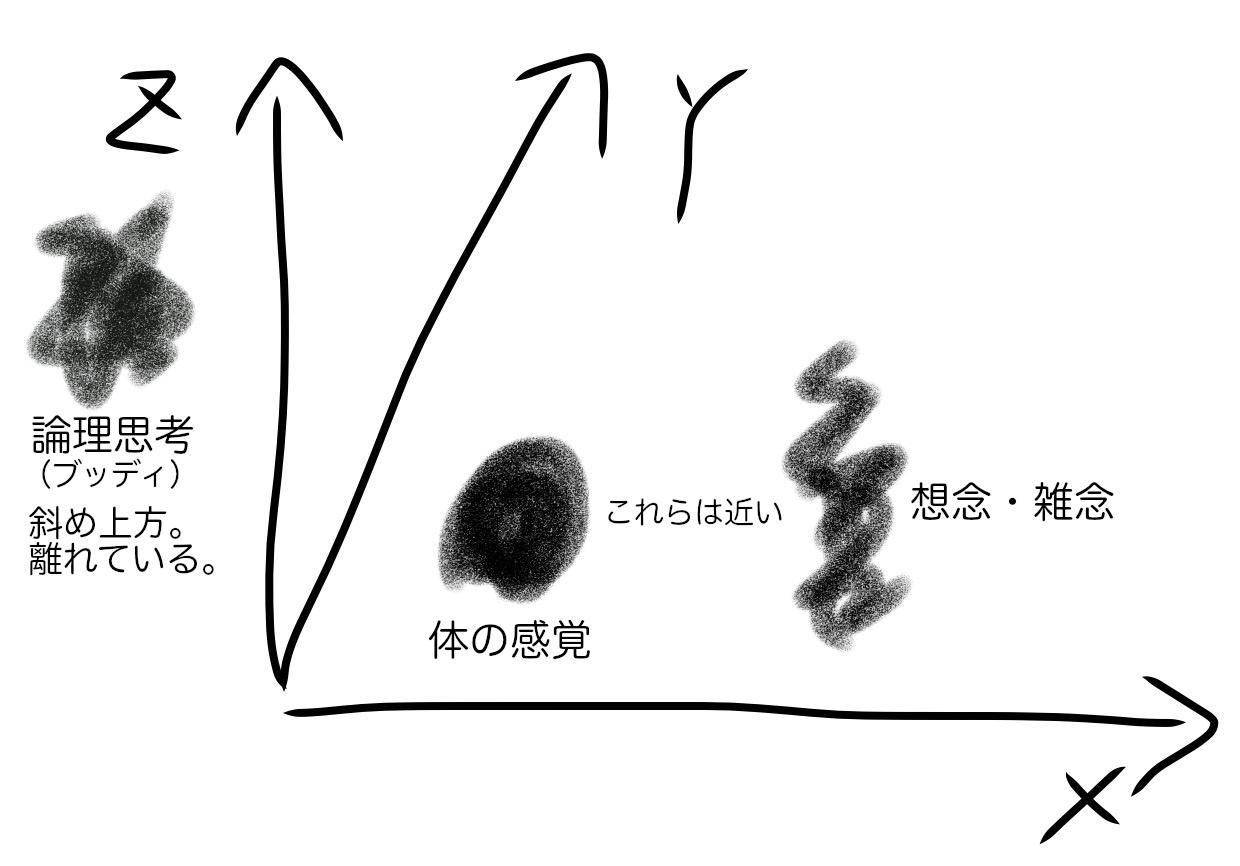 ・दृष्टिकोण, ऊपर से नीचे की ओर देख रहा है। (वास्तव में, जमीन का कोई समतल क्षेत्र नहीं है और इसके पीछे भी स्थान है, इसलिए यह केवल एक रूपक है।)
・"शरीर की संवेदना" जमीन (रूपक) पर मौजूद है।
・"शरीर की संवेदना" के थोड़ा बगल में, "अविचार" को पहचाना जा रहा है।
・थोड़ा ऊपर, थोड़े से निर्देशांक में बदलाव के साथ, तार्किक विचार (योग में बुद्धि?) काम कर रहा है।
तार्किक विचार (बुद्धि) के अलावा, "शरीर की संवेदना" और "विचार" भी स्थान पर अलग-अलग वस्तुओं के रूप में पहचाने जा रहे हैं।
पहले, "शरीर की संवेदना", "विचार" और "तार्किक विचार (बुद्धि)" सभी को व्यक्तिपरक रूप से समझा गया था, लेकिन इस बार, इस स्थान पर उन्हें वस्तुनिष्ठ रूप से देखा जा सकता है। मुझे कभी नहीं लगा था कि वे वास्तव में एक स्थान के रूप में पहचाने जाएंगे।
मैं अक्सर आध्यात्मिक संदर्भों में "ब्रह्मांड", "दुनिया" या "स्थान" जैसे शब्दों को सुनता हूं, लेकिन मैं हमेशा उन्हें केवल रूपक मानता था। लेकिन इस बार, एक वास्तविक स्थान को एक तरह की छवि के रूप में पहचाना गया। (जब मैं "छवि" कहता हूं, तो यह 2-आयामी होने का आभास दे सकता है), लेकिन यह 3-आयामी, होलोग्राफिक स्थान की एक छवि के रूप में पहचाना गया।
तनाव और ध्यान के दौरान प्रकाश।
हाल ही में, जब से मेरे शरीर में चेतना का प्रवेश हुआ, तब से मुझे थोड़ा तनाव महसूस हो रहा था, लेकिन ध्यान करने के साथ-साथ तनाव कम हो गया है।
उस समय अचानक मुझे एहसास हुआ कि, ऐसा लगता है कि जब तनाव कम होता है, तो ध्यान के दौरान दृष्टि में प्रकाश महसूस होता है।
मुझे यह नहीं पता कि तनाव ऊर्जा का जमाव है या ऊर्जा का संचय, लेकिन कम से कम, ऐसा लगता है कि तनाव के कम होने और प्रकाश महसूस होने के बीच कुछ संबंध है।
योग में ध्यान की बुनियादी बातों में से एक यह है कि ध्यान के दौरान जो कुछ भी देखा या सुना जाता है, वह महत्वपूर्ण नहीं है, इसलिए इसे नजरअंदाज कर देना चाहिए, लेकिन फिर भी, मुझे लगता है कि शायद इस तरह का कुछ संबंध हो सकता है।
हालांकि, यह वास्तव में "बस संयोग" हो सकता है। फिर भी, मुझे लगता है कि शायद कुछ संबंध है।
शून्यता का ध्यान और गर्म रोशनी।
हाल के दिनों में, मेरा ध्यान सांसों को देखने या सूक्ष्म विचारों और भावनाओं को देखने तक सीमित है, और मैं बहुत शांत, लगभग "शून्य" अवस्था में ध्यान कर रहा हूँ। इसके बाद, ऊर्जा-कार्य के दृष्टिकोण से, मैं स्वर्गीय ऊर्जा को नीचे ला रहा हूं या पृथ्वी की ऊर्जा से जुड़ रहा हूं।
इस स्थिति में, जब मैं अपने हृदय पर ध्यान केंद्रित करता हूं, तो अचानक मुझे एक विशाल हॉल दिखाई देता है और एक सीढ़ियों वाले मंच पर राजा बैठे होने जैसा एक सिंहासन दिखाई देता है। क्या यह आध्यात्मिक, योग या वेदों में वर्णित "हृदय के गहरे स्थान का कमरा" है?
उस स्थिति में ध्यान जारी रखने पर, अचानक मुझे लगा कि दो स्थान ओवरलैप हो रहे हैं।
एक स्थान वह है जहां मैं पहले लिखा था, तर्कसंगत सोच, शरीर की संवेदनाएं और विचार महसूस होते हैं।
दूसरा स्थान एक घास से ढके मैदान जैसा है जिसमें सूरज की गर्म रोशनी पड़ रही है।
ये दोनों स्थान ओवरलैप होकर मौजूद थे, और वे एक-दूसरे के सामने अर्धपारदर्शी होलोग्राफ की तरह एक साथ मौजूद थे। इस बिंदु पर, विशाल हॉल और सिंहासन गायब हो गए थे।
यह वास्तव में क्या है? वैसे भी, अभी रात है।
हाल ही में, मेरा ध्यान इसी तरह का रहा है, जहां कोई भी अनावश्यक विचार आए तो मैं केवल उसे देखता हूं, और मैं एक ऐसे ध्यान में हूँ जिसमें मैं केंद्र में हूँ और मेरे चारों ओर शून्य की काली जगह फैली हुई है।
दूसरी ओर, अक्सर उसी स्थान के किसी हिस्से में अचानक चमक महसूस होती थी, लेकिन आज जैसा कि दो स्थानों को ओवरलैप होते हुए महसूस हुआ, ऐसा पहली बार हो रहा था।
यह बहुत दिलचस्प है।
इसके अलावा, यह केवल उस स्थान से ही नहीं, बल्कि हृदय के गहरे स्थान के कमरे से भी संबंधित लगता है।
यह संभव है कि "स्थानों का ओवरलैप" सही शब्द हो, या शायद यह हृदय के गहरे स्थान के कमरे में प्रवेश करने के कारण हुआ परिवर्तन है।
हृदय के इस गहरे स्थान को अलग-अलग लोगों द्वारा अलग-अलग तरीके से देखा जाता है; कुछ लोग एक निश्चित स्थान पर देखते हैं, जबकि अन्य नहीं देखते हैं। मैं अभी इसे देखना शुरू कर रहा हूं। या शायद यह सिर्फ मेरा भ्रम हो सकता है। मैं अभी भी इसका निरीक्षण कर रहा हूँ।
प्लेएडेस की ऊर्जा कार्य और शिनकाएन्शी के नानसु के विधान।
मैं किताबें खोज रहा था, और मुझे एक ऐसी चीज मिली जो प्लेएडीस प्रणाली के कार्यों के समान थी। "प्लेयाडेस जागरण की ओर (अमोरा क्वान इन द्वारा लिखित)"
यह आभा को सुरक्षित रखने के तरीके के बारे में प्रतीत होता है। यह ग्राउंडिंग करने और आभा के अंडे बनाने के लिए एक पाठ है। और, उसी पुस्तक के अनुसार, "सीमाओं के रंगों" की कल्पना करने की सिफारिश की जाती है। रंग समय-समय पर स्थिति और उद्देश्य के आधार पर थोड़े भिन्न होते हैं।
- मूल रूप से सुनहरा रंग
- इसके ऊपर, उद्देश्य के अनुसार रंगों को जोड़ा जाता है। अस्थिर होने पर, एक शानदार नीला रंग। बाहर जाने या लोगों का स्वागत करने के समय, लैवेंडर रंग।
- एक निश्चित स्तर तक पहुंचने पर, ये अनावश्यक हो जाते हैं, लेकिन तब तक, यह "सीमा" उपयोगी है।
अधिक जानकारी के लिए, कृपया उसी पुस्तक को देखें। इसमें योग के अभ्यासों और अन्य आध्यात्मिक कार्यों के साथ समानताएं हैं। रंगों का उल्लेख आध्यात्मिक विषयों में अक्सर पाया जाता है।
मैंने पहले थोड़ा उल्लेख किया था, लेकिन "नानसो नो हो" नामक एक विधि है जो सफेद छिंज़ेन ज़ेन मास्टर द्वारा ज़ेन रोगों के इलाज के लिए उपयोग की जाती थी, जो बहुत समान लगती है। सफेद छिंज़ेन ज़ेन मास्टर ने इसे "शिरायु" नामक एक ऋषि से प्राप्त किया था, लेकिन शायद इसका मूल आध्यात्मिक अवधारणाओं के समान है। यह सिर्फ एक अनुमान है।
दुनिया का 30% हिस्सा ऐसा है जिसे आप अपने जैसा महसूस करते हैं।
हाल ही में, मेरे आसपास की घटनाओं और मिलने वाले लोगों में से लगभग 30% मुझे अपने ही प्रतिबिंब जैसे लगते हैं।
70% निश्चित रूप से दूसरे लोग हैं, लेकिन 30% मुझे खुद जैसे लगते हैं... या शायद, ऐसा लगता है कि जैसे कि एक ही स्थान से सब कुछ जुड़ा हुआ है।
"दुनिया" कहने का मतलब पृथ्वी या विश्व मानचित्र नहीं है। मेरा मतलब है कि मेरे जीवन के आसपास की वास्तविकता का केवल 30%, और यह दुनिया के हर कोने के 30% के बारे में नहीं है।
"स्थान जुड़ा हुआ है" कहने से, यह एक रेखा की तरह लग सकता है, लेकिन ऐसा कोई रेखा नहीं है। यहां तक कि हवा जैसी जगहों में भी, "कुछ" बहुत घनी तरह से भरा हुआ है, और यह "कुछ" भौतिक वस्तुओं में भी मौजूद है, और चाहे वह हवा हो या पदार्थ, मेरे आसपास के जीवन के स्थान की मेरी समझ के दायरे की लगभग 30% मुझे खुद जैसी लगती है।
यह 30% "यहां महसूस होता है लेकिन यहां नहीं" जैसा नहीं है, बल्कि यह एक अर्ध-पारदर्शी, समग्र रूप से लगभग 30% की सांद्रता जैसा है... ऐसा लगता है कि जैसे कि पूरी जगह लगभग समान सांद्रता के साथ, लगभग 30% तक, मुझे खुद के रूप में महसूस होती है।
यह मुख्य रूप से ध्यान के दौरान महसूस होता है, लेकिन यदि चेतना ध्यान की स्थिति के करीब है, तो बिना स्पष्ट रूप से ध्यान किए भी ऐसा महसूस हो सकता है।
इसलिए, भले ही मैं पूरी तरह से अपने आसपास की हर चीज को खुद महसूस नहीं कर रहा हूं, लेकिन मैं इस वास्तविकता को पहचानते हुए जी रहा हूं कि कुछ हद तक, सब कुछ मैं ही हूं।
यह, जब दिमाग से सोचा जाता है, तो यह काफी जटिल लग सकता है, लेकिन भावनात्मक और सचेत रूप से, यह काफी शांत है।
वास्तव में, हाल ही में ध्यान में, मैं लगातार अनावश्यक विचारों को कम करते हुए, एक पारदर्शी भावना, जिसे "शून्यता" का ध्यान कहा जाता है, जारी रख रहा हूं, और इस विस्तार में, भले ही किसी अन्य व्यक्ति की छवि मेरे दिमाग में आए, यह एक अनावश्यक विचार होने जैसा ही है। इसलिए, भले ही दुनिया का 30% मुझे खुद के रूप में पहचाना जाता है, लेकिन यह एक होलोग्राफिक रूप से अर्ध-पारदर्शी तरीके से पहचाना जाता है, जिससे शायद ज्यादा भ्रम नहीं होता है, और फिर भी अन्य लोग और आसपास का वातावरण मुझे खुद के रूप में महसूस होते हैं, जिससे मैं पहले से अलग तरह से सोच सकता हूं।
यह, मन की "भावनात्मक" कनेक्टिविटी से अलग है। यह शांत है, और फिर भी, एक दृढ़ता से जुड़े हुए अहसास है।
इस तरह, मेरी चेतना में इतना बदलाव आ गया है कि मुझे लगता है कि मुझे अपने पिछले व्यवहार को पूरी तरह से फिर से शुरू करने की इच्छा हो रही है, लेकिन जाहिर है, ऐसा करना संभव नहीं है, इसलिए मैं केवल अपने भविष्य के व्यवहार को जानबूझकर एक नई दिशा में ले जा सकता हूं।
शायद यह वह समय है जब मुझे अपने पुराने, पहले की चेतना से बने आदतों को त्यागकर नई आदतों को बनाना होगा।
शायद काम करने के तरीके भी इसी तरह हैं, और यह वह समय हो सकता है जब मुझे नई आदतों को बनाना होगा या फिर से चुनना होगा।
चक्रों को खोलने के दौरान का अनुभव।
तिब्बत के प्राचीन बोन धर्म की शिक्षा के अनुसार, निम्नलिखित बातें हैं:
"चक्र के खुलने पर हमेशा कोई अनुभव नहीं होता है।" ("तिब्बतन हीलिंग," टेंज़िन वांग्याल रिम्पोचे द्वारा लिखित)।
इस बारे में, निम्नलिखित स्पष्टीकरण दिया गया है:
पश्चिमी संस्कृति में, लोग भावनाओं से जुड़े होते हैं, इसलिए भावनात्मक कैथार्सिस हो सकता है।
तिब्बती संस्कृति में, यह ऊर्जा के रूप में प्रकट होता है। कंपन, झटकों, खिंचाव, पसीना, चक्कर आना आदि हो सकते हैं।
इसे होने दें, और फिर गायब होने दें।
यदि कुछ होता है, तो यह एक शुद्धिकरण का अनुभव है, और आपको इससे चिपके रहने की आवश्यकता नहीं है।
("तिब्बतन हीलिंग," टेंज़िन वांग्याल रिम्पोचे द्वारा लिखित) से।
यह दिलचस्प है।
पश्चिमी, उदाहरण के लिए, थियोसोफी जैसे आध्यात्मिक दृष्टिकोणों में, चक्रों को खोलना और उस अनुभव को महत्व दिया जाता है, लेकिन तिब्बत के अनुसार, अनुभव महत्वपूर्ण नहीं है।
इसके अलावा, जब मैं उसी पुस्तक को पढ़ता हूं, तो मुझे लगता है कि चक्रों की स्थिति योग से थोड़ी अलग है।
योग में, नाड़ी और चक्र, जो ऊर्जा के मार्ग हैं, निश्चित रूप से संबंधित हैं, लेकिन उन्हें अलग-अलग परिभाषित किया गया है।
दूसरी ओर, उसी पुस्तक के अनुसार, तिब्बती प्राचीन बोन धर्म में, नाड़ियों (जो नाड़ी के समान हैं) और चक्रों के बीच इतना अंतर नहीं है, और केंद्रीय नाड़ी (योग में सुषुम्ना के समान) को पेड़ के तने के रूप में, और चक्रों को शाखाओं के रूप में वर्णित किया गया है।
निश्चित रूप से, योग में भी इसे इस तरह समझा जा सकता है, लेकिन मुझे लगता है कि तिब्बती प्राचीन बोन धर्म में इस बिंदु को अधिक स्पष्ट रूप से बताया गया है।
इसलिए, पश्चिमी थियोसोफी या आध्यात्मिकता की तरह, "चक्रों को खोलने से क्या होता है" जैसे रहस्यमय विषयों में तिब्बती प्राचीन बोन धर्म को शायद ही कोई रुचि है, और इसके बजाय, यदि कुछ होता है, तो यह एक शुद्धिकरण का अनुभव है, इसलिए इसमें आसक्ति की कोई आवश्यकता नहीं है, और यह हमेशा नहीं होता है।
अनुभवों को इतना महत्व न देना, वेदांत के दृष्टिकोण के समान है, जो दिलचस्प है।
तिब्बती प्राचीन बोन धर्म में, नाड़ियों (नाड़ी के समान) और चक्रों को खोलना शुद्धिकरण का एक हिस्सा है, और शुद्धिकरण के परिणामस्वरूप, "विशाल, बिना किसी लगाव वाला मन और मुक्ति की भावना" या "शून्यता का अनुभव" महत्वपूर्ण है।
चाहे शारीरिक परिवर्तन हों, छवियों का प्रकटीकरण हो, या भावनाओं की मुक्ति हो, अंततः, शून्यता के अनुभव के साथ, पारंपरिक शिक्षाओं द्वारा बताए गए ज्ञान के विभिन्न पहलुओं को साकार किया जाता है। शून्यता के अनुभव के साथ, बिना किसी लगाव वाला, विशाल मन और सकारात्मक गुण आपको संतुष्ट करेंगे। ("तिब्बतन हीलिंग," टेंज़िन वांग्याल रिम्पोचे द्वारा लिखित)
चक्र के अनुभवों के बारे में बहुत कुछ पुस्तकों में लिखा हुआ है, लेकिन यह निश्चित रूप से एक "संकेत" के रूप में उपयोगी हो सकता है। हालांकि, यह आवश्यक नहीं है कि अनुभव हमेशा हो, और यदि "खाली चेतना" और "विशाल हृदय" प्राप्त हो जाता है, तो प्रक्रिया पर शायद इतना ध्यान देने की आवश्यकता नहीं है। मुझे हाल ही में इस बात का एहसास हुआ है।
यह एक व्यक्तिगत बात है, लेकिन ऐसा लगता है कि शायद मैंने योग या ध्यान जैसी चीजें धीरे-धीरे, प्रत्येक चरण को ध्यान से जांचते हुए की, ताकि मैं इस बात को समझ सकूं। शायद मैंने यह समझने के लिए ही हर चीज को धीरे-धीरे जांचते हुए आगे बढ़ा। यदि मुझे वास्तव में पता होता कि यह अंतिम समझ सही है, तो शायद मुझे हर चरण के अनुभव को ध्यान से जांचते हुए धीरे-धीरे आगे बढ़ने की आवश्यकता नहीं होती... या शायद मैं बिल्कुल भी धीरे-धीरे आगे नहीं बढ़ रहा होता, बल्कि तेजी से सभी चरणों को पूरा कर लेता। इस जीवन में, मुझे कई चुनौतियां दी गई हैं, और उनमें से एक यह है कि मुझे इन चरणों को सीखना या समझना है। अब मुझे लगता है कि मैंने धीरे-धीरे इन चरणों को सीखा है और मेरी समझ बढ़ रही है, और मैं अंतिम चरण के करीब हूं (हालांकि शायद अभी भी बहुत कुछ बाकी है)। ऐसा कहने के लिए शायद यह गलत है, लेकिन मुझे लगता है कि पिछले जीवन में, मैं शायद बहुत कम परेशान था, और इसलिए मैं दूसरों की परेशानियों को अच्छी तरह से नहीं समझ पाता था। इस जीवन में, मुझे लगता है कि मुझे जानबूझकर समस्याओं में डाला गया है, और मुझे विभिन्न चरणों से गुजरने के लिए मजबूर किया गया है, ताकि मैं लोगों की परेशानियों को समझ सकूं, या योग के चरणों को शुरू से ही एक-एक करके समझने की योजना थी। इसलिए, मुझे लगता है कि मैंने जानबूझकर खुद को एक अस्पष्ट स्थिति में रखा था, और अब मुझे लगता है कि मैं पिछले जीवन की एक स्पष्ट स्थिति में वापस आ गया हूं। खैर, यह कहने पर यह और भी जटिल हो जाता है, लेकिन इसे सरल शब्दों में कहें तो यह कुछ ऐसा है।
ज़ोकुचेन और वेदांत।
इन दोनों में कुछ समानताएं होने का मुझे आभास हुआ।
ज़ोक्चेन, तिब्बत में बोन धर्म की सर्वोच्च शिक्षा है, लेकिन "तिब्बती चिकित्सा (तेनज़िन वांग्याल रिम्पोचे द्वारा लिखित)" के अनुसार, ज़ोक्चेन की स्थिति को शुद्ध स्थिति, शून्यता (कू) और प्रकाश की अवस्था के रूप में वर्णित किया गया है। इसके अलावा, यह घटनाओं के प्रति "अनित्यता" जैसी स्थिति के बारे में भी बताता है। वास्तव में, यह स्थिति के बजाय घटनाओं का वर्णन है।
यह किसी न किसी तरह वेदांत से मिलता-जुलता है। शायद मूल समान है। मेरे अंदर, वेदों द्वारा वर्णित विश्वदृष्टि और तिब्बत के बोन धर्म द्वारा बताई गई विश्वदृष्टि में एक अजीब समानता थी। बेशक, वे पूरी तरह से समान नहीं हैं, लेकिन मुझे सहज रूप से महसूस हुआ कि सार समान है।
मैंने पहले भी कुछ ज़ोक्चेन से संबंधित पुस्तकें पढ़ी हैं और धीरे-धीरे वेदांत का अध्ययन किया है, लेकिन पहले मुझे ऐसा नहीं लगा कि इन दोनों में कोई समानता है।
यहाँ तक कि, उपरोक्त पुस्तकों के विवरण ने मुझे इस बात की शुरुआत की, कि मुझे लगता है कि इन दोनों का सार समान है।
ज़ोक्चेन क्या है... इसे संक्षेप में समझाना बहुत मुश्किल है। मुझे लगता है कि उपरोक्त पुस्तक इसे आसानी से समझाती है। मेरे पास मौजूद अन्य पुस्तकें मेरे लिए इसकी बारीकियों को पूरी तरह से समझने में सक्षम नहीं थीं, लेकिन उपरोक्त पुस्तक के माध्यम से मुझे आखिरकार कुछ समझ में आया।
ज़ोक्चेन द्वारा बताई गई "शून्यता" निश्चित रूप से वह चीज है जिसे मनुष्य समझ सकता है, लेकिन इससे भी अधिक, यह दुनिया के सार को "शून्यता" के रूप में, "अनित्यता" के रूप में वर्णित करता है, और यह "प्रकाश" है, और यह आध्यात्मिक रूप से अक्सर कहा जाता है कि "यह दुनिया प्रकाश से बनी है," और यह दुनिया के सार का वर्णन करता है कि सब कुछ चमक रहा है। मुझे लगता है कि यह इस दुनिया की स्थिति का वर्णन करता है, न कि मनुष्य के जागने का। और जब यह स्वयं से संबंधित होता है, तो इसे "प्रकाश" या "जागृति" कहा जाता है।
दलाई लामा भी ज़ोक्चेन का वर्णन करते हैं, लेकिन यह बौद्ध दृष्टिकोण से किया गया है, और इसे समझना बहुत मुश्किल है। मुझे लगता है कि तिब्बती प्राचीन बोन धर्म की शिक्षाएं बौद्ध धर्म से प्रभावित नहीं हैं, और बोन धर्म के ज़ोक्चेन की व्याख्या पढ़ना बौद्ध धर्म से प्रभावित ज़ोक्चेन की व्याख्या पढ़ने की तुलना में अधिक आसानी से समझा जा सकता है।
फिर भी, मुझे फिर से महसूस हो रहा है कि सार एक ही है।
इस बार हमने बोन धर्म के ज़ोकचेन और वेदांत के बीच समानता देखी, इसलिए, ऐसा होने पर, बौद्ध धर्म का सार भी समान होना चाहिए, और निश्चित रूप से, योग का अंतिम लक्ष्य भी समान है (यानी, वेदांत ही)।
ऊपर दी गई पुस्तक से अलग, बोन धर्म के ज़ोकचेन में एक कविता है, जिसे मैं उद्धृत कर रहा हूं:
विविध घटनाओं का सार, अद्वैत है।
प्रत्येक घटना, मन की बनाई गई सीमाओं से परे है।
ऐसी कोई अवधारणा नहीं है जो "जैसा है" को परिभाषित कर सके।
फिर भी, प्रकटीकरण जारी रहता है। सब ठीक है।
चूंकि सब कुछ पहले से ही पूर्ण है, इसलिए प्रयास के भ्रम को त्यागें और "जैसा है" की पूर्ण अवस्था में रहें, यही समाधि है।
"ज़ोकचेन की शिक्षा (नमकाई नोर्बु द्वारा)" से।
यह समझना कि ज़ोकचेन या वेदांत का ज्ञान न होने पर इसे तुरंत समझना मुश्किल है, लेकिन विभिन्न स्थानों पर वेदांतिक और योगिक तत्व दिखाई देते हैं, जो दिलचस्प है।
समाधि, योग की समाधि के समान ही, मूल रूप से समान समझ तक पहुंच सकती है। समाधि के कई प्रकार होते हैं, लेकिन इस कविता के अर्थ में समाधि, ज़ोकचेन और वेदांत की अवस्था के समान ही है।
ज़ोकचेन मूल रूप से तिब्बत में लंबे समय से प्रचलित एक शिक्षा है, और यह धर्मनिरपेक्ष होने का दावा करती है। यही कारण है कि दलाई लामा ज़ोकचेन से परिचित हैं, और वेदांत का सार ज़ोकचेन के समान होने की संभावना है। ऐसा लगता है कि यह केवल विभिन्न संस्कृतियों द्वारा इसे प्रस्तुत करने के तरीके में अंतर है, लेकिन सार समान है।
ज़ोक्चेन की साधना विधि को दर्ज करने वाला "येशे लामा"।
"ज्ञान की दूरस्थ चोटी (लामा केत्सुन संपो द्वारा लिखित)" के अनुसार, "येशे लामा" नामक पुस्तक में ज़ोकचेन के बारे में विस्तृत जानकारी दी गई है। मूल पाठ उपलब्ध नहीं है, लेकिन यह दिलचस्प है।
ज़ोकचेन का ध्यान दो प्रकार का होता है: "टेक्चु" (ब्रेकथ्रू) और "तुकार" (जंप)। ये दोनों ही येशे लामा द्वारा विस्तार से बताए गए हैं।
टेक्चु ध्यान का उद्देश्य मन की अशांति को दूर करके एक शांत और शुद्ध "शून्यता" का अनुभव करना है। इसके लिए, विशेष मंत्रों का जाप भी किया जाता है।
पुस्तक में निम्नलिखित लिखा है:
टेक्चु में, देखने, सुनने, और अपने मन में आने वाले भावनाओं और विचारों सहित सभी छवियों को "ब्रेकथ्रू" किया जाता है। यह एक गहन ध्यान है जिसके माध्यम से, तिब्बत के आकाश की तरह, एक बादल रहित, गहरा नीला और पारदर्शी स्वभाव वाली, नग्न अवस्था वाले मन तक पहुंचने का प्रयास किया जाता है। और जब ऐसा करने में सक्षम हो जाते हैं, तो फिर, नीले आकाश या सूर्य को देखते हुए, "तुकार" (जो कि "जंप" का अर्थ है) के ध्यान में प्रवेश किया जाता है। "ज्ञान की दूरस्थ चोटी (लामा केत्सुन संपो द्वारा लिखित)"
उस अनुभव को, पुस्तक में इस प्रकार वर्णित किया गया है:
पारदर्शी शून्यता से, लगातार प्रकाश की बूंदें निकलती हैं। (छोड़कर) नग्न मन का अनुभव स्पष्ट रूप से होता है। इसके ठीक बीच में, तुकार का ध्यान, शून्यता की गतिशील गति के सार को, प्रकाश के अनुभव के रूप में, हमारे सामने लाता है। "ज्ञान की दूरस्थ चोटी (लामा केत्सुन संपो द्वारा लिखित)"
इन अंशों को पढ़ने पर, यह स्पष्ट होता है कि "शून्यता" के बाद, प्रकाश का अनुभव होता है।
यह स्पष्ट नहीं है कि इसे कैसे किया जाए, लेकिन मैं भविष्य में अन्य पुस्तकों की भी जांच करूंगा। शायद यह अन्य आध्यात्मिक प्रथाओं से ज्यादा अलग नहीं है, लेकिन इसमें कुछ उपयोगी संकेत छिपे हो सकते हैं।
योग सूत्र में मनोवैज्ञानिक क्रियाओं का अंत।
बहुत समय बाद, योग सूत्र की चर्चा।
■ योग की परिभाषा
योग के प्रसिद्ध ग्रंथों में से एक, योग सूत्र में योग की परिभाषा इस प्रकार लिखी गई है:
1.2) योग का अर्थ है मन की क्रियाओं को शांत करना। "योग मूल ग्रंथ (साबोता त्सुरुजी द्वारा लिखित)"
सामान्यतः, इस योग की परिभाषा को "विचलन को दूर करना" के रूप में समझाया जाता है।
हालांकि, जब आप किसी भी धार्मिक ग्रंथ की व्याख्या शुरू करते हैं, तो इसमें काफी भ्रम होता है।
■ योग से प्राप्त होने वाली चीजें
और यह लिखा गया है कि योग करने के परिणामस्वरूप निम्नलिखित होगा:
1.3) जब मन की क्रियाएं शांत हो जाती हैं, तो शुद्ध पर्यवेक्षक, वास्तविक मैं अपनी मूल अवस्था में रहता है।
1.4) अन्य स्थितियों में, वास्तविक मैं विभिन्न मानसिक कार्यों के साथ घुलमिल जाता है।
"योग मूल ग्रंथ (साबोता त्सुरुजी द्वारा लिखित)"
वास्तविक मैं योग और वेदों में आत्मान है।
यह पुस्तक बहुत पुरानी है और जापान में सबसे प्रसिद्ध परिभाषा मानी जाती है।
■ विभिन्न व्याख्याएं
"घुलमिल होना", यह एक आम उदाहरण है, जो बताता है कि मन दर्पण की तरह होता है। जब मैंने इसे पहली बार पढ़ा था, तो मुझे ऐसा लगा कि मैं समझ रहा हूं लेकिन फिर भी नहीं समझ पा रहा हूं, और मैंने सोचा कि शायद यह कुछ ऐसा ही है, लेकिन ऐसा लगता है कि वेदों की संस्कृति और योग के दृष्टिकोण में इसकी व्याख्या थोड़ी अलग है।
वेदों और योग (जो लगभग एक ही हैं) के आधार पर, वास्तविक मैं (आत्मान) अपरिवर्तनीय और शाश्वत होता है, और उपरोक्त जैसी कोई परिवर्तन नहीं होती है। स्वामी योगेशिवारनंद की "सोल का विज्ञान" के अनुसार, वास्तविक मैं (आत्मान) के पास मन मौजूद होता है, और स्वयं मन चमकदार नहीं होता है, लेकिन यह वास्तविक मैं (आत्मान) की रोशनी से चमकता है, और मन विभिन्न रूप लेता है।
ऊपर दी गई योग की परिभाषा भी पुस्तकों में अलग-अलग व्याख्याओं के साथ लिखी गई है।
अब मुझे लगता है कि उपरोक्त एक भ्रामक गलत अनुवाद हो सकता है... चूँकि यह पुस्तक उस समय से मौजूद है जब योग लोकप्रिय होने में 30 साल बाकी थे, इसलिए ऐसा हो सकता है। यह वह युग था जब हर चीज को धीरे-धीरे जांचा जाता था।
यह भी एक पुरानी किताब है, लेकिन भारत के योग निकेतन की स्थापना करने वाले स्वामी द्वारा लिखी गई पुस्तक में इसे इस प्रकार समझाया गया है:
योग का अर्थ है मन की सूक्ष्म क्रियाओं को शांत करना। "सोल का विज्ञान (स्वामी योगेशिवारनंद द्वारा लिखित)" पृष्ठ 272
यहां स्पष्ट रूप से "मन की सूक्ष्म" शब्द का उपयोग किया गया है, और इस पुस्तक में "मन की सूक्ष्म" का अर्थ चित्त है। उसी पुस्तक के पृष्ठ 207 के अनुसार, इसका वर्गीकरण इस प्रकार है:
■ आंतरिक मनोवैज्ञानिक संस्थान (Antaḥkaraṇa Chatushtaya)
・इच्छा (Manas): विचार करने और कल्पना करने की मानसिक क्षमता।
・बुद्धि (Buddhi): जो इच्छा को नियंत्रित करती है और निर्णय लेने की क्षमता रखती है।
・अहंकार (Ahankara): स्व-चेतना।
・चित्त (Chitta): मनोवैज्ञानिक कार्यों का स्रोत।
मूल रूप से, योग की परिभाषा 1.2 का मूल पाठ "Yogas Chitta Vritti Nirodha" है, जिसमें "द्वि-रोधा" का अर्थ है विनाश और "वृत्ती" का अर्थ कंपन या इसी तरह का कुछ होता है; इसलिए, समान शब्दों वाला उद्देश्य चित्त (Chitta) है।
यह सब विभिन्न पुस्तकों में अलग-अलग तरीकों से लिखा गया है, और मैंने प्रत्येक को पढ़ा है, लेकिन अक्सर "ऐसा ही होगा" सोचते हुए उन्हें अनदेखा कर दिया था, या अस्पष्ट रूप से "हम्म हम्म" कह कर पढ़ लिया था; हाल ही में, मुझे एक सहज ज्ञान प्राप्त हुआ है कि क्या सही है और क्या थोड़ा अलग है।
■ सामान्य गलतफहमियां
एक आम गलतफहमी यह है कि योग की परिभाषा को बुद्धि (Buddhi) के साथ भ्रमित करना। योग-सूत्र पर एक आलोचना के रूप में, "यदि आप सोचने बंद कर देते हैं तो आप क्या करेंगे?" जैसे प्रश्न पूछे जाते हैं; लेकिन यह मूल रूप से एक गलतफहमी है। योग-सूत्र का उद्देश्य चित्त (Chitta) की गतिविधियों को रोकना है, इसलिए विचार करने वाला कार्य, जो कि बुद्धि (Buddhi) है, वह बना रहता है।
एक अन्य गलतफहमी यह है कि, भले ही ऐसा कहा जाए, चित्त (Chitta) के मनोवैज्ञानिक कार्यों का विनाश संभव नहीं है; यह भी सही है, और इसका अर्थ है कि वे पूरी तरह से नष्ट नहीं होते हैं, बल्कि नए रूप में उत्पन्न होते हैं, और यह ठीक है। स्वामी योगेशवारांडा द्वारा लिखित "आत्मा का विज्ञान" के अनुसार, इस "विनाश" शब्द ने कई गलतफहमियां पैदा की हैं, और इसमें लिखा है कि कुछ प्रकार की समाधि (Samadhi) में चित्त (Chitta) को अस्थायी रूप से रोका जा सकता है, जो ज्ञान प्राप्त करने में मदद करता है, लेकिन अंततः चित्त (Chitta) का कार्य हमेशा के लिए समाप्त नहीं होता है।
■ विनाश की तुलना में शुद्धिकरण
यह मेरी व्यक्तिगत व्याख्या है, लेकिन योग की परिभाषा में "द्वि-रोधा" को शाब्दिक रूप से "विनाश" के बजाय "शुद्धिकरण" के रूप में समझा जाए तो यह अधिक स्पष्ट होगा।
इसके बाद आने वाले पाठ भी इसी तरह हैं। ऐसा लगता है कि शायद इसे एक प्रारंभिक आकर्षक वाक्यांश के रूप में प्रस्तुत किया गया था...
हाल में, भविष्य के बारे में भविष्यवाणी करने की क्षमता के माध्यम से किए गए अनुमान अक्सर गलत होते हैं।
मेरे समूह सोल (रूह) की यादों को देखते हुए, मैंने कई तरह के अनुभव किए हैं, और मेरे पास अतीत के जीवन भी हैं जिनमें मैं भविष्य देख सकता था।
उदाहरण के लिए, लगभग 100 से 200 साल पहले, उत्तरी भारत के मध्य भाग, वाराणसी के दक्षिण-पूर्व में एक छोटे से गांव में, एक गुरु था जो एक छोटे हिंदू मंदिर का प्रमुख था। उस क्षेत्र में, वह भविष्य देखने की क्षमता वाले एक संत के रूप में काफी प्रसिद्ध था।
उस जीवन में, गुरु का उद्देश्य हिंदू धर्म में गुरु बनना, शिष्यों को सिखाना, आध्यात्मिक विकास को बढ़ावा देना और साथ ही खुद भी सीखना था। सबसे पहले, उसने उन स्थानों की तलाश की जहां वह गुरु के रूप में अनुभव कर सकता था। कुछ लोगों ने पहले से ही गुरु वाले स्थानों की तलाश की और शिष्य बनकर कई वर्षों तक साधना की, लेकिन उस समय, उसने एक ऐसे मंदिर को चुना जो बहुत पहले त्याग दिया गया था और खंडहर हो गया था, और उसने उस मंदिर के पास ही जन्म लेने का फैसला किया। निश्चित रूप से, जन्म से पहले, उसने अपने जीवन के कुछ हिस्सों को देखा और भविष्य की भविष्यवाणी की, और उसने एक योजना बनाई कि यह सब लगभग कैसा होगा, और फिर वह पैदा हुआ।
जन्म के बाद, जब वह स्वतंत्र रूप से घूमने लगा, तो उसने सबसे पहले उस खंडहर की सफाई शुरू की। उसने इसे साफ किया, प्रार्थना की, और लुढ़कते पत्थरों को व्यवस्थित किया।
जैसे-जैसे वह बड़ा हुआ और युवा हुआ, खंडहर को साफ करने से आसपास के लोगों को उसकी उपस्थिति के बारे में पता चल गया। यहीं पर उसने इस खंडहर पर अपना निशान छोड़ी। फिर, वयस्क होने पर, उसने संन्यास लेने का फैसला किया, और चूंकि उसके परिवार ने ऐसा कुछ देखा था, इसलिए उन्होंने विरोध नहीं किया।
वयस्क होने के बाद, उसने पहले कुछ वर्षों तक अन्य गुरुओं के शिष्यों के रूप में साधना की, और फिर कुछ वर्षों तक एक अन्य गुरु के साथ साधना की, और फिर उसने साधना समाप्त कर दी। उसने अन्य गुरुओं के साथ लंबे समय तक साधना करने के बजाय, जल्दी अपने स्वयं के मंदिर का निर्माण करने का फैसला किया।
साधना के दौरान, उसकी भविष्य देखने की क्षमता और भी तेज हो गई, और वह दूसरों के अतीत और भविष्य को भी देख सकता था।
अतीत के बारे में, वह मुख्य रूप से जन्मस्थान और पिछली समस्याओं के बारे में जानता था। भविष्य के बारे में, वह भाग्य और भविष्य की सुरक्षा जैसी चीजों को देख सकता था।
मध्य उम्र तक, लगभग 100 में से 100 बार उसकी भविष्यवाणियां सही थीं। बहुत कम बार ही वह गलत साबित हुआ। उसने नाम और जन्मस्थान जैसी चीजों का सही अनुमान लगाया।
जब कोई शिष्य आता था, तो वह अक्सर उन्हें आश्चर्यचकित कर देता था, जैसे कि "ओह, मैं तुम्हारी प्रतीक्षा कर रहा था। क्या तुम ○○ गांव से आए ○○ नहीं हो?"
दैनिक समारोहों (हिंदू पूजा, अग्नि अनुष्ठान) में, ग्रामीण आते थे और उनसे अपने भाग्य के बारे में पूछते थे। वे पूछते थे, "क्या ○○ सफल होगा?", "शादी के बारे में क्या?", और इसी तरह की चीजें, और गुरु उन सवालों के जवाब देता था।
जो लोग प्रार्थना करने आते थे, वे दान देते थे, जिससे उस दान से भोजन खरीदा जाता था और उस मंदिर के लोग उससे जीवन यापन करते थे।
इसलिए, पहले, भविष्य के बारे में जो भी भविष्यवाणी की जाती थी, वह अक्सर गलत नहीं होती थी।
एक बार, एक गाँव की एक दादी ने भविष्यवाणी की कि उनका भाग्य अच्छा होगा, लेकिन वह गलत साबित हुई, जिससे उनकी सुरक्षा खतरे में पड़ गई और वे एक खतरनाक स्थिति में आ गईं। फिर भी, दोबारा भविष्यवाणी करने पर भी, वे किसी खतरनाक चीज का सामना नहीं करेंगे।
ऐसा लगता है कि भविष्य की भविष्यवाणी लगभग सही होती है, लेकिन कभी-कभी "दुर्घटनाएं" होती हैं।
"अनजाने में" या "बस संयोग से" होने वाली दुर्घटनाएं, भविष्यवाणी से पूरी तरह से टाली नहीं जा सकती हैं।
भले ही किसी चीज में सफल होने की भविष्यवाणी हो, फिर भी अपनी इच्छा से उसे विफल किया जा सकता है।
इसी तरह, भले ही किसी चीज में असफल होने की भविष्यवाणी हो, फिर भी किसी तरह सफल हो जाना भी संभव है।
लेकिन, सामान्य तौर पर, ज्यादातर भविष्यवाणियां सही होती थीं। अतीत में।
यह एक ऐसी कहानी है जिसे "रयूकोन" (समान आत्मा) ने अतीत में अनुभव किया था, इसलिए यह मेरी कहानी का केवल एक छोटा सा हिस्सा है, लेकिन मेरी स्मृति का थोड़ा सा हिस्सा अभी भी मौजूद है।
लेकिन, हाल ही में, मुझे लगता है कि स्थिति काफी बदल गई है। भविष्य अब उतना निश्चित नहीं है, और ऐसा लगता है कि भविष्य को काफी हद तक बदल दिया जा रहा है।
ऐसा इसलिए है क्योंकि, ऐसा लगता है कि भविष्य को देखने वाले लोगों की संख्या बढ़ गई है...
यदि कोई व्यक्ति भविष्य को देखता है, तो वह अपने कार्यों को बदल सकता है, और परिणामस्वरूप, भविष्य भी बदल जाएगा।
मुझे हाल ही में लगता है कि समय बदल गया है।
पहले यह सब बहुत सरल था।
मूल रूप से, कुछ भी नहीं बदला है, लेकिन ऐसे लोग बढ़ गए हैं जो जानबूझकर भविष्य को बदल सकते हैं, और वे लोग प्रभावशाली बन गए हैं।
पहले, मैंने सोचा था कि क्या यह मंदिर वास्तव में मौजूद था या नहीं, इसलिए मैंने नक्शे की तलाश की, लेकिन मुझे कुछ भी पता नहीं चला। मुझे लगता है कि यदि मैं इस जीवन में इसे ढूंढ लेता और वहां जाता, तो भी अगर मुझे वहां से कुछ सीखने को मिलता, तो ही मेरा मार्गदर्शक मुझे वहां ले जाता। यदि वहां कुछ महत्वपूर्ण है जिससे मैं सीख सकता हूं, तो निश्चित रूप से मेरा मार्गदर्शक मुझे वहां ले जाएगा, लेकिन अभी तक ऐसा कोई संकेत नहीं है।
इस जीवन का उद्देश्य कर्मों का निवारण है।
यह भी एक ऐसी कहानी है जो मैंने सपने में देखी थी। यह सच है या नहीं, मुझे नहीं पता।
लोगों के लिए जीवन का उद्देश्य अलग-अलग हो सकता है, लेकिन मेरे मामले में, यह कर्मों को दूर करना है।
यदि किसी का उद्देश्य एक मिशन है, तो वे मिशन को पूरा करने के लिए भी कर्म जमा कर सकते हैं। मेरे मामले में, पिछले कई जन्मों में, मैंने मिशन को पूरा करने को प्राथमिकता दी है।
जब मैं दूसरों को आध्यात्मिक मार्गदर्शन देता हूं, तो मैं अपने शिष्यों के कर्मों को अपने ऊपर ले लेता हूं। और जब मैं किसी देश के भाग्य को बदलता हूं, तो मैं बहुत बड़े कर्मों को अपने ऊपर ले लेता हूं।
इस तरह, काफी सारे कर्म जमा हो गए, और मैंने उन्हें बाद में दूर करने के बारे में सोचा, लेकिन अब मैं इस जीवन में कर्मों को दूर करने के उद्देश्य से, केवल इसी के लिए जीने का फैसला किया है।
मेरे मामले में, कई समानांतर दुनिया (पैरेलल वर्ल्ड) हैं। शुरुआत में, मैं एक अमीर परिवार में पैदा हुआ था, लेकिन कर्मों को दूर करने में विफल रहा, और फिर मैंने समय को पीछे कर दिया और फिर से शुरुआत की। मैंने कई बार कोशिश की, और अंततः मैंने इस जीवन को चुना। नतीजतन, मैंने लगभग 40 वर्षों तक एक बहुत ही कठिन जीवन जिया, लेकिन मुझे लगता है कि अधिकांश कर्म दूर हो गए हैं, और यह एक संतोषजनक परिणाम है।
यह एक ही जीवन नहीं है, बल्कि एक समूह आत्मा (ग्रुप सोल) के कर्मों को लेकर है, इसलिए विभिन्न मूलों वाले विभिन्न कर्मों का मिश्रण है, और अक्सर मुझे जटिल समस्याओं से निपटने की स्थिति में होना पड़ता है, जिससे मुझे बहुत परेशानी हुई।
अभी भी कुछ कर्म बचे हैं, लेकिन चूंकि मैंने समूह आत्मा (ग्रुप सोल) के साथ मिलकर कर्मों को फैला दिया है, इसलिए वे ऐसे कर्म हैं जिन्हें अलग-अलग दूर किया जा सकता है। इसलिए, मैं कह सकता हूं कि मैंने इस जीवन के उद्देश्य को पूरा कर लिया है।
हाल ही में, मैंने एक हिंदू गुरु के जीवन के बारे में लिखा था। उस जीवन में, वह अपने शिष्यों को जागृत करने में विफल रहा, इसलिए उसने पछतावे के कर्मों को अपने ऊपर ले लिया। इस जीवन में, मेरा इरादा था कि मैं एक-एक करके सभी चरणों का पालन करके यह जानूं कि मेरे शिष्य किस चीज से जूझ रहे हैं। इसलिए, मैं आध्यात्मिक ज्ञान प्राप्त करने के बजाय, आध्यात्मिक समस्याओं को समझने पर अधिक ध्यान केंद्रित कर रहा हूं। इसके लिए, मुझे खुद को उस स्थिति में होना होगा जिसमें मैं संघर्ष कर रहा हूं, तभी मैं इसे जड़ से समझ सकता हूं। इसलिए, ऐसा लगता है कि बचपन से ही मेरा जीवन ऐसा रहा है कि मुझे हमेशा निराशा की स्थिति में धकेल दिया जाता था। यह बहुत कठिन था, लेकिन अब मैं ठीक हूं।
जब मैं समूह आत्मा (ग्रुप सोल) के पिछले जन्मों की यादों को देखता हूं, तो मुझे पता चलता है कि मैंने कभी भी इस तरह की समस्याओं का सामना नहीं किया था। चूंकि मैंने खुद संघर्ष नहीं किया है, इसलिए मुझे यह नहीं पता कि मेरे शिष्य किस चीज से जूझ रहे हैं, और मुझे यह नहीं पता कि उन्हें कैसे विकसित होना चाहिए, और मुझे यह नहीं पता कि उन्हें कैसे सलाह देनी है। इसलिए, समूह आत्मा (ग्रुप सोल) उत्सुकता से मेरे द्वारा खोजे गए सभी चीजों का इंतजार कर रहा है। चूंकि समूह आत्मा (ग्रुप सोल) वर्तमान में अलग है, इसलिए वे मेरे द्वारा प्राप्त सभी चीजों को पूरी तरह से नहीं जानते हैं। जब मैं मर जाऊंगा, तो मैं समूह आत्मा (ग्रुप सोल) के साथ मिल जाऊंगा, और उस समय मैं अपने द्वारा प्राप्त सभी ज्ञान को पूरी तरह से साझा करूंगा। समूह आत्मा (ग्रुप सोल) उस समय का इंतजार कर रहा है।
मैं इस जीवन में इस तरह की चुनौतीपूर्ण जीवनशैली चुनने और कर्म के निवारण पर ध्यान केंद्रित करने के परिणामस्वरूप, उन आध्यात्मिक मित्रों और शिष्यों के साथ जिनका मेरे पिछले जीवन में संबंध था, उनके साथ इस जीवन में मेरा बहुत कम संपर्क रहा है। वास्तव में, मेरा इरादा इस कर्म को दूर करने का नहीं था। वर्तमान युग को "असेन्शन" का युग कहा जाता है, जिसमें बड़े बदलाव होने वाले थे। लेकिन, मेरे समूह आत्मा (ग्रुप सोल) ने पिछले जीवन में विभिन्न गतिविधियों के माध्यम से इतना अधिक कर्म जमा लिया था कि, मैं खुद इतना भारी हो गया था कि असेन्शन के लिए मेरी स्थिति कठिन हो सकती थी। इसलिए, मेरा इरादा था कि मैं भी इस जीवन में आध्यात्मिक गतिविधियों को जारी रखूं, लेकिन मुझे अनिच्छा से इस जीवन में कर्म के निवारण पर ध्यान केंद्रित करना पड़ा। और इसमें लगभग 40 वर्ष लग गए। अब मैं बहुत थका हुआ हूं, लेकिन फिर भी, मैं कुछ हद तक ऊर्जावान हूं।
वास्तव में, इस योजना में बदलाव के कारण, मैंने अपने आसपास के लोगों को कठिनाई दी।
मेरा इरादा था कि मैं इस जीवन में भी आध्यात्मिक गतिविधियां जारी रखूं, लेकिन चूंकि मैंने इस जीवन को कर्म के निवारण के लिए समर्पित कर दिया, इसलिए मैंने उन लोगों के आध्यात्मिक स्तर को जो मैंने पहले पढ़ाया या मार्गदर्शन किया था, को इस जीवन के असेन्शन तक पहुंचने के लिए तैयार करने के बजाय, तेजी से बढ़ाकर पिछले जीवन के स्तर तक पहुंचाना चाहा। मैंने सोचा कि यह ठीक रहेगा, लेकिन शायद इसमें थोड़ी जल्दबाजी थी।
उस निर्णय तक, मैंने धीरे-धीरे मार्गदर्शन किया था, लेकिन मेरे कर्म के निवारण के लिए समय निकालने के लिए, मैंने तेजी लाने का निर्णय लिया और फिर मैंने सख्ती से मार्गदर्शन करना शुरू कर दिया... शायद आज भी दुनिया के कुछ आध्यात्मिक स्कूलों में सख्त अनुशासन है, क्योंकि मेरे समूह आत्मा (ग्रुप सोल) ने पिछले जीवन में सख्त अनुशासन का पालन किया था। शायद मैंने फिर से कोई अजीब कर्म बना लिया है... लेकिन, कम से कम, इससे प्रत्येक व्यक्ति का आध्यात्मिक स्तर तेजी से बढ़ा होगा।
इस तरह, मैंने इस जीवन में कर्म के निवारण पर ध्यान केंद्रित किया ताकि मेरे परिचितों और शिष्यों को खुद असेन्शन तक पहुंचने में सक्षम बनाया जा सके।
मेरा मानना था कि मेरे बिना भी, मेरे पुराने मित्र, परिचित और शिष्य जैसे अन्य आध्यात्मिक कार्यकर्ता अपनी गतिविधियों के माध्यम से इसे पूरा कर लेंगे। मेरे इस जीवन में जन्म लेने से पहले या बाद में, मैंने जो आध्यात्मिक दृष्टि या सपने देखे थे, उनमें ऐसी योजना थी। मूल रूप से, मेरा समूह आत्मा (ग्रुप सोल) सीधे मेरी वृद्धि के साथ रहेगा, लेकिन चूंकि मैंने इस जीवन में कर्म के निवारण पर ध्यान केंद्रित करने की तैयारी की थी, इसलिए मैंने आध्यात्मिक दृष्टि में देखा कि यह ठीक रहेगा।
...लेकिन, हाल ही में, ऐसा लग रहा है कि कुछ रुक गया है।
योजना के अनुसार, तोकाई भूकंप नहीं आ रहा है, और कांटो महाभूकंप अभी तक नहीं आया है। यह सिर्फ देरी हो सकती है, लेकिन कुछ अजीब लग रहा है। टोक्यो ओलंपिक को भूकंप के कारण नहीं होना चाहिए था, लेकिन ऐसा लगता है कि यह हो सकता है। मूल रूप से, टोक्यो ओलंपिक को भूकंप के कारण नहीं आयोजित किया गया था, और शायद इसी प्रभाव के कारण, कारणों के बावजूद, मैराथन और कुछ अन्य खेल टोक्यो से अन्य स्थानों (सपपुर) पर स्थानांतरित किए जा रहे हैं, जो दिलचस्प है। आध्यात्मिक दृष्टिकोण से, भूकंप के कारण स्थानांतरण न हो, लेकिन स्थानांतरण की इच्छा या उस योजना का खाका शायद बरकरार है... यह देखना दिलचस्प है। टोक्यो ओलंपिक रद्द होने पर क्या होता, यह मुझे नहीं पता, लेकिन शायद कुछ खेलों को पुनर्निर्माण और भूकंप से उबरने के समर्थन के लिए सपपुर में आयोजित करने की योजना थी।
मैं इस जीवन में दुनिया पर कोई प्रभाव डालने की योजना नहीं बना रहा हूं, बस शांति से रहूंगा, इसलिए मैं बस इस तरह से ब्लॉग लिखता रहता हूं। लेकिन, अगर यह परिवर्तन अधूरा और असफल रहता है, तो शायद आध्यात्मिक परिवर्तन में मदद करने के लिए मुझे कुछ करना पड़ सकता है... ऐसा महसूस हो रहा है। यह इतना गंभीर संकट नहीं है, लेकिन मुझे कुछ अजीब लग रहा है।
मेरी कार्यशैली थोड़ी लापरवाह है, उदाहरण के लिए, जोन ऑफ आर्क या ओडा नोबुनागा की तरह, मैं जल्दबाजी में काम करता हूं, इसलिए अगर मैं कुछ करता हूं तो मुझे चोट लगने की संभावना बढ़ जाती है, इसलिए मुझे नहीं पता कि क्या करना चाहिए। फिलहाल, मेरा कोई विशेष इरादा नहीं है।
फिर भी, अगर मेरे मार्गदर्शक मुझे कार्रवाई करने के लिए प्रेरित करते हैं, तो मैं उनका पालन कर सकता हूं, लेकिन फिलहाल, मेरा मानना है कि मुझे केवल "कर्म का निवारण" करना चाहिए, जो कि मुझे जन्म के समय दिया गया मिशन या उद्देश्य है।
वैसे, यह मूल रूप से एक सपने की बात है। मेरे जैसे व्यक्ति के लिए कुछ भी करना संभव नहीं है।
जारी → इस जीवन का उद्देश्य कर्म का निवारण करना और जागृति की सीढ़ी की जांच करना है।
जेन डार्क को शरीर से बाहर निकलने की घटना को देखने की कहानी।
<यह एक ऐसी कहानी है जो मुझे शरीर से बाहर निकलने या सपनों में दिखाई दी। मुझे नहीं पता कि यह सच है या नहीं।>
मूल रूप से, जीन डार्क की आत्मा का स्रोत एक बहुत बड़ा देवता था जो फ्रांस के भविष्य के बारे में चिंतित था।
जीन डार्क देवता का एक अंश है, इसलिए देवता स्वयं चिंतित थे।
देवता फ्रांस की उस स्थिति से परेशान थे जिसमें वे लगातार इंग्लैंड द्वारा आक्रमण किए जा रहे थे।
यदि वे ठीक से लड़ते, तो वे इंग्लैंड को खदेड़ सकते थे, लेकिन फ्रांसीसी सेना में साहस की कमी थी। शायद उनमें शूरवीरता की भावना की कमी थी। वे लड़ने की इच्छाशक्ति के कारण हार रहे थे।
एक देवता जो परेशान थे, उन्होंने भविष्य को देखने के लिए दिव्य दृष्टि का उपयोग किया।
...यदि यह जारी रहा, तो फ्रांस का भविष्य अंधकारमय होगा। फ्रांस का वह भविष्य जो उन्होंने योजनाबद्ध किया था, वह गायब हो जाएगा।
फ्रांस को भविष्य में एक महत्वपूर्ण भूमिका निभानी है, लेकिन यदि वे इंग्लैंड के अधीन हो जाते हैं, तो उनकी मूल योजना गायब हो जाएगी।
...ऐसा लगता है कि फ्रांस पर इंग्लैंड द्वारा इस तरह के आक्रमण देवता के लिए भी अप्रत्याशित था। ऐसा भी हो सकता है।
इसलिए, जीन डार्क को एक अंश के रूप में पुनर्जन्म दिया गया, और जीन डार्क ने देवता की आवाज सुनी और फ्रांस को बचाया।
यह दिलचस्प है कि देवता की यह निराशा सीधे जीन डार्क, जो एक अंश है, तक पहुंच गई। देवता भी व्यक्तित्व रखते हैं।
■ जीन डार्क की आत्मा की मृत्यु के बाद, यह तीन भागों में विभाजित हो गई।
- शुद्ध भाग सीधे देवता के पास वापस चला गया और उसमें विलीन हो गया।
- मध्य भाग एक कुलीन परिवार की बेटी के रूप में पुनर्जन्म लिया, और कई पुनर्जन्मों के बाद, वह स्वर्ग में चढ़ गई और देवता के पास वापस चली गई और उसमें विलीन हो गई।
- जो हिस्सा आग में जलने के कारण पीड़ित था, वह कुछ समय के लिए आध्यात्मिक दुनिया में भटकता रहा, और फिर दो जापानी देवताओं ने उससे अनुरोध किया कि वह Tokugawa Ieyasu की मदद करे, और वह Oda Nobunaga के रूप में पुनर्जन्म लिया।
जीन के समय में, उसके पास एक मिशन था, और उसने स्वर्गदूतों से आवश्यक ऊर्जा प्राप्त की और उस मिशन को पूरा किया। उसके बाद, उसकी बहुत बड़ी ऊर्जा का कुछ हिस्सा स्वर्गदूतों को वापस कर दिया गया या विभाजित कर दिया गया, और शेष भाग ने जीन के पुनर्जन्म के रूप में कई जीवन जिए।
उनमें से एक कुलीन परिवार की बेटी थी, लेकिन कुछ सामान्य, धनी परिवारों में भी पैदा हुई, और मूल रूप से, उन्होंने बिना किसी कठिनाई के जीवन जिया।
हालांकि, कई जीवन जीने के दौरान, उन्हें कुछ अजीब लोगों के साथ भी बातचीत करनी पड़ी, और उन्होंने अपने भीतर कहीं काले ऊर्जा जमा कर लिए। यह जीन के अंश के रूप में कर्म है, और एक बड़े समूह आत्मा के दृष्टिकोण से, यह समूह आत्मा द्वारा साझा किए गए काले कर्म भी हैं।
यह काला कर्म, यदि इसकी मात्रा थोड़ी हो, तो कोई समस्या नहीं होती। लेकिन, जब इसका अनुपात बढ़ता है, तो यह मानसिक रूप से अस्थिरता पैदा कर सकता है। अंततः, इस कर्म को दूर करने के लिए, एक तरीका यह है कि इसे आग से जलाकर शुद्ध किया जाए, या फिर, इस कर्म को वास्तविकता में लाकर इसे समझा जाए। इस मामले में, बाद वाला तरीका चुना गया, और समझ के लिए एक अंश आत्मा बनाई गई और पुनर्जन्म हुआ।
अंधेपन के साथ श्रेष्ठता, गतिशीलता के साथ श्रेष्ठता, और अच्छाई के साथ श्रेष्ठता।
अनुवाद के आधार पर, अभिव्यक्ति में सूक्ष्म अंतर हो सकते हैं, लेकिन यह तामस गुणों वाले समाधि, राजस गुणों वाले समाधि और सात्विक गुणों वाले समाधि के बारे में है।
योग और आयुर्वेद में, तीन गुणों का उल्लेख किया गया है: तामस (जड़ता, अशुद्धता), राजस (उत्तेजना, गतिशीलता) और सात्विक (शुद्धता, अच्छाई)। ऐसा लगता है कि समाधि में भी इन गुणों के अंतर होते हैं।
योग साधक स्वामी योगेशिवारनंद ने "आत्मा का विज्ञान" में निम्नलिखित बातें कही हैं:
■ तामस गुणों वाले समाधि
तामस का अर्थ है, स्थूल, अंधकारमय और निष्क्रिय होना। (छोड़ दिया गया) इस अवस्था में, हमारी चेतना 2 घंटे से 12 घंटे तक सुस्त अवस्था में रह सकती है (शुन्या भावना)। (छोड़ दिया गया) इस अवस्था को, एक तरह से, गहरी नींद में जाने जैसा कहा जा सकता है। (छोड़ दिया गया) इस अवस्था में, कोई महत्वपूर्ण ज्ञान या उपयोगी अनुभव नहीं होता है। (छोड़ दिया गया) जो साधक बिना गुरु के अकेले अभ्यास करते हैं और मन की क्रियाओं को नियंत्रित करने की कोशिश करते हैं, वे अक्सर तामस गुणों वाले इस खाली समाधि अवस्था में प्रवेश करते हैं। (छोड़ दिया गया) मेरे (स्वामी योगेशिवारनंद) मामले में भी, मैंने वर्षों तक केवल इस खाली समाधि का अनुभव किया था। (छोड़ दिया गया) ज्ञान और विवेक प्राप्त करने वाले समाधि के बिना, मुक्ति की खोज की इच्छा पूरी नहीं हो सकती है। "आत्मा का विज्ञान (स्वामी योगेशिवारनंद द्वारा लिखित)"
मुझे लगता है कि इसमें मेरे अगले चरण के लिए कुछ संकेत हो सकते हैं।
फिलहाल, मैं मन की अशांति को नियंत्रित करने में सक्षम हूं और एक शांत ध्यान कर पा रहा हूं, लेकिन हाल ही में, कभी-कभी, लोगों के संपर्क में आने से, मैं दूसरों के तामस को ग्रहण कर लेता हूं और अंधेरे में डूब जाता हूं। हाल ही में, मैंने उपरोक्त तामस गुणों वाले समाधि के बारे में अधिक ध्यान देना शुरू कर दिया है। यदि कोई बाहरी व्यक्ति तामस गुणों से प्रभावित है, तो उसे अस्वीकार करना और समाप्त करना ठीक है, लेकिन हाल ही में, मेरे परिवार के एक सदस्य की मृत्यु हो गई थी, और अन्य परिवार के सदस्य तामस में डूब गए हैं, और मुझे उन्हें ठीक करने की आवश्यकता है। ऐसे समय में, मैं अनिच्छा से तामस को ग्रहण कर लेता हूं। खैर, यह अपरिहार्य है।
पहले की तरह, तामस को शुद्ध करके सात्विक बनाना अच्छा है, लेकिन ऐसा लगता है कि इसमें बहुत समय लगता है। इसलिए, मुझे उसी पुस्तक में एक संकेत मिला।
■ राजस गुणों वाले समाधि
राजस का अर्थ है, भावनाओं को उत्तेजित करना, प्रयास करना और आसक्ति रखना। इस राजस गुणों वाले समाधि अवस्था में, सात्विक गुण राजस को सहायता करते हैं, इसलिए सूक्ष्म चीजों का ज्ञान प्राप्त किया जा सकता है। "आत्मा का विज्ञान (स्वामी योगेशिवारनंद द्वारा लिखित)"
यहाँ मुझे एक बात समझ में आई।
जब हम दूसरों की 'तामस' को ग्रहण कर लेते हैं और 'तामस' बढ़ जाता है, तो 'तामस' को शुद्ध करके 'सत्व' में बदलने के अलावा, 'राजस' को बढ़ाने का भी एक तरीका है।
मुझे आश्चर्य है कि मैंने इस साधारण बात पर पहले क्यों ध्यान नहीं दिया।
यह अक्सर कहा जाता है कि 'तामस' से 'सत्व' की ओर बढ़ना अच्छा है, लेकिन शायद हमने 'सत्व' के बीच में मौजूद 'राजस' को कम महत्व दिया है। वैसे भी, 'राजस' का उपयोग ध्यान में कैसे किया जाए, यह जानने के लिए, हमें या तो किताबें पढ़नी होंगी या किसी से सीखना होगा।
'तामस' को शुद्ध करके 'सत्व' में बदलना निश्चित रूप से एक तरीका है, लेकिन 'तामस' में 'राजस' के तत्वों को जोड़ना, जैसे कि भावनाओं को बढ़ाना, 'तामस' के भारीपन को दूर करके 'राजस' के ध्यान में ले जाना, और फिर 'सत्व' की गुणवत्ता को जोड़कर शुद्ध करना, 'तामस' को सीधे शुद्ध करके 'सत्व' में बदलने की तुलना में 'सत्व' तक पहुंचना आसान हो सकता है।
यह 'चरणबद्ध ध्यान' शायद "नीचे अंधेरा" जैसा कुछ है। तीन 'गुणों' के विवरण को समझने के बाद भी, मैंने कभी यह नहीं सोचा कि इसे ध्यान में कैसे लागू किया जाए।
वैसे भी, मेरा मानना है कि यह 'समाधि' तक नहीं जाता है, लेकिन सामान्य ध्यान में भी इसी तरह के तत्वों का उपयोग किया जा सकता है।
जब मैं 'भावनाओं को बढ़ाना' कहता हूं, तो मेरा मतलब भावनात्मक होकर चिल्लाना या ऐसा कुछ नहीं है। क्योंकि मेरे पास पहले से ही ध्यान की शांति है, इसलिए शरीर, खासकर ऊपरी शरीर में थोड़ा सा बल डालकर, एक सूक्ष्म कंपन पैदा करना, जिसे 'स्थैतिक बिजली' जैसा महसूस होता है, इससे भी काफी 'तामस' दूर हो जाता है। यह 'भावनाओं को बढ़ाना' कहने के बजाय, 'संवेदनाओं को बढ़ाना' या 'स्थैतिक बिजली पैदा करना' जैसा है।
वैसे, मुझे याद है कि मैंने कहीं 'समान भावनाओं को बढ़ाने' वाले ध्यान के तरीकों के बारे में देखा था... क्या था वह? मुझे याद नहीं है, लेकिन मुझे याद है कि उस समय भी ऐसे ध्यान के तरीके थे। मुझे ठीक से याद नहीं है कि वे कितने समान थे, लेकिन यह 'स्थैतिक बिजली' का तरीका 'तामस' के लिए बहुत प्रभावी हो सकता है। भविष्य में, जब भी मुझे 'तामस' का अनुभव होगा, तो मैं इसे आज़माना चाहूंगा।
जारी: उत्साह के साथ 'तामस' को शुद्ध करने वाली प्राचीन शिंटो 'फुरुतामामी' विधि।
उत्साहित होकर, तामास को शुद्ध करने के लिए, प्राचीन शिंटो विधि: फुरुत्सुमी।
पिछले दिनों की चर्चा की अगली कड़ी।
मुझे एहसास हुआ कि प्राचीन शिंटो की "फुरुतामा" विधि, पिछले दिनों के उत्तेजनात्मक ध्यान के समान है। प्राचीन शिंटो में भी विभिन्न धाराएं हैं, इसलिए वे सभी अलग-अलग हैं, लेकिन "शिंटो की रहस्यमयता (मायाकी किओ द्वारा लिखित)" के अनुसार, "चिनतामा" विधि के प्रारंभिक चरण के रूप में "फुरुतामा" का उपयोग किया जाता है।
"चिनतामा" को, जैसा कि मैंने पहले थोड़ा लिखा था, एक ऐसी विधि के रूप में समझा जाता है जो ऊर्जा को केंद्रित करती है, लेकिन प्राचीन शिंटो का मूल अर्थ कुछ और ही है। कुछ धाराओं में, इस "फुरुतामा" को एक प्रारंभिक चरण के रूप में उपयोग किया जाता है।
"फुरुतामा" शारीरिक रूप से "हल्के कंपन" प्रदान करके एक प्रकार की दैवीय अवस्था में लाने का एक तरीका भी है, लेकिन ऐसा प्रतीत होता है कि इस तरह के आकर्षक अर्थ मूल अर्थ में नहीं हैं, इसलिए फिलहाल इसे अलग रख दें। मैंने जो महसूस किया है, उससे भी अधिक, मुझे यह भी लगा कि यह योग में उपयोग किए जाने वाले मांसपेशियों के तनाव और विश्राम के लयबद्ध तरीके के समान है। और मेरा मानना है कि "फुरुतामा" का सार, जैसा कि मुझे पहले एहसास हुआ था, तामस को अधिक प्रभावी ढंग से शुद्ध करने की क्षमता में निहित है।
प्राचीन शिंटो की "चिनतामा" एक ऐसी विधि भी है जिसके द्वारा उच्च स्तरीय दिव्य क्षेत्रों से संपर्क स्थापित किया जाता है या उन्हें प्राप्त किया जाता है। यदि इसे सात्विक अवस्था के रूप में समझा जाता है, तो तामस को शुद्ध करके राजस अवस्था में लाने के लिए "फुरुतामा" का उपयोग करना तर्कसंगत लगता है।
संक्षेप में:
तामस को शुद्ध करके राजस अवस्था में लाना, प्राचीन शिंटो की "फुरुतामा" है (यह मेरी व्याख्या है)। इसमें "हल्के कंपन" प्रदान किए जाते हैं।
राजस को सात्विक बनाना, प्राचीन शिंटो की "चिनतामा" है (यह मेरी व्याख्या है)। इसमें श्वास तकनीक (योग में प्रणायाम)।
इसलिए, विभिन्न आध्यात्मिक तकनीकों में, अक्सर पहले हल्के व्यायाम या कंपन जैसी क्रियाएं शरीर पर की जाती हैं, और इसका उद्देश्य तामस को शुद्ध करके राजस अवस्था में लाना होता है।
योग के आसन (व्यायाम) भी निश्चित रूप से इसी तरह हैं, और योग के प्रणायाम (श्वास तकनीक) में भी कुछ बहुत तीव्र होते हैं, लेकिन कुछ प्रणायाम तामस को शुद्ध करके राजस अवस्था में लाने का काम करते हैं, जबकि कुछ प्रणायाम राजस को सात्विक अवस्था में लाने का काम करते हैं।
"ताकीको" (झरने में स्नान) भी, निश्चित रूप से, मन को मजबूत करने के अर्थ में किया जाता है, लेकिन शायद इसका उद्देश्य "हल्के कंपन" प्रदान करना भी है। "ताकीको" में तामस को राजस में बदलकर सात्विक अवस्था तक पहुंचाना काफी कठिन लग सकता है, लेकिन क्या यह सच है? ऐसा कहा जाता है कि "ताकीको" में बहुत से लोग मर जाते हैं। "ताकीको" में जीवन को खतरे में डालने की तुलना में, "हल्के कंपन" के माध्यम से तामस को शुद्ध करना पर्याप्त हो सकता है, लेकिन क्या यह सच है? चूंकि विभिन्न धाराएं हैं और तरीके अलग-अलग हैं, इसलिए यदि इसे किसी प्रणाली में शामिल किया गया है, तो "ताकीको" का प्रत्येक धारा के लिए अपना महत्व होगा।
"वैसे, मुझे याद है कि पचास साल पहले या उससे भी पहले, "रेइदो हो" (霊動法) जैसी चीजें भी लोकप्रिय थीं। मैंने खुद कभी ऐसा नहीं किया, लेकिन मेरे पास एक किताब है। ऐसा लगता है कि रेइदो हो, फुंशिन (振魂) के समान है, लेकिन क्या यह सच है? क्योंकि दोनों ही प्राचीन शिंटो की परंपराएं हैं, इसलिए वे समान दिख सकते हैं।
अगर इस "राजस" की स्थिति, हाल ही में "आत्मा का विज्ञान" (स्वामी योगेशिवारानंद द्वारा लिखित) की व्याख्या में "राजस-प्रधान समाधि" के समान है, तो इससे जुड़ने वाली दुनिया भौतिक दुनिया (का सूक्ष्म भाग) है, और यह "सत्व-प्रधान समाधि" की तरह उच्चतर दुनिया से नहीं जुड़ती है। इसलिए, यह समझ में आता है कि राजस चरण में फुंशिन या रेइदो हो जैसी प्रथाओं के माध्यम से, बुरे आत्माओं से जुड़ना या निम्न स्तर की आत्माएं (जैसे किkitsune या tanuki) प्रकट होना, संभव है। रेइदो हो में कई तरह की चीजें होती हैं, और यदि कोई इसमें महारत हासिल कर लेता है, तो वह सत्व वाली चीजों से जुड़ सकता है, लेकिन ऐसा लगता है कि इसमें राजस के उदाहरण अधिक हैं।
मुझे एक ऐसी ही घटना याद है जो रेइदो हो के समान है, जो कि "भूमि की माता" नामक ओमोतो-क्यो (大本教) के संस्थापक डेगुची ओजिनसब्रो (出口王仁三郎) की जीवनी में वर्णित है। इसमें एक कहानी है जिसमें किसी ने प्राचीन शिंटो की प्रथाओं का पालन किया, और सोचा कि एक उच्च स्तर की आत्मा आ रही है, लेकिन वास्तव में वह एक तानाकी (狸) या किसी अन्य चीज द्वारा धोखा दिया गया था, और उसने बड़ी मात्रा में खजाने की खोज करने की कोशिश की, लेकिन अंततः उसे कुछ भी नहीं मिला, और उसे बहुत शर्मिंदगी हुई और उसकी प्रतिष्ठा खराब हो गई। यह कहानी, फुंशिन, चिनकोन (鎮魂), या रेइदो हो जैसी प्रतीत होती है, लेकिन ऐसा लगता है कि वह इसमें बहुत कुशल नहीं था, और वह परीक्षण और त्रुटि के माध्यम से काम कर रहा था, इसलिए वह स्पष्ट रूप से समझ नहीं पाया। शायद, उसने तामस को शुद्ध करके राजस चरण में प्रवेश किया, और इसी कारण से वह निम्न स्तर की आत्माओं से जुड़ गया। इसलिए, इस प्रकार की "भविष्यवाणियां" के साथ बहुत सावधान रहना चाहिए। मुझे लगता है कि वास्तव में सत्व की स्थिति तक पहुंचने से पहले, लोग अक्सर "आत्माओं" द्वारा "शरारतों" से प्रभावित होते हैं।
योग सूत्र में भी कहा गया है कि ज्ञान प्राप्त करने से पहले, विभिन्न देवताओं और अन्य आत्माओं द्वारा प्रलोभन होता है, और सभी को अस्वीकार करना चाहिए। शायद, यह इस प्रकार के राजस चरण में विशेष रूप से सावधान रहने की बात है।"
तमस से शुरू होकर सत्त्व की ओर ध्यान।
हाल ही में तिब्बत के ज़ोकचेन ध्यान का उल्लेख किया गया था, लेकिन "टेक्चु (ब्रेकथ्रू)" और "तुकार (जंप)" के प्रत्येक चरण ऐसा लगता है कि यह पहले उद्धृत योग और प्राचीन शिंटो ध्यान विधियों से जुड़ा हुआ है।
तिब्बत में, "टेक्चु (ब्रेकथ्रू)" के माध्यम से एक स्वच्छ और शुद्ध शून्य तक पहुंचा जाता है, और "तुकार (जंप)" के माध्यम से इसे पार किया जाता है।
दूसरी ओर, योग में, सबसे पहले "एकाग्रता" से शुरू होता है और तमस (जड़त्व, नकारात्मकता) से संबंधित ध्यान में प्रवेश किया जाता है।
ऐसा लगता है कि योग में, तमस को अक्सर नकारात्मक माना जाता है, लेकिन ज़ोकचेन ध्यान से जोड़ने पर, इसे भी एक चरण के रूप में समझा जा सकता है।
ज़ोकचेन में, सबसे पहले "टेक्चु (ब्रेकथ्रू)" से शुरुआत होती है, और पिछली अशांत अवस्था की तुलना में, यह एक बहुत ही शांत और स्वच्छ अवस्था है।
योग में भी, सबसे पहले "एकाग्रता" से शुरुआत होती है, और अशांति को दबाकर, पहले एक शून्य की अवस्था तक पहुंचा जाता है।
जैसा कि मैंने पहले उल्लेख किया था, योग में, इस प्रारंभिक शून्य ध्यान को तमस-प्रधान ध्यान के रूप में समझा जा सकता है।
योग में, तमस को अक्सर नकारात्मक रूप से वर्णित किया जाता है, लेकिन ध्यान के प्रारंभिक चरण में, निश्चित रूप से (शायद, निश्चित रूप से), इस तमस ध्यान तक पहुंचा जाता है।
भले ही यह तमस ध्यान हो, फिर भी पिछली अशांत अवस्था की तुलना में मन बहुत शांत होता है, और यह एक बहुत ही स्वच्छ अनुभव होता है। इसलिए, तमस ध्यान होने पर भी, इसे शर्मिंदा होने की आवश्यकता नहीं है, बल्कि यह एक प्रकार की उपलब्धि है।
यह तमस ध्यान, संभवतः तिब्बती ज़ोकचेन में "टेक्चु (ब्रेकथ्रू)" के माध्यम से प्राप्त होने वाली स्वच्छ अवस्था है।
ऐसा इसलिए है क्योंकि मैं एक किताबों की दुकान में ज़ोकचेन से संबंधित किताबें खोज रहा था, और इसमें लिखा था कि "टेक्चु (ब्रेकथ्रू)" निश्चित रूप से एक शानदार अवस्था की ओर ले जाता है, लेकिन "तुकार (जंप)" के माध्यम से पार की गई अवस्था और भी स्वच्छ और शानदार है। इसके अलावा, ज़ोकचेन की पूर्णता के लिए कुछ और चरण हैं।
इसलिए, इस "तुकार (जंप)" को संभवतः रजस (गतिशीलता, ऊर्जा) माना जा सकता है।
यदि यह अनुमान सही है, तो योग और ज़ोकचेन दोनों में, शुरुआत तमस ध्यान से होती है।
योग में, तमस को अक्सर नकारात्मक रूप से चित्रित किया जाता है, लेकिन ध्यान में, यह निश्चित रूप से पहला चरण है।
- ・ध्यान केंद्रित करें, अनावश्यक विचारों को कम करें, और तामस के ध्यान में प्रवेश करें ताकि "शून्यता" की शुद्ध अवस्था प्राप्त हो सके। ज़ोकचेन का "टेकुचू (ब्रेकथ्रू)", "ध्यान केंद्रित" का ध्यान। एक प्रकार की समाधि।
・ भावनाओं और संवेदनाओं को उत्तेजित करें, "हल्की कंपन" उत्पन्न करें, और तामस से राजस के ध्यान तक पहुंचें। ज़ोकचेन का "तुकार (कूदना)", प्राचीन शिंटो का "फुरुतामा (आत्मा को जगाना)" (मेरी व्याख्या)। एक प्रकार की समाधि।
・ और भी अधिक शुद्धिकरण करें, और राजस से सात्व (शुद्धता, अच्छाई) की अवस्था तक पहुंचें। ज़ोकचेन का उच्च स्तर। प्राचीन शिंटो का "शिनतामा (आत्मा को शांत करना)" (मेरी व्याख्या)। एक प्रकार की समाधि।
・ ऐसी अवस्था भी होनी चाहिए जहाँ सात्व भी समाप्त हो जाए। ज़ोकचेन का और भी उच्च स्तर। प्राचीन शिंटो में भी इसका उल्लेख होना चाहिए। एक प्रकार की समाधि। ज्ञान?
इस तरह देखने पर, यह स्पष्ट होता है कि तमस का ध्यान भी बुरा नहीं है।
हालांकि, "आत्मा का विज्ञान" के अनुसार, यदि कोई व्यक्ति तमस के ध्यान तक पहुँच जाता है, तो आगे बढ़ना आवश्यक है। यदि कोई व्यक्ति तमस के ध्यान में समधि में प्रवेश करता है और घंटों या दिनों तक विचारविहीन अवस्था में ध्यान करता रहता है, तो भी इससे कोई नया ज्ञान उत्पन्न नहीं होगा। अधिक आध्यात्मिक विकास के लिए, राजस या सात्विक ध्यान (या समधि) आवश्यक है। गुरु की भूमिकाओं में से एक यही सिखाना है।
ज़ोकुचेन के तीन चरण: शिने, टेकचू, टुगर।
पिछले दिनों की चर्चा की अगली कड़ी।
"ज़ोकुचेन ध्यान मैनुअल (कोबाटेरा ताकियो द्वारा लिखित)" के अनुसार, ज़ोकुचेन में तीन अवस्थाएँ होती हैं।
• शिनेई की अवस्था
• टेकचु की अवस्था
• तुगल की अवस्था
मैं इसी पुस्तक से मुख्य बिंदुओं को लिख रहा हूँ।
■ शिनेई की अवस्था
आराम। शांति।
संस्कृत में "शमाथा"
विचारों और विकर्षणों में कमी।
ध्यान केंद्रित करने का कोई विषय होता है।
■ टेकचु की अवस्था
इसका अर्थ है "ब्रेकथ्रू"। शिनेई की अवस्था को पार करना। द्विविमीय मन की गतिविधियों को पार करना।
ध्यान केंद्रित नहीं है।
"रिकुपा" नामक एक बोध क्षमता, जो विचार और भेदभाव के गायब होने के बाद भी मौजूद "नंगे मन" की कार्यप्रणाली है, वह शुरू हो जाती है।
विषय और मन के बीच का भेद गायब हो जाता है।
■ तुगल की अवस्था
इसका अर्थ है "जंप"।
"तिकले" दिखाई देने लगते हैं। तिकले का अर्थ है प्रकाश का चमकना। यह ध्यान की शुरुआती अवस्था में दिखाई देने वाले प्रकाश से अलग है।
पुनर्जन्म से निर्वाण तक का छलांग।
वास्तविकता से शून्यता की ओर छलांग।
अब, जब आप इतना पढ़ते हैं, तो कुछ चीजें स्पष्ट होती हैं। मेरा मानना है कि शिनेई की अवस्था, जिसे आमतौर पर "तामास" का ध्यान कहा जाता है। और टेकचु का ध्यान "राजस" का ध्यान है। और तुगल को "सत्व" के ध्यान के समान समझा जा सकता है। यह एक परिकल्पना है।
उसी पुस्तक में यह भी उल्लेख किया गया है कि अधिकांश मामलों में, ध्यान शिनेई की अवस्था में ही रहता है, जो कि "तामास" का ध्यान है। हालाँकि, यह भी सच है कि इससे मन शांत हो जाता है, और ध्यान शुरू करने से पहले की तुलना में जीवन अधिक सुखद हो जाता है, इसलिए सामान्य समाज में आरामदायक जीवन जीने के लिए यह पर्याप्त हो सकता है।
टेकचु की अवस्था में, जैसा कि ऊपर उल्लेख किया गया है, "विषय" और "मन" के बीच का भेद गायब हो जाता है, इसलिए इसे सामान्य "समाधि" की परिभाषा के समान पढ़ा जा सकता है। समाधि कई प्रकार की होती है, लेकिन सामान्य रूप से, इसे "देखने वाली चीज़" और "देखे जाने वाली चीज़" के बीच के भेद के गायब होने और उनके एक होने की स्थिति के रूप में समझा जाता है, इसलिए ऐसा लगता है कि टेकचु की अवस्था सामान्य समाधि के समान है।
और, उसी पुस्तक के अनुसार, यदि आप टेकचु की अवस्था में ध्यान जारी रखते हैं, तो आप तुगल की अवस्था में पहुँच जाते हैं, इसलिए, पहले टेकचु की अवस्था तक पहुँचना ही एक बाधा है।
जारी: टेकचु की अवस्था, विपस्सना का स्लो-मोशन अनुभव।
कुंडालीनी एक प्रतीक है।
"योग का सत्य अर्थ (एम. डोरिल द्वारा लिखित)" के अनुसार, इसे इस प्रकार समझाया गया है।
यह वही बात है जो अन्य पुस्तकों में भी लिखी गई है, जैसे कि "आत्मा का विज्ञान (स्वामी योगेशिवारানন্দ द्वारा लिखित)", लेकिन "योग का सत्य अर्थ" में इसे अधिक स्पष्ट रूप से लिखा गया है।
योगियों द्वारा ईथर ऊर्जा को 'प्राणात्मक ऊर्जा' या 'प्राणात्मक शक्ति' कहा जाता है। 'प्राण' शब्द का अर्थ है ईथर। (छोड़ दिया गया) कुण्डलिनी ईथर ऊर्जा से बनी होती है। कुण्डलिनी केवल उत्तेजित ईथर ऊर्जा है। "योग का सत्य अर्थ (एम. डोरिल द्वारा लिखित)"।
इस प्रकार, कुण्डलिनी की व्याख्या की गई है।
मुझे लगता है कि यह एक ऐसी बात है जिसे योग का थोड़ा अध्ययन करने पर आसानी से समझा जा सकता है, और मेरे अपने अनुभव से भी ऐसा ही लगता है।
"सांप चढ़ गया" कहने की तुलना में, "ऊर्जा प्रवाहित हुई" कहना अधिक वास्तविक है, और यदि इसे "सांप" कहा जाए तो यह सांप हो सकता है, लेकिन यह स्पष्ट नहीं है कि यह सांप है या नहीं।
कुंडलिनी ऊपर जाती है या नीचे?
कुछ आध्यात्मिक स्रोतों में, कुंडालिनी के बारे में ऐसी बातें अक्सर सुनी या देखी जाती हैं कि यह अजना तक ऊपर उठने के बाद नीचे उतरता है और अनाहत (हृदय) तक पहुँचता है। क्या यह कुंडालिनी के सक्रिय होने के बाद होता है? कुंडालिनी के सक्रिय होने से पहले, मैंने हाल ही में एक पुस्तक में पहली बार "सक्रिय करने के लिए ऊपर-नीचे होने" की बात पढ़ी।
"ग्रेट व्हाइट ब्रदरहुड" नामक एक संगठन, जो गूढ़वाद और न्यू एज गतिविधियों में शामिल है, ने एक पुस्तक में निम्नलिखित विवरण दिया है। पाइनल ग्रंथि सिर के मध्य भाग में स्थित होती है।
"मनुष्य को कुंडालिनी को ऊपर उठाने से पहले ईथर ऊर्जा को नीचे लाना होता है।" ("योग का सत्य", एम. डोरिल द्वारा लिखित)
"कुंडालिनी की शक्ति रीढ़ की हड्डी के निचले हिस्से से सिर की ओर ऊपर उठने से पहले, सबसे पहले पाइनल ग्रंथि से (ब्रह्मांडीय शक्ति) शरीर में प्रवेश करती है, फिर पाइनल ग्रंथि से शरीर के अन्य अंतःस्रावी ग्रंथियों में नीचे जाती है, और फिर ऊपर उठती है।" ("रहस्यमय सत्य", एम. डोरिल द्वारा लिखित)
हालाँकि, मेरे मामले में, मैंने कभी इस बारे में सोचा नहीं था... क्या ऐसा करने से यह आसान हो जाता? यदि मुझे शुरू से ही ऐसा बताया गया होता, तो गुरु के निर्देशों के बिना मुझे पता नहीं होता कि क्या करना है।
हालाँकि, मुझे याद है कि मैंने पहले लिखा था कि कुंडालिनी के पूरी तरह से सक्रिय होने से पहले, मुझे मूलाधार चक्र में बिजली का झटका और मेरे माथे के सामने के स्थान (अजना के पास) में एक विस्फोट का अनुभव हुआ था। शायद वह विस्फोट वह क्षण था जब यहां उल्लिखित ब्रह्मांडीय शक्ति (ईथर ऊर्जा?) मेरे शरीर में प्रवेश कर रही थी।
जैसा कि मैंने हाल ही में उद्धृत किया है, उसी पुस्तक में कुंडालिनी को ईथर ऊर्जा कहा गया है। दूसरी ओर, ऊपर दिए गए उद्धरण में कहा गया है कि कुंडालिनी को ऊपर उठाने से पहले "ईथर ऊर्जा" को नीचे लाना होता है। और यदि पाइनल ग्रंथि से (ब्रह्मांडीय शक्ति) शरीर में प्रवेश करती है और नीचे जाती है, तो यह "योग का सत्य" के विवरण के समान है, तो ब्रह्मांडीय शक्ति को ईथर ऊर्जा के रूप में समझा जा सकता है। यदि यह ईथर ऊर्जा है, तो ब्रह्मांडीय शक्ति कुंडालिनी है, इसलिए कहने के तीन तरीके हैं: "कुंडालिनी", "ईथर ऊर्जा", और "ब्रह्मांडीय शक्ति", लेकिन सभी एक ही प्रकार की ऊर्जा हैं। अंततः, कुंडालिनी एक प्रतीकात्मक अभिव्यक्ति है, इसलिए ऐसा हो सकता है।
तो, यदि ऐसा है, तो संभवतः पहली बार ईथर ऊर्जा के नीचे आने पर भी ऊर्जा महसूस हो सकती है, लेकिन मैं इस प्रकार की "ऊर्जा के नीचे आने" की बात से अवगत नहीं था। शायद मैं इसे केवल ऊर्जा में बदलाव के रूप में नजरअंदाज कर रहा था, लेकिन अब मुझे याद नहीं है। यदि मुझे पहले से ही इस बारे में बताया गया होता, तो मैं यह जांचने के लिए अधिक जागरूक होता कि कौन सी घटना ऐसा है, जो कि एक चूक थी।
योग सूत्र के ध्यान और ज़ोकचेन।
हाल ही में, मैंने ज़ोकुचेन के तीन पहलुओं का उल्लेख किया था। "तामास" ध्यान पर एक लेख को ध्यान में रखते हुए, योग सूत्र में ध्यान के बारे में एक अलग दृष्टिकोण सामने आता है।
योग सूत्र में, ध्यान निम्नलिखित चरणों में आगे बढ़ता है:
धरणा (एकाग्रता)
ध्यान (ध्यान)
समाधि (समाधि)
■ योग सूत्र में ध्यान
योग सूत्र में ध्यान के बारे में विभिन्न व्याख्याएं दी गई हैं, जिनमें से कुछ इस प्रकार हैं:
"यदि मन 12 सेकंड तक केंद्रित रह सकता है, तो यह धरणा है, बारह ऐसी धरणाएं ध्यान हैं, और बारह ऐसे ध्यान समाधि हैं।" - "राजा योग (स्वामी विवेकानंद द्वारा लिखित)"
"ध्यान में, समय का कोई अर्थ नहीं होता। और स्थान भी खो जाता है। आप नहीं जानते कि आप कहां हैं। (छोड़कर) सच्चे ध्यान में, शरीर भी भुला दिया जाता है। आप समय और स्थान से परे हैं। (छोड़कर) मन शरीर के प्रति जागरूकता से परे हो जाता है।" - "इंटीग्रल योग (पतंजलि के योग सूत्र) (स्वामी सच्चिदानंद द्वारा लिखित)"
इन वाक्यों को पढ़ने पर, योग सूत्र में ध्यान धरणा (एकाग्रता) के विस्तार में ही लगता है।
और उसके बाद समाधि आती है। योग सूत्र में समाधि के बारे में निम्नलिखित लिखा है:
"समाधि (समाधि) वह अवस्था है जिसमें ध्यान ही अपना रूप खो देता है, और केवल उस वस्तु का ही प्रकाश होता है।" - "इंटीग्रल योग (पतंजलि के योग सूत्र) (स्वामी सच्चिदानंद द्वारा लिखित)"
योग सूत्र में समाधि के बारे में विभिन्न विवरण दिए गए हैं, लेकिन ध्यान (ध्यान) से समाधि तक का संक्रमण बहुत अचानक लगता है।
इसके अलावा, ध्यान (ध्यान) को शाब्दिक रूप से करने में बहुत अधिक गलतफहमी की संभावना है। शायद यह एक ऐसी समस्या है जिसे गुरु की उपस्थिति में टाला जा सकता है, लेकिन केवल लेख पढ़ने से, निम्नलिखित प्रकार की समस्याओं का सामना करने की संभावना है:
ध्यान (ध्यान) में "तामास" ध्यान में फंस जाना और इसे अंतिम बिंदु मान लेना, जिससे अगले चरण में आगे बढ़ना मुश्किल हो जाता है। हालांकि, ध्यान करने से पहले की तुलना में, यह एक बहुत ही शांत अवस्था है, इसलिए इसे बेकार नहीं कहा जा सकता है।
ध्यान (ध्यान) को "कुछ न होना", "चेतना को खोना", या "नींद जैसी अचेतन अवस्था" के रूप में गलत समझा जा सकता है।
इस स्थिति को एक जाल माना जा सकता है, लेकिन मेरा मानना है कि एक बार उस अवस्था तक पहुंचने की आवश्यकता होती है। बस उस अवस्था में न रुकें, बल्कि अगले चरण में आगे बढ़ें। यदि आप इसे अंतिम गंतव्य मान लेते हैं, तो विकास रुक सकता है। ध्यान शुरू करते समय, बहुत सारे विचार आते हैं, इसलिए आमतौर पर "धारणा" (एकाग्रता) से शुरू करके विचारों को दबाना सामान्य है। यदि आप इस पद्धति का पालन करते हैं, तो आप अस्थायी रूप से "शून्यता", "चेतना खोना", या "नींद जैसी अचेतन अवस्था" तक पहुँचेंगे, और फिर उससे आगे बढ़ेंगे। इन अवस्थाओं को अस्वीकार करने की आवश्यकता नहीं है, बल्कि उन्हें केवल "मील के पत्थर" के रूप में उपयोग किया जाना चाहिए। योग सूत्र के विवरण को सीधे तौर पर स्वीकार करने में कुछ जाल हो सकते हैं, लेकिन मूल रूप से यह सही है। संभवतः, योग सूत्र में सबसे महत्वपूर्ण बात "धारणा" (एकाग्रता) है, और इसके बाद के विवरण अस्पष्ट हैं। इन पहलुओं को अभ्यास के माध्यम से सत्यापित किया जाना चाहिए।
• योग सूत्र में वर्णित ध्यान (दीर्घा, तामस ध्यान) और समाधि के बीच एक छलांग है। या, योग सूत्र में वर्णित ध्यान के दो प्रकार हैं।
"छलांग" का क्या मतलब है, यह ऊपर उद्धृत किए गए विवरणों में बताया गया है: "धारणा" (एकाग्रता) का विस्तार, "चेतना और समय खोना" वाला तामस ध्यान, और "ध्यान का अर्थ अवलोकन है" जैसे विवरण और व्याख्याएं भी हैं।
■ एकाग्रता और विस्तार
कुछ व्याख्याओं के अनुसार, "धारणा" (एकाग्रता) "एकाग्रता" है और "ध्यान" "विस्तार" है।
"योग मूल ग्रंथ (साबोता त्सुरुजी द्वारा लिखित)" के अनुसार, "धारणा" (एकाग्रता) केंद्रित होती है, जबकि "ध्यान" विस्तारवादी होता है।
■ ज़ोकचेन के आधार पर योग सूत्र का ध्यान और समाधि
योग सूत्र में कुछ ऐसे पहलू हैं जो अस्पष्ट हैं, लेकिन ज़ोकचेन जैसे ज्ञान को ध्यान में रखते हुए, एक अलग दृष्टिकोण सामने आता है।
• योग सूत्र में वर्णित ध्यान, ज़ोकचेन के "शिने की अवस्था" के अनुरूप है। इसे "तामस ध्यान" कहा जाता है। यह एक डूबने जैसा ध्यान है। विचारों और व्याकुलताओं में कमी। शांति। शांति। इसे संस्कृत में "शमाथा" कहा जाता है। यह "शून्यता" की अवस्था है। इसे "धारणा" (एकाग्रता) से "ध्यान" में संक्रमण का पहला संकेत माना जा सकता है। आप थोड़ा अवलोकन कर सकते हैं, लेकिन अभी भी एकाग्रता प्रबल है।
• योग सूत्र में वर्णित ध्यान का एक अन्य पहलू, जिसे "राजसी ध्यान" या "विस्तारवादी" ध्यान कहा जाता है। इसे ज़ोकचेन के "टेकुत्सु की अवस्था के प्रवेश द्वार" के रूप में समझा जा सकता है। यह "एक बिंदु पर एकाग्रता" से "अवलोकन" की ओर बढ़ने की प्रारंभिक अवस्था है।
• योग सूत्र में वर्णित समाधि कई प्रकार की होती हैं, लेकिन निम्न स्तर की समाधि, ज़ोकचेन की "टेकुत्सु की अवस्था" के अनुरूप है। इसे "सत्वपूर्ण ध्यान" कहा जाता है। यह एक "अवलोकन" का ध्यान है। इसमें कोई एकाग्रता नहीं है। "वस्तु" और "मन" के बीच का भेद गायब हो जाता है।
• योग सूत्र में वर्णित उच्च स्तर की समाधि, ज़ोकचेन की "तुगल की अवस्था" के अनुरूप है।
इस तरह से "ज़ोकूचेन" के चरणों का पालन करने से, वे चीजें दिखाई देती हैं जो योग सूत्र की सीधी व्याख्या से दिखाई नहीं देती हैं।
ऊर्जा बढ़ने पर, व्यक्ति सकारात्मक हो जाता है और नकारात्मक विचार कम हो जाते हैं।
हाल में, ध्यान तकनीकों के "एकाग्रता" या "निरीक्षण" जैसे विषयों पर बहुत चर्चा हो रही है, और ऐसा लगता है कि बुनियादी बातों का उल्लेख कम किया जा रहा है, इसलिए मैं थोड़ा उल्लेख करना चाहता हूं।
"एकाग्रता" या "निरीक्षण" जैसी "संवेदनाओं" या "कार्यों" के आधार पर वर्गीकरण करना, इसे मनोवैज्ञानिक दृष्टिकोण भी कहा जा सकता है। ध्यान और योग में भी ऐसे पहलू होते हैं। विशेष रूप से, ऐसा लगता है कि बौद्ध धर्म मनोवैज्ञानिक रूप से आंतरिक संवेदनाओं का विश्लेषण करता है, और योग भी आंतरिक निरीक्षण पर जोर देता है, इसलिए "एकाग्रता" या "निरीक्षण" जैसे विषयों पर चर्चा होती है।
हालांकि, एक समान रूप से महत्वपूर्ण दृष्टिकोण "शक्ति" है।
पुरुषों के लिए यह "शक्ति" है, महिलाओं के लिए यह "उपचार" हो सकता है, या तटस्थ रूप से इसे "ऊर्जा" कहा जा सकता है, लेकिन यह एक ही बात है।
जब "शक्ति" (उपचार की शक्ति, ऊर्जा) बढ़ती है, तो यह सकारात्मकता लाता है, नकारात्मक विचारों को कम करता है, और "एकाग्रता" और "निरीक्षण" दोनों संभव हो जाते हैं।
यदि "एकाग्रता" और "निरीक्षण" बिना "शक्ति" के किए जाते हैं, तो उच्च ध्यान अवस्था में प्रवेश करना मुश्किल हो सकता है।
एक ऐसी ध्यान तकनीक जो बिना "शक्ति" के भी की जा सकती है, वह है "ट्रांस", लेकिन "ट्रांस" एक असामान्य स्थिति बनाने के लिए आभा को अस्थिर करता है, जिससे अलौकिक क्षमताएं या अन्य क्षमताएं, या अन्य आत्माओं द्वारा स्वयं को आसानी से नियंत्रित करने जैसी विशेष स्थितियां पैदा होती हैं, और "ट्रांस" एक सामान्य तरीका नहीं है। बल्कि, योग और ध्यान का सामान्य तरीका खुद को "ट्रांस" करने से रोकना है।
"शक्ति" बढ़ाने के लिए, शरीर के भीतर ऊर्जा के मार्गों, जिसे योग में "नाडी" कहा जाता है, को सक्रिय करना आवश्यक है। योग में, नाडी के सक्रियण को "शुद्धिकरण" कहा जाता है। नाडी गंदगी से अवरुद्ध होती है, इसलिए शुद्धिकरण से ऊर्जा आसानी से प्रवाहित होती है, और "शक्ति" बढ़ती है।
इसके बाद, कुंडलनी नामक ऊर्जा सक्रिय होती है, जिससे सकारात्मकता बढ़ती है, और एकाग्रता और अवलोकन क्षमता दोनों में वृद्धि होती है।
इसलिए, कुछ संप्रदायों में, "एकाग्रता" या "निरीक्षण" से अधिक "शक्ति" बढ़ाने, या "उपचार की शक्ति" बढ़ाने, या "ऊर्जा" को मजबूत करने पर जोर दिया जाता है। ये सभी अलग-अलग दृष्टिकोण हैं, लेकिन मूल रूप से एक ही बात हैं।
जब ऊर्जा बढ़ती है, तो अवलोकन क्षमता बढ़ती है, और "अवलोकन ध्यान" जैसी चीजें संभव हो जाती हैं।
प्रत्येक संप्रदाय की अपनी विधि होती है, और प्रत्येक विधि के अपने फायदे और नुकसान हो सकते हैं।
ऊर्जा बढ़ाने के तरीकों में, हाल ही में मैंने जो "तमस का ध्यान", "शून्यता का ध्यान", या "सोने जैसी ध्यान" तकनीकों का उल्लेख किया है, उनमें कम जोखिम हो सकता है।
कुछ संप्रदायों में योग के आसन (व्यायाम) को कम महत्व दिया जाता है, लेकिन केवल ध्यान करने से इस प्रकार के जोखिम में पड़ने की संभावना अधिक हो सकती है।
यदि केवल ध्यान के माध्यम से आध्यात्मिक अभ्यास किया जा रहा है, तो शायद एक गुरु की आवश्यकता होती है, क्योंकि ध्यान एक अदृश्य चीज है।
मेरे मामले में, शुरुआत में मैंने योग के आसन (व्यायाम) से शुरुआत की, और थोड़ा ध्यान भी किया था, लेकिन कुंडलनी के थोड़े सक्रिय होने के बाद, ध्यान अचानक से आसान हो गया, और मैं ध्यान में पूरी तरह से डूब गया।
ऐसा लगता है कि यदि आपके पास पर्याप्त शक्ति नहीं है, तो ध्यान ठीक से नहीं हो पाता।
वैसे भी, हाल ही में मैंने ज्यादातर ध्यान के बारे में ही लिखा है, इसलिए मुझे लगता है कि शक्ति के बारे में उल्लेख कम है, इसलिए मैंने थोड़ा इसके बारे में लिखा है।
कुंडालिनी अनुभव जो लोगों में नहीं होता।
हाल ही में, मैंने कुंडाली के प्रतीक होने के बारे में एक लेख लिखा था। इसे ध्यान में रखते हुए, यह स्पष्ट होता है कि कुछ लोगों को "कुंडाली अनुभव" नहीं होता है।
कुंडाली अनुभव मूल रूप से उन लोगों का अनुभव होता है जिनकी ऊर्जा का स्तर कम होता था और फिर ऊर्जा में वृद्धि होती है। इसलिए, ऐसे लोग जो जन्म से ही उच्च ऊर्जा स्तर वाले होते हैं, या जिन्होंने बचपन में अनजाने में ही ऊर्जा का स्तर बढ़ा लिया है, वे शायद "कुंडाली अनुभव" से दूर रहते हैं।
शायद, अतीत में भारत में समान आध्यात्मिक स्तर के लोग रहते थे, इसलिए "अनुभव" भी समान थे। लेकिन, आज की दुनिया में, खासकर जापान में, ऐसा लगता है कि बहुत से लोग जन्म से ही काफी उच्च आध्यात्मिक स्तर पर पैदा होते हैं।
मेरे मामले में, मुझे लगता है कि पिछले जीवन में, उपरोक्त कारणों से, मैं कुंडाली अनुभव से दूर रहा। मेरे समूह आत्मा (समान आत्मा) की खोज में भी, ऐसा लगता है कि मैं एक सक्रिय ऊर्जा अवस्था में पैदा हुआ हूं। जब मैं अगले जीवन या समानांतर दुनिया की खोज करता हूं, तो मुझे पता चलता है कि मैंने बचपन में कुंडाली अनुभव किया था।
मेरे वर्तमान जीवन में, जैसा कि मैंने पहले भी लिखा है, इस जीवन का उद्देश्य कर्मों को दूर करना है, और कर्मों का अनुभव करने के लिए मुझे एक बार "गहरे गड्ढे" में गिरना पड़ता है। "गहरे गड्ढे" में गिरना ही कर्मों के अंकुरण का एक रूप है। इसलिए, कर्मों को दूर करने के उद्देश्य और कर्मों के परिणाम के रूप में, मैं "गहरे गड्ढे" में गिर गया। इस प्रक्रिया में, ऐसा लगता है कि कर्मों के अंकुरण के कारण, ऊर्जा के मार्ग, योग में "नाड़ी" कहे जाने वाले मार्ग, अस्थायी रूप से अवरुद्ध हो गए, जिससे ऊर्जा का प्रवाह रुक गया और मैं एक निम्न ऊर्जा अवस्था में आ गया।
इसके बाद, मैंने लगभग 40 वर्षों तक कर्मों को दूर करने का प्रयास किया। फिर, चूंकि मैंने पर्याप्त रूप से कर्मों का अनुभव कर लिया था, इसलिए मैंने कर्मों के जीवन से बाहर निकलने के लिए योग जैसी चीजें शुरू कीं। थोड़ी देर बाद, मुझे कुंडाली जैसा अनुभव हुआ। मेरा मानना है कि यह इसलिए था क्योंकि मूल रूप से ऊर्जा के मार्ग (नाड़ी) अवरुद्ध थे और ऊर्जा का प्रवाह कम था। जब मार्ग खुल गया और ऊर्जा में वृद्धि हुई, तो मुझे कुंडाली का अनुभव हुआ।
कुंडाली का अनुभव एक तरह का "कैथार्सिस" है, जो दमित चीजों को बाहर निकालने और सक्रिय करने का अनुभव है। इसलिए, मेरा मानना है कि यदि कोई व्यक्ति पहले से ही दमित नहीं है या पहले से ही उच्च ऊर्जा स्तर पर है, तो उसे कुंडाली का अनुभव नहीं होगा। शायद, एक और भी उच्च स्तर की कुंडाली हो सकती है, लेकिन यह एक और भी उच्च स्तर का अनुभव होगा।
लोगों के अनुसार कुंडालिनी अनुभव अलग-अलग होते हैं, क्योंकि ऊर्जा के मार्ग (नाड़ी) की स्थिति अलग-अलग होती है, कुछ मार्ग पूरी तरह से अवरुद्ध होते हैं, जबकि कुछ आंशिक रूप से अवरुद्ध होते हैं। इसके अलावा, यह भी हो सकता है कि मार्ग खुल जाएं और ऊर्जा बढ़े, लेकिन यह केवल कुछ मार्गों में ही बढ़े। इसलिए, कुंडालिनी अनुभव होना या न होना, और अनुभवों की विशिष्टता को समझना संभव है।
इस प्रकार, आध्यात्मिक स्तर का आकलन करने के लिए, कुंडालिनी जैसे "अनुभव" एक "संकेत" हो सकते हैं, लेकिन केवल इसी के आधार पर निर्णय नहीं लिया जा सकता है।
मूल रूप से, कुंडालिनी अनुभव के होने या न होने की तुलना में, यह महत्वपूर्ण है कि ऊर्जा कितनी बढ़ रही है और ध्यान में "एकाग्रता" और "अवलोकन" की क्षमता कितनी है।
योग करने वाले कुछ लोगों में ऐसा प्रतीत होता है कि उनकी ऊर्जा शुरू से ही बढ़ रही है, जैसे कि कुंडालिनी सक्रिय होने के बाद होता है, लेकिन वे "मैं अभी तक कुंडालिनी का अनुभव नहीं कर पाया" ऐसा सोचते हैं। मेरा मानना है कि इसका मतलब यह नहीं है कि उनमें कुंडालिनी का अनुभव है।
दूसरी ओर, ऐसे भी लोग हैं जो कुंडालिनी का अनुभव किए बिना ही स्वाभाविक रूप से ऊर्जावान होते हैं और आध्यात्मिक रूप से दृष्टि और श्रवण की क्षमता रखते हैं।
इसलिए, कुंडालिनी का अनुभव होना एक शानदार बात है, लेकिन मेरे अपने अनुभव के अनुसार, कुंडालिनी का अनुभव होने का मतलब यह नहीं है कि ऊर्जा पूरी तरह से बढ़ गई है। कई मामलों में, पुस्तकों में लिखा है कि कुंडालिनी का केवल एक हिस्सा ही सक्रिय होता है, और मेरे मामले में भी ऐसा ही था। मेरा मानना है कि कुंडालिनी से भी अधिक ऊंचे स्तर मौजूद हैं। यदि कुंडालिनी के बाद पूरी तरह से ऊर्जावान स्थिति ही अंतिम लक्ष्य है, तो कुंडालिनी के अनुभव के होने या न होने की तुलना में, ऊर्जावान स्थिति ही अधिक महत्वपूर्ण है।
प्राचीन काल में "ओम" का उच्चारण कैसे किया जाता था।
स्पिरिचुअलिस्ट डोरिन वर्च्यू, तीसरी आंख को खोलने के लिए एक प्रशिक्षण के रूप में प्राचीन ओम मंत्र की सिफारिश करती हैं।
(मिस्र के) पुजारियों ने अपने शिष्यों को "ओम" के तीन अक्षरों, "आ," "ऊ," और "नू" को स्पष्ट रूप से और ध्यान से उच्चारण करने के लिए सिखाया था ("ओम" को अंग्रेजी में "Aum" लिखा जाता है, और यह "Ahh," "Uuuu," और "Mmm" के तीन ध्वनियों से बना है)। यदि आप इसे प्राचीन तरीके से गाते हैं, तो आपको तीसरी आंख के आसपास कंपन महसूस होगी। कृपया इसे अपने मन में दोहराएं। "एंजेल गाइडेन्स (डोरिन वर्च्यू द्वारा लिखित)"
इसी तरह की बात द ग्रेट व्हाइट ब्रदरहुड नामक एक संगठन के दस्तावेजों में भी दर्ज है।
उदाहरण के लिए, (तिब्बती मंत्र) ओम मणि पद्मे ओम में छह अक्षर थे, जिन्हें ओम-मान-इ-पद्मे-ओम माना जाता था। हालांकि, यह सही नहीं है। ओम, एक अक्षर नहीं है, बल्कि सही उच्चारण में यह "आउम" है, जो दो अक्षरों का है, (छोड़ दिया गया), और इसे "आ-ऊम, मा-नी, पद्मे, हुम, आ-ऊम, तत्, सत, आ-ऊम" के रूप में उच्चारण किया जाता है। "योग का सत्य (एम. डोरिल द्वारा लिखित)"
मैंने इसे आज़माया, और तुरंत ही, मेरी भौहों के बीच और मेरे सिर के केंद्र में प्रतिक्रिया हुई।
डोरिन वर्च्यू में तीन अक्षर हैं, जबकि "योग का सत्य" में दो अक्षर हैं, लेकिन केवल "ओम" कहने की तुलना में, अलग-अलग अक्षरों को उच्चारण करना अधिक प्रभावी लगता है।
मैंने एक वेदिक अध्ययन समूह में ओम के उच्चारण के बारे में सीखा था, और यह था कि ओम मूल रूप से दो भागों में विभाजित था, और इसे सैंडी नियमों (ध्वनि परिवर्तन के नियमों) के साथ जोड़ा जाता है। इसलिए, आधुनिक समय में, इसे जोड़कर पढ़ना सही माना जाता है, लेकिन मुझे लगता है कि प्राचीन उच्चारण अधिक प्रभावी हो सकता है।
पहले, मैं श्वास अवलोकन ध्यान पर केंद्रित था, लेकिन पिछले कुछ दिनों से, मैंने तिब्बती मंत्रों को ऊपर बताए गए उच्चारण में दोहराना शुरू कर दिया है, और मुझे बदलाव महसूस हो रहा है। हालांकि, यह इतना प्रभावी हो सकता है कि मेरी चेतना थोड़ी थकाऊ हो जाती है। मुझे पहले कभी नहीं देखी गई नींद आ रही है।
पहले, मुझे मंत्र ध्यान के प्रभाव पर कुछ संदेह था, लेकिन तिब्बती मंत्रों को प्राचीन तरीके से आज़माने के बाद, मैं इस तरह की स्थिति में हूं, इसलिए मैं मंत्र ध्यान के प्रभाव पर पुनर्विचार कर रहा हूं।
पहले, मुझे लगता है कि मंत्र ध्यान केवल "एकाग्रता" का एक विषय था। हालांकि, इस मंत्र के माध्यम से होने वाले आंतरिक परिवर्तन बहुत बड़े लगते हैं। यह इतना प्रभावी हो सकता है कि इसे स्वयं करने में सावधानी बरतनी चाहिए, क्योंकि यह खतरनाक हो सकता है। मैं समझता हूं कि इसे मूल रूप से गुरु से प्राप्त किया जाना चाहिए।
मंत्रों में प्रत्येक का अपना प्रभाव होता है, और यह अक्सर कहा जाता है कि यदि उन्हें सही ढंग से नहीं गाया जाता है, तो उनका कोई प्रभाव नहीं होता है। हालांकि, यहां तक कि प्रसिद्ध मंत्रों में भी, ऐसा हो सकता है कि प्राचीन उच्चारण की तुलना में उच्चारण अलग हो। मुझे यह तय करने में मुश्किल होती है कि कौन सा वास्तव में सही है, लेकिन प्राचीन उच्चारण मेरे शरीर में अधिक प्रतिक्रिया उत्पन्न करते हैं।
जारी: प्राचीन उच्चारण वाले तिब्बती मंत्र ध्यान के माध्यम से होने वाले परिवर्तन।
प्राचीन उच्चारणों के साथ तिब्बती मंत्र ध्यान से होने वाले परिवर्तन।
पिछले दिनों की चर्चा जारी है।
अगले दिन। मंत्रों का जाप करने के तुरंत बाद नींद आने लगी। कुछ बार मंत्रों का जाप करने के बाद नींद गायब हो गई, और फिर भौहों के बीच, दिमाग में कुछ दबाव महसूस हुआ, जैसे कि कुछ पैदा हो रहा हो। इसके बाद, एक पानी की बूंद गिरने की आवाज और अनुभूति हुई। यह एक ऐसी आवाज और अनुभूति थी, जैसे कि बिना किसी आवाज के शांत पानी की सतह पर पानी की बूंद गिर रही हो। वास्तव में, केवल आवाज और अनुभूति थी, और मैंने पानी की बूंद गिरने की कोई छवि नहीं देखी थी। उस आवाज और अनुभूति को व्यक्त करने के लिए, मैंने उसे पानी की बूंद गिरने जैसा बताया है। इसके बाद, मामूली असुविधा और हल्की मतली के कारण मैं ध्यान जारी नहीं रख सका, और उस दिन (सुबह) का ध्यान समाप्त हो गया।
इसके बाद, कुछ दिन बीत गए। उस दौरान, मैंने कई बार तिब्बती मंत्रों का ध्यान करने की कोशिश की, लेकिन पहले हमेशा भौहों के बीच और दिमाग में दबाव और उससे जुड़ी असुविधा होती थी। यह डोरीन वर्च्यू द्वारा वर्णित निम्नलिखित चीज़ों में से एक हो सकता है, या नहीं भी हो सकता है:
"यह एक सुस्त सिरदर्द जैसा दबाव या दर्द की अनुभूति हो सकती है। लेकिन चिंता न करें। यह अनुभूति केवल इसलिए होती है क्योंकि आपने लंबे समय से अपनी तीसरी आंख के पलक का उपयोग नहीं किया है, और यह जंग खा गया है।" - "एंजेल गाइडेन्स" (डोरीन वर्च्यू द्वारा लिखित)।
लेकिन आज, वह असुविधा गायब हो गई, और इसके बजाय, मेरे दिमाग में "गर्मी" महसूस हुई। यह वह गर्मी है जो मंत्रों का जाप करने पर महसूस होती है।
पहले, मंत्रों के कंपन अनियमित महसूस होते थे, लेकिन अब वे स्थिर हो गए हैं।
अगले दिन। भौहों के बीच की गर्मी या दबाव, सुबह उठने के बाद भी बनी रही।
इस मंत्रों को गाने शुरू करने के बाद हुए परिवर्तनों में से एक यह है कि पिछले कुछ दिनों से, मुझे लगता है कि मेरी समझ थोड़ी बेहतर हो गई है। ऐसा लगता है कि मेरी समझ अधिक स्पष्ट हो गई है।
उदाहरण के लिए, जब मैं शहर में घूम रहा था और सोच रहा था कि क्या खाना है, तो मुझे बाईं ओर एक अनुभूति हुई, इसलिए मैं उस दिशा में गया। मुझे पता था कि वहां "○○○○" है, इसलिए मैंने उस दिशा में मुड़ गया, और फिर मुझे बाईं ओर की इमारत में एक अनुभूति हुई, और ऐसा लगा कि मुझे यहीं खाना चाहिए, इसलिए मैं वहां गया, लेकिन वहां एक अलग दुकान थी। मुझे लगा, "अरे? क्या यह वही है?" मैंने ध्यान से देखा, तो पता चला कि जो "○○○○" मैंने पहले महसूस किया था, वह एक समूह का हिस्सा था, और वे इस तरह की दुकान भी चला रहे थे, इसलिए वह भी उस समूह की एक दुकान थी। "हम्म। तो ऐसा ही है..." प्रेरणा, खासकर नई चीजों के बारे में, व्यक्त करना मुश्किल होता है, इसलिए अक्सर मौजूदा छवियों का उपयोग करके इसे अधिक स्पष्ट रूप से समझाया जाता है। खैर, ऐसा पहले भी कई बार हुआ है, इसलिए यह कोई असामान्य बात नहीं है, लेकिन इस बार, वह अनुभूति अधिक स्पष्ट हो गई। ऐसा लगता है कि मेरी संवेदनशीलता बढ़ गई है। यह इस मंत्र को आजमाने के बाद का प्रभाव है।
अच्छी चीजों और खराब चीजों के बीच का अंतर, अब अधिक स्पष्ट रूप से दिखाई देने लगा है। यह एक सापेक्षिक अंतर है, जो पहले की तुलना में है।
तिब्बत की तीसरी आंख के बारे में किंवदंती।
पुस्तकालय में तिब्बत से संबंधित पुस्तकों की तलाश कर रहा था, तभी मुझे एक दिलचस्प विवरण मिला।
तिब्बत की किंवदंती के अनुसार, पहले सभी पुरुषों और महिलाओं में तीसरी आंख होती थी। उस समय, देवता भी पृथ्वी पर चलते थे और मनुष्यों के साथ रहते थे। मनुष्यों ने यह भूल गए कि देवता बेहतर ढंग से चीजों को देख सकते हैं, और उन्होंने देवताओं को बदलने की कोशिश की, जिसके परिणामस्वरूप उन्होंने देवताओं को मारने की भयानक योजना बनाई। दंड के रूप में, मनुष्यों की तीसरी आंख बंद हो गई। ("तीसरी आंख," लोबसन लंप द्वारा)।
इंटरनेट पर खोज करने पर, इस पुस्तक पर नकली होने के संदेह लगाए गए हैं, और इसके लेखक पर भी संदेह है, लेकिन फिर भी, मेरा अनुमान है कि यह किंवदंती शायद वास्तविक है। मेरे पास तिब्बती परिचित नहीं हैं, इसलिए मैं इसकी पुष्टि नहीं कर सकता, लेकिन यदि मौका मिले तो मैं इसके बारे में पूछना चाहूंगा।
इस पुस्तक में एक गुप्त विधि का वर्णन है जिसमें माथे की हड्डी में एक छेद किया जाता है और उसमें विशेष जड़ी-बूटियाँ डाली जाती हैं, जिससे तीसरी आंख की क्षमता को अधिकतम किया जा सकता है। यह बहुत दिलचस्प है, लेकिन मुझे ठीक से पता नहीं है कि वास्तव में माथे की हड्डी में छेद करने के मामले हुए हैं या नहीं। इसके परिणामस्वरूप, ऐसा लगता है कि लोग आभा देख सकते हैं या दूसरों के इरादों को समझ सकते हैं। तिब्बती मामलों में अक्सर ऐसी क्षमताएं दिखाई देती हैं, इसलिए मेरा मानना है कि वास्तव में ऐसे लोग थे और हो सकते हैं, लेकिन माथे की हड्डी में छेद करने की विधि के बारे में मुझे जानकारी नहीं है। शायद पहले ऐसे पंथ भी थे।
मैंने अन्य पुस्तकों में केवल जड़ी-बूटियों को माथे पर लगाने की कहानियाँ पढ़ी हैं। ऐसा लगता है कि माथे पर लगाने से भी बहुत दर्द होता है।
ध्यान का अर्थ है, एक शांत अवस्था में किसी वस्तु का निरीक्षण करना।
देखने के तरीके पर, ध्यान को इस तरह समझा जा सकता है। कुछ संप्रदायों में ऐसा कहा जाता है।
यह सिर्फ चीजों को तार्किक रूप से सोचने से अलग है। सबसे पहले, एक शांत मन की आवश्यकता होती है, जो एक दर्पण की तरह शांत होता है। फिर, उस मन में धीरे से किसी वस्तु को रखकर (एक रूपक के रूप में), उस वस्तु को विभिन्न कोणों से देखकर और गहराई से समझकर, उसे समझा जा सकता है। यह कहना समझ में आता है कि कुछ संप्रदायों में यह ध्यान है।
यहाँ "शांत मन" का अर्थ योग सूत्र में वर्णित "मन की क्रियाओं का अंत" है। परिभाषा को पहले उद्धृत किया गया था, लेकिन इसे सीधे पढ़ने पर, "क्या यह सार्थक होगा यदि हम मन को रोक दें और कुछ भी न सोचें?" ऐसा लग सकता है, लेकिन यहाँ जो कहा जा रहा है वह यह है कि हमें मन की "चंचलता" को रोकना है, इसलिए उच्च स्तर की अवलोकन क्षमता समाप्त नहीं होती है।
उदाहरण के लिए, थियोसोफी में निम्नलिखित विवरण दिया गया है:
विचारों का अंत, उच्च आयामों पर काम करने के लिए आवश्यक एक प्रारंभिक क्रिया है। (छोड़ दिया गया) पतंजलि ने योग को चित्त-वृत्ती-निरोध (chitta-vriti-nirodha) के रूप में परिभाषित किया, जिसका अर्थ है चित्त (मन) की वृत्ति (चंचलता) का निरोध (सीमित करना)। (छोड़ दिया गया) योग, मानसिक शरीर में सभी तरंगों और परिवर्तनों को दबाना है। "थियोसोफी का सार 3, मानसिक शरीर (आर्थर ई. पॉवेल द्वारा लिखित)"
यदि योग सूत्र में वर्णित अवस्था प्राप्त हो जाती है, तो बाहरी उत्तेजनाओं से मन कांपना बंद कर देगा, और एक शांत मन बना रहेगा जो शांत पानी की सतह की तरह शांत और स्वच्छ होगा।
उस शांत अवस्था में, उच्च चेतना "इच्छा" के साथ किसी वस्तु का चयन करती है और उसका निरीक्षण करती है, यही ध्यान है।
उच्च चेतना थियोसोफी में वर्णित कारण शरीर की बुद्धि (Buddhi, ज्ञान, तर्क) है, और जब निम्न स्तर का मानसिक शरीर शांत हो जाता है, तो कारण शरीर प्रकट होता है।
योग सूत्र की एक आम गलतफहमी यह है कि कुछ लोग कारण शरीर की बुद्धि (Buddhi, ज्ञान, तर्क) को समाप्त करने के बारे में सोचते हैं, लेकिन ऐसा नहीं है। जो समाप्त होता है वह चित्त (Citta, मन) में उत्पन्न होने वाली "विचारों की तरंगें" हैं, जिन्हें वृत्ति (Vrtti, तरंग) कहा जाता है।
यह कहना समझ में आता है कि ध्यान का अर्थ है चित्त (Citta, मन) की वृत्ति (Vrtti, तरंग) को समाप्त (रोकना) करके किसी वस्तु को शांत रूप से देखना और गहराई से समझना।
योग केंद्र में सुबह के ध्यान के दौरान हनुमान देवता का अवतरण।
योग में, यह एक बुनियादी सिद्धांत है कि ध्यान के दौरान जो कुछ भी देखा या सुना जाता है, वह महत्वपूर्ण नहीं होता है, लेकिन यह एक ऐसे ध्यान अनुभव का रिकॉर्ड है।
एक सुबह, हमेशा की तरह, मैं योग केंद्र में ध्यान कर रहा था। यह 30 नवंबर था।
हाल ही में, मैं तिब्बती मंत्रों को प्राचीन तरीके से मन में दोहराने का ध्यान कर रहा था, और जब मैं ऐसा कर रहा था, तो अचानक मेरे सामने एक दृश्य दिखाई दिया, जिसमें एक वेदी और उसके सामने की सीटों पर नृत्य करते हुए हनुमान देवता दिखाई दे रहे थे।
भारत के नृत्य में शरीर और सिर को हिलाया जाता है, और सिर को गर्दन से दाएं-बाएं घुमाया जाता है। इस हनुमान देवता में, शरीर की गति बहुत अधिक थी, जो कि किसी इंसान में संभव नहीं है। सामने और बाईं ओर दो बहुत ही शानदार भारतीय शैली के वेदी थे, और हनुमान देवता उन वेदियों के सामने नृत्य कर रहे थे।
भारत में, "हाँ" कहने के लिए सिर को दाएं-बाएं हिलाया जाता है, लेकिन ऐसा लगता था कि वह सिर को अपनी सीमा से अधिक हिला रहा है। क्या आप इसे "स्पिरिटेड अवे वे कॉडमा" के सिर की गति की तरह, लेकिन थोड़ी धीमी गति से समझ सकते हैं?
और, वह हनुमान देवता उस योग केंद्र में हमेशा गाए जाने वाले गाने को नृत्य करते हुए बिना किसी वाद्य यंत्र के गा रहे थे।
और, एक अद्भुत, गहरा और गूंजने वाला, शानदार आवाज! अगर किसी को इस तरह की आवाज से पुकारा जाता है, तो न केवल महिलाएं, बल्कि पुरुष भी अपनी मर्दानगी खो सकते हैं, क्योंकि यह आवाज इतनी स्पष्ट, गहरी और ताज़ा थी।
सिर की गति और शरीर के अंगों की गति अविश्वसनीय थी, और वह योग केंद्र के एक प्रसिद्ध गाने को बिना किसी वाद्य यंत्र के, शानदार आवाज में गा रहे थे। गति और गाने को देखकर, ऐसा लगता है कि यह बहुत ही सुखद और स्वाभाविक है, और आप स्वाभाविक रूप से मुस्कुराने और हंसने लगेंगे, लेकिन केवल आवाज को सुनकर, आप उसकी सुंदरता से मोहित हो जाएंगे।
अगर मुझे बताया जाए कि देवताओं की आवाज ऐसी होती है, तो शायद मैं मान लूंगा।
चित्र में, मैं वेदी को ठीक से चित्रित नहीं कर पाया, इसलिए मैंने इसे थोड़ा अस्पष्ट रूप से चित्रित किया है, लेकिन वास्तव में जो देखा गया, वह बहुत ही शानदार था, और हनुमान भी बहुत आकर्षक थे।
इस तरह की चीजों को अक्सर योग में "महत्वपूर्ण नहीं है, इसलिए इसे अनदेखा करें" कहा जाता है।
दूसरी ओर, आध्यात्मिक रूप से, यह भी कहा जाता है कि "उस छवि का उपयोग अक्सर संरक्षक आत्मा द्वारा संदेश देने के लिए किया जाता है, ताकि वह आसानी से समझ में आ सके।" संरक्षक आत्मा अपना रूप बदल सकती है, इसलिए प्रसिद्ध देवताओं का उपयोग करना आसान होता है। ऐसा लगता है कि प्राप्तकर्ता अक्सर "एक महान देवता दिखाई दिया" यह सोच सकते हैं, लेकिन ज्यादातर मामलों में, यह संरक्षक आत्मा ही है जो अपना रूप बदल रही है। संरक्षक आत्मा में भी उच्च और निम्न स्तर होते हैं, और यह निर्धारित करने की आवश्यकता होती है कि यह किस प्रकार की छवि और शब्दों के कंपन और संदेश की सामग्री के आधार पर है। यह शिंटो में "साइनवा" के समान है।
ठीक है, इस बार, इसमें कोई विशेष संदेश भी नहीं था, और शायद किसी संरक्षक आत्मा या आत्मा ने हनुमान जैसे एक आसान रूप का उपयोग किया है... ऐसा लगता है। इस बार, मैंने उसका नाम नहीं पूछा। ऐसा कहा जाता है कि यदि आप नाम पूछते हैं, तो वे अक्सर उत्तर देते हैं, लेकिन यह नृत्य और गाना इतना मजेदार था कि मैं हंसते हुए देखता रहा, और फिर यह समाप्त हो गया।
वास्तव में, ध्यान के बाद, जब मैं मन में सोचता हूँ "अरे? वह किस तरह की आवाज़ थी?", तो वह उस समय की आवाज़ से फिर से जवाब देता है, इसलिए मेरा मानना है कि यह हनुमान देवता स्वयं नहीं, बल्कि एक संरक्षक आत्मा या स्पिरिट द्वारा दिया गया उत्तर है। लेकिन, जब मैं इस तरह से अनुमान लगाता हूँ, तो मेरे भीतर "नहीं, नहीं" जैसी भावना उत्पन्न होती है, इसलिए ऐसा लगता है कि मैं अभी भी इस वास्तविक स्वरूप को नहीं जान पाया हूँ। यदि ऐसा है, तो यह संभावना है कि यह हनुमान स्वयं नहीं है, बल्कि कोई अन्य अस्तित्व है, जो कि एक संरक्षक आत्मा भी नहीं है। खैर, शायद अंततः मुझे पता चल जाएगा। क्या यह ठीक है? ऐसा लगता है कि यह हनुमान से संबंधित या उससे जुड़ा कोई अस्तित्व है।