Love is energy.
It seems to me that love deepens as energy increases.
If energy is low, one may want to receive energy from someone else, and that someone may be a romantic partner. If energy is high, one is in a state of being loved and is liked by others, and there is no need to take energy from others.
There are times when love is described as "taking" or "giving." "Taking" love means taking energy, while "giving" love means giving energy.
Love that binds someone is an expression of the thought of wanting to continuously take energy from the other person. However, fundamentally, it is a matter of energy.
People who serve others are giving energy to others.
Love is an increase in energy. For women, they might call it "healing," while men might call it "increasing power."
However, fundamentally, they are the same thing. The nature of the energy is slightly different, but both involve increasing energy.
Women may find it easier to call it love, while men may find it difficult. However, it is energy and power, so just as there is no discomfort in the words "healing power," both are expressions of energy.
Men may distinguish between love received from women and power received from others, but in either case, it is energy. Even things other than love, such as respect or gratitude, are ultimately energy, and while they may be slightly different types of energy, they are not so different that they cannot be called the energy of love. It becomes a more detailed story, but in terms of the point that love is energy, it can be said to be generally true.
Well, I think in that way. Others may have different ideas. You can do whatever you want. I'm not writing this to change other people's ideas. I think other people should live as they please.
In the past, I often heard this way of thinking, but I didn't quite understand it.
"What is love?"
This may be a universal theme from the past.
When people talk about love, they usually think of love between men and women first, and then it expands to a universal, social love that transcends gender. That is fine, but there was something that didn't quite resonate with me at the fundamental level.
Taking love and giving love, and universal love. There are different forms of love, and when viewed within that framework, there is a relationship where taking one side negates the other. For example, if "taking" love is considered bad, then "giving" love is considered good. Or, if universal love is considered good, then "giving" love may be denied. It was difficult to resolve this with just thinking.
However, since I have increased my own energy, my perception of healing has changed. When I connect increasing energy to healing, or power, or masculinity, my perspective has shifted.
Instead of viewing love as an individual event, I view it as a flow of energy.
Then, whether it is "taking" love or "giving" love or universal love, everything is an expression of energy, so you arrive at an understanding that everything is okay.
This is something that has been said to me many times before, but I didn't quite understand it. However, the feeling of "everything is okay," the feeling of "love," and the feeling of "flow of energy" are all connected and make sense to me.
And now, when I look at love, I feel that love is energy, and I am in a state of mind where everything is okay.
Be careful of contact from entities claiming to be gods.
When one progresses in their spiritual practice, there is a need to be cautious of contact from entities claiming to be deities.
The organization I studied with about 20 years ago experienced something similar. Initially, it focused on spiritual teachings related to the cosmos, but at a certain point, teachings about the indigenous gods of Japan were introduced, eventually becoming the sole focus.
The characteristics of Japanese gods are generally strong and fierce. While they possess the strength and kindness of Japanese samurai, they also exhibit the strictness of Japanese wartime officers. Of course, this varies depending on the specific deity.
These are powerful entities, but whether they have achieved enlightenment is questionable. From what I've observed, many of these gods do not appear to be enlightened. In fact, among the indigenous gods of Japan, it seems that very few, if any, have achieved enlightenment.
These gods are engaged in conflict and power struggles. This is happening even in modern Japan, albeit behind the scenes.
Therefore, one should be wary of following instructions from Japanese deities, as it may lead to unwanted situations or rituals. Those with limited spiritual understanding may not comprehend the true purpose or hidden agendas. Even if one believes they understand, they may be deceived. It's best to avoid involvement if there's any doubt.
As one progresses in their spiritual practice, a certain number of individuals may be "disposable" to entities claiming to be Japanese gods. While these individuals may believe they are advancing spiritually and serving as the gods' instruments, it's unclear whether they are fully aware of the situation.
Of course, there are those who are fully aware, and if they are, then there is no problem. In that case, they understand which "side" they are on. Are they aligned with the gods, or are they taking a neutral stance and avoiding the conflict?
In the past, there was a surge of interest in ascension. However, some individuals exploited the concept of ascension to conduct rituals and expand their influence. Even if one is helping, it's important to ensure they are not becoming a pawn of such manipulative forces.
It's important to remember that the gods are often more skilled than humans. One should not assume that they can easily discern the true intentions of these entities and avoid involvement. If someone who is truly aware is participating, then that's fine.
Whether it's called "ascension" or something else, there is a significant transformation occurring, and it's good to convey that. However, there are also Japanese gods who exploit the concept of ascension to manipulate and expand their influence. Even gods can be quite cunning.
The term "god" often evokes the image of enlightenment, but in reality, many of the Japanese gods do not appear to be enlightened. Instead of becoming a tool of the Japanese gods, one should strive to become someone who can teach them. Those who are sought out for their wisdom are the true ones, in my opinion.
Everyone else should live as they please. If they want to participate in rituals at the request of the gods, that's their choice. I won't stop them. I may have my doubts, but it may be the right path for them. Whether it's the right choice in the short term or long term is less important. Ultimately, it's their decision, and I personally prefer to avoid involvement.
If someone has a mission and wants to participate in rituals with the gods, that's their choice. It's essentially a game or a hobby. If they want to enjoy such activities, they should go ahead. There's nothing inherently wrong with it. It's simply a matter of personal preference.
However, if someone starts to believe that it's not just a game or hobby and becomes completely immersed in that reality, it's best to avoid involvement. It's easy to get drawn into such worlds, even if you initially thought it was just a hobby. It's often better to avoid it altogether.
Similar concepts are mentioned in the Yoga Sutras.
3-52) The yogi should not be tempted or flattered by the inhabitants of the heavenly realms, fearing misfortune. ("Raja Yoga" by Swami Vivekananda)
3-51) All forms of temptation should be completely rejected, even if they come from the heavens, because there is still the possibility of evil contact. ("The Light of the Soul" by Alice Bailey)
There are exceptions, of course. If it's part of one's birth mission or an additional mission, then one must fulfill it. There's likely a reason for that. Participating in the gods' conflicts is also a path that some people may be destined to take.
However, I don't think it's a good idea to assume that just because something is called a Japanese god, it's an enlightened being. The concept of "god" in the sense of governing the creation, destruction, and maintenance of this universe is different from the Japanese gods. They are different kinds of deities.
I think there are gods in Japanese mythology who are enlightened, but it's better not to get involved with gods who are caught up in such conflicts.
Well, that's just my opinion, so if someone wants to do it, they can do it as they please.
When you have contact with deities, even ordinary people or those with some knowledge can easily be deceived and become overjoyed, thinking, "I've finally reached that level." They won't listen to what I have to say. So, they can do whatever they want.
If it starts to affect me, I will intervene from my side, but otherwise, they can do whatever they want.
After all, even that is a learning experience, and it's perfect in its own way.
Or, perhaps they are truly good deities doing good things. Of course, that's also possible.
I think it's best to be involved in it as a hobby.
Food affects the flow of energy.
For a while now, I've noticed that simply focusing on my breath and aligning it with the center of my nose has been increasing my energy levels. However, I believe that food has an impact on the flow of energy.
When I consume unhealthy foods, I experience blockages in my abdomen, which makes it difficult for energy to reach my head. This energy stagnation then leads to a feeling of mental fogginess, indicating a lack of energy.
This could be due to either a blockage in the energy pathways or the fact that the body is using energy to digest the unhealthy food. In either case, consuming unhealthy foods disrupts the flow of energy for a day or even several days.
However, recently, I've also experienced a sense of "creation, destruction, and preservation" spreading throughout my body. This awareness seems less affected by food.
Nevertheless, consuming unhealthy foods still disrupts the basic flow of energy. Even if the deeper "creation, destruction, and preservation" awareness remains unchanged, the overall vitality and ability to perceive the surrounding environment are diminished.
Therefore, it's best to avoid unhealthy foods.
While experimenting to determine which foods are unhealthy is necessary, processed foods are generally not good.
Surprisingly, curry bread is often okay. Despite containing many additives, it's relatively well-tolerated. Similarly, processed bread with additives, depending on the type, is often not a problem. In fact, compared to the sheer number of unhealthy options available, well-known brand frozen foods are surprisingly stable and reassuring. It's better to stick with these established options than to risk encountering unpleasant surprises with unknown foods. The only drawback is that the type of oil used can sometimes cause discomfort. However, larger manufacturers tend to have better oil management, so even though they are often perceived as unhealthy, they are surprisingly stable and safe to consume. In the past, frozen foods sometimes caused discomfort, but the quality of frozen foods seems to have improved over the years. While not exceptionally good, choosing well-known frozen foods is a relatively stable option compared to eating random things.
However, eating only these types of foods will still lead to problems. Therefore, I generally consume staples like tofu, soy products, miso soup, butter, peanuts, and fruits.
I am not a vegetarian, but I prioritize vegetables and fruits, and I believe that occasional meat consumption is necessary for nutrition. I don't restrict my diet, but I avoid foods that make me feel unwell. In particular, hamburgers are risky, as they can cause nausea and hinder meditation. Sausages are similar. Both are often made by combining meat scraps with additives to create a visually appealing product. While there are safer, higher-quality hamburgers and sausages available, it's difficult to distinguish them at the supermarket. Sometimes, even products that claim to be safe on the packaging can cause nausea. In such cases, it's best to avoid them altogether. I occasionally buy them for nutritional purposes, but only when I feel inspired.
Many vegetarians argue that eating meat is cruel because it involves "living beings." However, I don't dwell on that aspect.
The culture of meat consumption may disappear in the future. I feel like I should enjoy it while it lasts. Meat consumption is a relatively recent phenomenon in Japan, dating back only about 100 years. Before that, people were primarily vegetarian. Perhaps a vegetarian diet is nutritionally sufficient, but given the high quality of meat products available today, I enjoy them.
It's impossible to know what the future of meat consumption will be in a few hundred years.
Especially if contact with extraterrestrial life begins, and we encounter beings resembling cows, pigs, or even birds, the culture of meat consumption on Earth may be reevaluated. More importantly, these extraterrestrial beings might find it unpleasant. It's not so much an issue for us as it is that extraterrestrial beings might say, "Please address the fact that humans are consuming their own kind."
Currently, there is a universal rule that guarantees freedom on each planet and respects the autonomy of each planet. Therefore, extraterrestrial beings are silently observing what happens on Earth. However, some extraterrestrial beings may find it unpleasant. In fact, they do. But because of the universal rule, they are silently observing.
If we enter an era where we interact with extraterrestrial beings, I think many things will change.
However, even putting that aside, eating meat can hinder the flow of energy, so if you are getting proper nutrition, there is probably no need to eat meat unnecessarily. Therefore, I think it would be best to primarily eat vegetables, and occasionally eat meat for nutritional purposes.
This is true for the meat of terrestrial animals, but I don't think fish have that much of an energy-related problem. I personally eat shellfish and fish without any concerns.
"The public awareness of 'creation, destruction, and maintenance' is gradually seeping into people's minds."
The awareness of creation, destruction, and preservation is inherently a public awareness, but it initially started deep within the chest and gradually spread to encompass approximately one-third of the body, from the throat to the chest and lower abdomen.
Although it initially seemed to expand to the head, it felt like only the area below the throat chakra was stably present for a while.
When I touch the areas that are filled with this awareness, such as the chest and lower abdomen, I feel a very light sensation.
When I touch areas slightly above the chest, there's a slight resistance, not quite like sand, but a soft, powdery feeling. However, it's not powder, but rather a liquid-like sensation with a slight stickiness, almost like a smooth jelly.
In contrast, the areas filled with this "public awareness of creation, destruction, and preservation" feel much "smoother." This smooth sensation is gradually permeating the body.
For a while, it felt like that, but then, during meditation, I felt the range expanding further, slowly spreading into my head.
Recently, there hasn't been a trembling sensation or resistance from the ego, like when the awareness spread to the lower abdomen or, in some cases, the head. It simply expands.
If I were to simplify this bodily sensation into a single word, it might be "emptiness." I'm not sure if it's the same as the "emptiness" described in Zen, and it might vary depending on the school of thought, but this "smooth sensation" is not "nothingness," and therefore, it might be appropriate to call it "emptiness." I once heard the phrase "hollow bamboo," and I seem to recall that there were types of samadhi that involved creating a hollow space within the body, like a bamboo.
For example, I checked "The Ten Bulls Meditation Method" by Koizumi Kazuo, but it's a bit ambiguous, neither quite fitting nor entirely unrelated.
In that book, after the shedding of the body and mind, there's the "hollow bamboo" stage. However, I don't quite understand the "shedding of the body and mind." Before this "public awareness of creation, destruction, and preservation" appeared, I was filled with energy, and even before that, when I reached a state of peaceful tranquility, I experienced a clarity that seemed to glimpse Nirvana. In that state, I might have been able to say that I had shed the body and mind, but now, I'm not sure. However, I don't usually pay much attention to my body during meditation, so it's possible that I was already in a state of shedding the body and mind from the beginning. If that's the case, perhaps it was already achieved without me being aware of it.
According to the book, the "hollow bamboo" is a "tube," and the samadhi energy is poured into it. Indeed, there might be a situation where a disciple creates a "hollow bamboo" and has the teacher pour their energy into it. On the other hand, the book also includes several quotes from enlightened beings, who describe a state of mind similar to the "hollow bamboo," and that state is indeed somewhat similar to my current state.
It's more like a "hollow bamboo" with the existing aura surrounding it, and the "smooth sensation" is filling the center and increasing. It's a bit elongated, but not as long as a bamboo, so it might be something else.
Initially, when this "public awareness of creation, destruction, and preservation" appeared in my chest, I recognized it as "something that exists." However, after it spread, I started to recognize it as "something that doesn't exist." This change is interesting. I think the quality might not have changed, but when something has a different quality from the surroundings, it's recognized as "something that exists." However, when it spreads, it feels like a "smooth sensation," so it's recognized as "something that doesn't exist." Since it's not completely nothing, it's not "nothingness," and therefore, it might be appropriate to call it "emptiness," or some might say "void." The sensation is that this "smooth sensation" is filling the entire body, and that is the "public awareness of creation, destruction, and preservation." Initially, I felt a slight fear and trembling, perhaps due to the "destruction" or "loss of ego" aspect of it, but now, I mostly accept this new sensation, although I occasionally feel a slight "vibration" due to subtle differences in the waves.
These three attributes of creation, destruction, and preservation are expressions of different aspects of a single wave, aura, existence, or awareness. It feels like a single entity that is spreading from the chest to cover the entire body.
Is it entering from a place of unlimited knowledge to a place of no possession?
I will read the book "Shinji to Zazen" by Masasa Yui.
- Kūmuhensho (Emptiness without limit)
- Shiki Mubehensho (Perception without limit) → From here
- Mushōsho (No possession) → Here
- Hishō Hihisōsho (Beyond thought and non-thought)
The book describes the stage of transitioning from Shiki Mubehensho to Mushōsho as follows:
"The mind, as the last remaining basis, becomes heavily restricted. The feeling of breakthrough is approaching. And just as it reaches its peak, it suddenly breaks through. The restricted mind instantaneously breaks through. With this, the last remaining basis, the mind, becomes empty. "Shinji to Zazen" (written by Masasa Yui)
This is a state where the "self" gradually disappears and transforms into a "universe" consciousness. It's not so much that it changes, but rather that the distinction between the self and the universe disappears. And the end of Shiki Mubehensho, where the last remaining part of the mind as the "self" is "emptied," seems to mean that the "self" disappears.
However, when reading other parts, it seems that while it mostly disappears, it's not completely zero. As a broad interpretation, I understand that at this stage, the cosmic consciousness is integrated, and the distinction between the universe and the self almost disappears.
Whether the "self" has completely disappeared is not the case for me. However, first, the consciousness of creation, destruction, and maintenance in the depths of my chest spread throughout my chest, and then the "public consciousness of creation, destruction, and maintenance" gradually permeated my mind. This state might be what's being described. In this state, a part of "me" still exists in a corner, but this "consciousness of creation and destruction" is definitely a public consciousness, so it's basically a state where the public consciousness is overwhelmingly dominant.
If the description in the book indicates a major stage of consciousness transformation, and it's a stage where the "self" doesn't have to be completely zero, then if the "public consciousness of creation, destruction, and maintenance" has gradually permeated the mind, it might be considered that the "I" has disappeared, and it can be interpreted as having completed Shiki Mubehensho and started transitioning to Mushōsho.
"Because the self has obtained a basis to be completely fused with the vastness of the universe. Because a wonderful opportunity has been obtained to be free and at ease beyond all limitations." "Shinji to Zazen" (written by Masasa Yui)
Indeed, it doesn't feel like a complete fusion, but if it's "obtained a basis to be fused," then perhaps that's what it means. If so, it might be in the process of entering Mushōsho.
It is a state where one reaches a place beyond thought, where it is unclear whether or not one has a physical aura.
I try to explore my body with something like a hand, but it feels empty and there's no response. When I touch my chest, abdomen, or head, it feels like my "hand" passes right through, with no "resistance." Previously, I felt some resistance in my body, which made me feel like there was an aura there.
Now, I don't feel that "resistance" that makes me think there's an aura. Instead, it feels like it's made of very fine particles, and while I feel like "something" is there, when I actually try to "touch" it with my "hand," it feels "empty." It's like something that seems to be there, but when you check it, there's nothing there.
It's a strange sensation of having a body that seems to be there, but not really.
Of course, my physical body exists, so it hasn't become physically empty.
This sensation started in my chest and gradually spread to my head.
I'm comparing this sensation to the writings of Masaharu Yui in his book "Shinji to Zazen" (Faith and Zen).
- Emptiness without limit (Kūmuhensho)
- Awareness without limit (Shiki Muhensho)
- Emptiness of all things (Mushōsho) → This
- Emptiness beyond thought and non-thought (Hiso Hihisōsho)
Since the mind-heart becomes empty as the last basis for observing all phenomena, it should not leave even a trace of the mind-heart. However, there's still a subtle feeling, a faint basis, that's perceived. From there, the primordial energy of the universe, the yin-yang energies that are mutually destructive, the inverted manji symbol, is observed. "Faith and Zen (by Masaharu Yui)"
When I apply this to my own sensations, it seems that the consciousness of creation, destruction, and preservation has spread, and the "self" has disappeared, replaced by a "public" consciousness. However, the phenomenon of "recognizing" continues as before. In addition, I feel the energy of the earth rising from the Muladhara chakra. I can also bring down the energy of the heavens. On the other hand, the consciousness of creation, destruction, and preservation extends to my chest, lower body, and head.
That consciousness of creation, destruction, and preservation seems to be expressed as "emptiness" in the same book. If that's the case, we can interpret that the "self" consciousness, which originally occupied most of my body, has become "empty" in the words of the book, and that this state of mind, this consciousness of creation, destruction, and preservation, has opened up. If that's the case, it seems similar to my own state.
Even though the "self" has disappeared in this state, there's still a "subtle feeling" that's perceived. If that's the energy of the flow, then it's consistent with what's described.
When a ray of sunlight appears in the empty air, immediately the energy of the shadow comes to meet it. This is the phenomenon of dependent origination, which becomes the true nature of "Hojin Engi" (the law of dependent origination). "Faith and Zen (by Masaharu Yui)"
If the consciousness of creation, destruction, and preservation in my body is "emptiness," then the "sun's energy" is the energy of the earth rising from the Muladhara chakra. It feels like it suddenly appears from "nothing," but actually there's a "source" deep within. From that "source," the "sun's energy" emerges. On the other hand, similar energy, which I call "earth energy," emerges suddenly from places other than the Muladhara chakra. For example, when I concentrate on my nose, energy suddenly "appears" around it, and that energy gathers around my nose, between my eyebrows, and in my head, creating a feeling of condensed energy.
So, not only the "source" deep within the Muladhara chakra, but also energy suddenly appears from various places. If we call this common basis "emptiness," then the description above is exactly that: energy suddenly appears from various spaces, and then suddenly disappears. This is something I often feel during meditation. There's something that seems to be "yin energy," but it's subtle, and it's hard to say whether it exists. However, when the "earth energy" disappears, it seems to return to its "source" like smoke dispersing in the wind. Perhaps that "wind" could be called "yin energy," but it doesn't really feel like there's an actual "yin energy." It seems like it's just dispersing, but what do you think? If it seems to exist, maybe it does, but I don't think there's a real substance to it.
I also found similar things in my understanding of the Heart Sutra, which I interpreted based on what I felt during meditation a while ago. At that time, I didn't feel it as clearly as I do now, but the direction is similar.
According to the book, even though the sense of "self" almost completely disappears here,subtle sensations remains.
I also feel that the sense of "self" has largely disappeared, but my existence doesn't vanish, and my individuality as a human being continues. Perhaps that's the case.
According to the book, this state of mind completes the "no-possession place" and moves to the "non-thought, non-non-thought place."
- Infinite Emptiness Place
- Infinite Consciousness Place
- No-Possession Place
- Non-Thought, Non-Non-Thought Place → Here
This state is a place where the "seeds" of the universe's energy, arising from the essence of things, are generated, allowing for the observation of the true harmony of emptiness as it transforms from nothingness into existence. "Faith and Zazen (by Yui Shinsu)"
Therefore, it is a state where one feels the "emptiness" giving rise to "yang," which then disappears.
However, if you only read this part, the necessary preconditions for the previous stage are not explicitly mentioned, so it may seem as if one has reached this stage even in a much earlier stage. If one progresses step by step from the previous stage and reaches this stage, then perhaps that is the case.
Once you reach this point, the subtle nuances of the poem "Even if the voice of a crow does not sound in the dark night, I yearn for the father before birth" can be experienced as a tangible reality. "Faith and Zazen (by Yui Shinsu)"
However, the interpretation of this poem is difficult.
■ In the dark night → Does this represent the state of emptiness? It seems to represent a space where the "public consciousness of creation, destruction, and maintenance" or the "primordial source" exists, serving as a foundation for the emergence of "yang" energy.
■ The voice of a crow that does not sound → In spirituality, "sound" refers to energy, the primordial energy. It is said that sound existed at the beginning of creation, and that the entire universe is made of sound. Therefore, if a crow does not sound, it also exists, and in spirituality, the sound of a crow is often referred to as "nada" sound, which is a super-sensory sound that is not a physical sound, but is sometimes expressed as "the sound of a buzzing" or various sounds of birds and drums. Here, the word "crow" is used as a representative example of the many "nada" sounds, and by saying "a crow that does not sound," it means "not the nada sound." Therefore, the meaning is "if you feel a deep energy."
Nada sound is also sometimes expressed as "a sound that does not sound," and it can be interpreted as referring to the nada sound in that sense. However, the other words do not quite fit, and if it were "hearing a nada sound in the dark night," it would be a poem from a stage much earlier than the non-thought, non-non-thought place, and would have a shallow meaning. Also, the phrase "hearing a nada sound, I yearn for the father before birth" does not align with the emptiness, yang, or other sensations of the non-thought, non-non-thought place. Therefore, it is more appropriate to interpret this as "not the nada sound."
Instead of the nada sound that is actually perceived as a sound, this passage seems to be referring to the primordial sound, also called "para," as "the voice of a crow that does not sound."
■ I yearn for the father before birth → Even before the actual emergence of "yang" energy, the existence that will become it exists "there." That is a space that is metaphorically described as "the dark night," and within that space, there is a consciousness of "emptiness," or perhaps "the public consciousness of creation, destruction, and maintenance," or even "the primordial source." Even though that consciousness has not yet manifested, it still contains the essence and characteristics of what will be manifested. And, by looking at that space that exists before manifestation, one feels the energy that is still not manifested, and that is what is being said. "Father" is like a "parent," and if the energy of the "parent," which is the space before manifestation, gives rise to the actual phenomenon or concrete energy that manifests, then expressing that space as "father" is appropriate. Furthermore, if one observes the wonderfulness of creation, it would be appropriate to express it as "yearning."
The poem by Motomura is difficult, but when interpreted in this way, it is truly profound.
This state is described as follows: "In the previous consciousness place, there was thought, and in the no-possession place, there was no-thought, but here, by abandoning the previous thought, it is called non-thought, and by abandoning no-thought, it is called non-non-thought. The practitioner is like being intoxicated, asleep, dark, and has no pleasure, and is in a state of emptiness, tranquility, purity, and non-being. Therefore, it is called the non-thought, non-non-thought place." "Faith and Zazen (by Yui Shinsu)"
- Kuum Hensho → The stage where a deep awareness emerges.
- Shiki Muhensho → Yuusou. The state where the vastness of the universe is felt.
- Mushousho → Musou. The state where the "self" disappears. The state where "public" expands.
- Hi-so-hi-hi-so-dokoro → Because there is no yuusou, it is hisou. Because there is no musou, it is hi-hisou.
The state of having reached both Shiki Muhensho and Mushousho is Hi-so-hi-hi-so-dokoro. Therefore, I feel like I might be in the state of Hi-so-hi-hi-so-dokoro now.
In Shiki Muhensho, the universe was felt, but as it became something natural, it stopped being felt. Therefore, it is hisou. In Mushousho, the "self" disappeared and "public" expanded, but as that expansion continued, it became a natural state, and the feelings experienced during that transitional period are no longer felt. Therefore, it is hi-hisou. It's a state where there is both yuusou, the consciousness of "I" feeling the vastness of the universe, and musou, the consciousness where the "I" consciousness seems to have disappeared, or a state where it seems like there is neither, or even when looking at one or the other, it seems like there is or isn't. I think that might be Hi-so-hi-hi-so-dokoro.
I seem to remember that some books describe Hi-so-hi-hi-so-dokoro as a state where there seems to be or not be consciousness. However, this explanation by Yui Masago seems completely different. Because it's a definition I haven't seen anywhere else, it seems like it doesn't match the stages of other schools of thought. However, if I apply it to this book, I think I might be at this stage.
Still, this is difficult to understand. It's understandable that one might initially think, "Is this about the movement of the mind?"
Niemo omowanu meisō to hikikaeru, netsujin.
There is a state where one feels like they have an aura, or perhaps not, and after reaching the state of "non-intention, non-non-intention place," continuing the meditation leads to a light and airy state.
In this state of tranquility, one may experience a clear and bright awakening, such as suddenly waking up from a light sleep, and have the good fortune to be startled by it. (Omission) The feeling of pure equality is perceived, for example, like moonlight appearing as clouds are parted. "Faith and Zazen (by Yui Shinsa)."
This suggests that the "non-intention, non-non-intention place" is complete, and thus, the four immaterial realms of meditation are also complete.
■ Four Immaterial Realms of Meditation
- Infinite Space
- Infinite Consciousness
- Nothingness
- Non-intention, Non-non-intention Place
Next, there is the "extinction of consciousness" (meshin-jō), a state of meditation where the mind is extinguished. This is described as the ninth meditation, following the four color realms of meditation and the four immaterial realms of meditation. Therefore, it comes after the "non-intention, non-non-intention place," which is the last of the immaterial realms of meditation.
This interpretation varies depending on the school of thought. Some schools describe it as "completely extinguishing the mind," while others describe it as "something completely different from the non-intention, non-non-intention place." In Theravada Buddhism, it is explained as follows:
Only enlightened beings who have attained the Arhat fruit (Omission) thoroughly calm the waves of the mind, and finally, "extinguish" the mind itself for a while. (Omission) There is a significant difference between the "non-intention, non-non-intention place" meditation and the "extinction of consciousness" meditation. The "extinction of consciousness" aims to achieve a state of mental tranquility by calming the mind, while the very absence of that mind is a fundamental difference. "The Ladder of Enlightenment (by Fujimoto Akira)."
The terminology used in the Theravada system and the recent book "Faith and Zazen" by Yui Shinsa seem to differ, making it difficult to understand. However, based on the Theravada definition, the "non-intention, non-non-intention place" meditation and the "extinction of consciousness" meditation are quite different. However, based on the explanation in "Faith and Zazen (by Yui Shinsa)," they seem to describe almost the same state.
The Theravada explanation assumes that the mind exists even in the immaterial realms of meditation. In "Faith and Zazen (by Yui Shinsa)," the mind exists to some extent, but upon reaching the "non-intention, non-non-intention place," one reaches a state where it feels like the mind exists, or perhaps not.
If that is the case, the next "extinction of consciousness" is similar, simply maintaining a state of non-existence.
Although it is called the "extinction of consciousness," the mind does not completely disappear, and the mind returns to a state of functioning. Therefore, even if one has experienced the "extinction of consciousness" once, it does not mean that one completely abandons the mind; it can be interpreted as something that is "extinguished" but is only temporary.
The formal name of the "extinction of consciousness" is "thought-feeling-extinction" (shūju-metsu), where "thought" refers to the motivation of the mind, "feeling" refers to what is perceived and felt, "extinction" occurs for a moment, and then the mind does not arise. Since it is extinguished, it has disappeared; it does not exist. Because it does not exist, nothing can be said about what happens afterward. "The Ladder of Enlightenment (by Fujimoto Akira)."
Therefore, it can be understood that it is a state similar to the application of the "non-intention, non-non-intention place" meditation.
Even at the "non-intention, non-non-intention place," one is already in a state where it feels like the mind exists, or perhaps not. However, this is a state that is recognized as such only when one consciously uses their cognitive abilities to confirm the feeling of an aura. If one does not intentionally try to perceive the state, the sensation is already in a state where it "occurs for a moment and then does not occur again."
Therefore, it is already in a state similar to "thought-feeling-extinction," but in order to achieve a more settled state like the "extinction of consciousness," one intentionally avoids using their "cognitive abilities" and instructs themselves in advance not to "recognize" even when the five senses come in, resulting in the state where they "perceive something from the five senses for a moment, and then extinction occurs for a moment, and nothing else happens."
Therefore, although it is not quite the "extinction of consciousness," it is already in a state similar to it, and if one considers it as a meditation, it can be said that it is, in a way, a form of "extinction of consciousness."
It is likely a similar state to the "non-intention, non-non-intention place" meditation, but there may be a distinction made to clearly separate it from the "non-intention, non-non-intention place" meditation, as there are many misunderstandings about the explanation of the "non-intention, non-non-intention place," and it is often misunderstood as simply stopping the mind temporarily.
Although the definition is clearly different depending on the school of thought, and it is a different thing according to the Theravada definition, it seems almost identical based on the definition in "Faith and Zazen (by Yui Shinsa)."
Indeed, it may not feel like the "extinction of consciousness" when one has just entered the "non-intention, non-non-intention place," but it seems like a light and airy feeling appears after continuing the meditation, and it becomes the "extinction of consciousness."
In this area, simply describing it with words seems to lead to misunderstandings. Saying it's just a "light feeling" doesn't quite capture it, because even before this, there were various similar experiences, so it's not something that immediately leads to complete cessation. However, if you go through the steps and reach the state of "non-thinking, non-non-thinking," you can truly feel that lightness, and that's what "cessation of consciousness" is.
In the state of "cessation of consciousness," it's important to remember that while it's a path everyone must go through, you shouldn't stay in that comfortable state for too long. It's explained that remaining in that state like being asleep hinders enlightenment.
This can be understood from the fact that this state is very comfortable and light.
It seems necessary to give yourself instructions to move on to the next stage with intention.
If you read "cessation of consciousness" literally, it means "losing your mind," but that's not actually the meaning. The state of your mind has changed significantly, and in reality, it's a state where mental activity quickly disappears, like "thought-receiving-cessation." If you've reached the stage of "non-thinking, non-non-thinking," I think it's possible to quickly achieve that state with a little practice. It's about how you use your mind. Initially, you only lightly "tie" your mind with something like a leash, so it doesn't wander around, and even if you sense something, it quickly disappears. Eventually, you can let go of the leash, and your mind (the "pet") won't go anywhere. Of course, reading only this part, it might seem like "tying your mind with a leash," and that's something that has been done in the past to calm the mind. However, the premise is that "cessation of consciousness" is based on the state of "non-thinking, non-non-thinking," so even if it's a "leash," it's just a thin one, like a kite string or a slightly thicker one, and the "pet" is like a chihuahua, not a leash for a large dog. It's a matter of degree. And, while a leash is needed initially, once it becomes stable, you can let go of the leash, and your mind won't go anywhere, and any sensations you experience will quickly disappear (cease).
Strictly speaking, it's not "not thinking" at all, but rather "almost not thinking," or "mental activity quickly ceases," and that's what's being formally expressed as "not thinking" or "mind extinguished." It's a bit confusing, but I think it's already been expressed that way in various places.
There's absolutely no need to worry and think, "My mind isn't disappearing, so I'm not reaching 'cessation of consciousness.'" If you read the explanation, it's actually about "thought-receiving-cessation," so it's enough to formally understand that if "thought-receiving-cessation" comes after the state of "non-thinking, non-non-thinking," then that's "cessation of consciousness."
However, even so, the interpretation of this area may differ depending on the school of thought, and this is just my interpretation, not a commentary on the interpretation of any particular school.
By the way, in Theravada Buddhism, "cessation of consciousness" comes after becoming an Arhat, and an Arhat is a saint who has attained enlightenment, so the order is enlightenment followed by "cessation of consciousness." However, in "Faith and Zazen" (by Yui Shinsa), it's positioned as still not being enlightened, even in "cessation of consciousness." Enlightenment is a complex thing, but the enlightenment of an Arhat in Theravada Buddhism gives the impression of being a "state of tranquility." If that's the case, the order would be as described above, but personally, I feel that "a state of tranquility" is a personal experience that doesn't extend to the "public," and I certainly don't think it's enlightenment yet, so the position in "Faith and Zazen" (by Yui Shinsa) resonates more with me.
Receiving a ritual of pouring cow's milk into a heart shape during meditation.
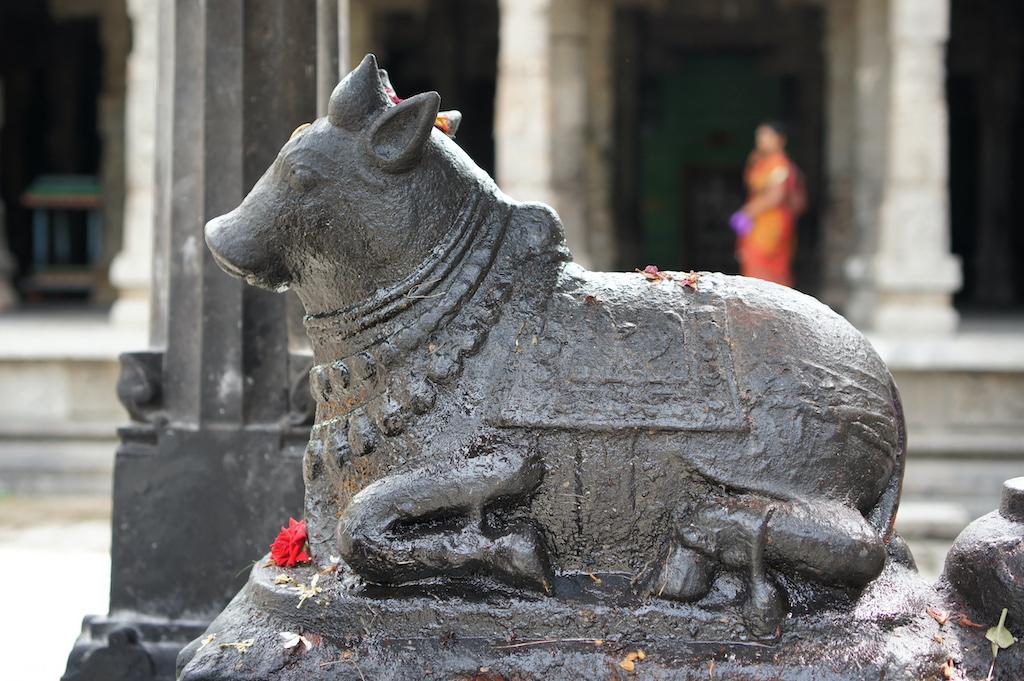 This morning, while meditating and feeling the public consciousness of creation, destruction, and preservation, and filling myself with energy, suddenly, unexpectedly, an image of a cow appeared, and a glass of milk in a stainless steel cup appeared in front of me. I wondered what it was, and then the cup moved closer, reaching the area above my chest, near my throat. It seemed like the cup tilted, and the milk flowed onto the "circular core" located near my heart.
There was no particular sensation, just a feeling of "Huh? Milk is falling? What is this?" Although there were no changes in me, I somehow understood that the milk was flowing on the surface.
Initially, the milk only fell on my chest, and then the cup moved upwards, and milk began to fall from above my head.
...What could this be? In Indian Hindu temples, there is a stone statue of Nandi, the god of cows, and during a ritual called "puja," milk is poured onto the Nandi statue. The feeling is similar. Although I didn't become a cow in my imagination, the sensation of having milk poured on me is similar.
I think there might be some ritualistic meaning behind it.
Intuitively, I thought it might be some kind of initiation ritual, but I'm not sure what kind of initiation it is.
I also thought that the Indian puja ritual might be a symbolization of this.
Initially, I had this feeling, but after continuing meditation, I visualized milk being poured over my head, and it had a cleansing effect.
However, there is a slight difference between when I visualized it myself and when it happened automatically. When I visualized it myself, it felt like I was bringing down energy from the heavens, while when it happened automatically, I didn't feel or perceive any changes. It felt like I was just being shown something, perhaps a demonstration of "try doing this." And, when I actually imitated it, it worked.
Perhaps I was being shown that pouring milk like this would cleanse me.
Inside my chest, I feel the dawn, and my awareness of creation, destruction, and maintenance deepens.
I am meditating, and I am feeling the consciousness of creation, destruction, and preservation throughout my entire body, centered in my chest. I concentrate on my forehead to draw in energy, and I chant Tibetan mantras in the ancient way several times to activate energy throughout my body. The energy flows up to my head, and sometimes I focus on the Muladhara chakra to circulate the energy.
As I do this, my consciousness gradually becomes more calm, and my relaxation deepens. I am meditating, and I am feeling the consciousness of creation, destruction, and preservation throughout my entire body, centered in my chest. I concentrate on my forehead to draw in energy, and I chant Tibetan mantras in the ancient way several times to activate energy throughout my body. The energy flows up to my head, and sometimes I focus on the Muladhara chakra to circulate the energy.
As I do this, my consciousness gradually becomes more calm, and my relaxation deepens. I am meditating, and I am feeling the consciousness of creation, destruction, and preservation throughout my entire body, centered in my chest. I concentrate on my forehead to draw in energy, and I chant Tibetan mantras in the ancient way several times to activate energy throughout my body. The energy flows up to my head, and sometimes I focus on the Muladhara chakra to circulate the energy.
As I do this, my consciousness gradually becomes more calm, and my relaxation deepens.
As the awareness of creation, destruction, and maintenance deepens, one begins to feel fragility and may even shed tears.
In the depths of my chest, I feel the dawn, and as my awareness of creation, destruction, and preservation deepens, I've started to experience tears in my daily life.
Often, there's no specific reason, but during casual conversations or everyday activities, I feel a sense of impermanence, and beneath that, a fleeting quality. I feel the brilliance of each moment, and then its disappearance. Experiencing this fleetingness repeatedly, even if each instance seems small, gradually accumulates into unspoken tears.
Nothing particularly has changed, and I'm living a normal life without any major inconveniences.
Even though I'm not particularly sad, each fleeting moment feels like an eternity, and that which seems eternal transforms and disappears. The beauty of that manifestation, the stable brilliance while it lasts, and the fleeting nature of its disappearance alternate, and each is beautiful. However, the fleetingness of their disappearance accumulates as a slight sadness, eventually leading to small tears.
This isn't a result of any major event, but rather a sadness that accumulates from feeling the impermanence of daily life.
Initially, I thought it might be caused by something specific in my daily life, so I tried to trace each instance. However, I've come to the conclusion that it's simply the feeling of impermanence itself.
Another possibility is that this sadness isn't just about impermanence, but also reflects the deep-seated sadness that exists in the current world, especially in the region where I live. Feeling the impermanence of things means seeing reality as it is, so it's natural to pick up on the sadness if the region I live in is filled with sorrow. While I'm observing impermanence, I might be inadvertently picking up on the underlying sadness. This is also a possibility.
It's difficult to determine which is the case right now, but it's a plausible hypothesis.
Perhaps, as my "public" consciousness awakens, my own happiness may depend on the happiness of many of the people in the region where I live.
If that's the case, it's quite difficult. Because my connection to the "public" creates a constraint: for me to be happy, the people around me must also be happy. This raises the bar significantly.
It makes sense that I'm feeling the sadness of the "public."
Perhaps both are true. I'm feeling the impermanence of things and crying, and I'm also feeling the sadness of people. However, upon closer inspection, they seem to be slightly different.
The impermanence feels deeper, while the sadness of people feels a bit more superficial. But both are of the type that cause sadness and tears.
There are passages in the writings of Honzan Hoshimi, a well-known yoga teacher, that are similar to this.
He realized that his existence was confronting the abyss of nothingness, and he experienced extreme terror. He felt like stopping his yoga practice because the terror was so intense and profound. It was an indescribable and terrifying experience. Before and after this experience, he felt a sense of resignation and detachment from the world and people. Gradually, a complete faith in God, "according to God's absolute will, whether in life or death," began to diminish the terror of confronting that abyss of nothingness. "Leap to Superconsciousness" by Honzan Hoshimi.
This is a description related to Vishuddha, and perhaps my sensations are also related to Vishuddha. I felt it more as sadness rather than fear, but if we interpret "scary" as "sadly scary," the content seems somewhat similar.
When one loses awareness and the ability to recognize things as they are, sadness arises.
Recently, as my awareness of creation, destruction, and maintenance has deepened, I have been feeling a sense of transience and shedding tears. It feels like this sadness is emerging from a state that is separate from the awareness of "creation, destruction, and maintenance."
I used the word "separate" here, but it doesn't mean physical distance; it means that the center of my heart is slightly "off" from the root. Some schools of thought might express this as "a state of not understanding."
Some schools of thought might express the state of being close to the root and recognizing things as they are as "a state of not being off from the root," "a state of not being separated from the soul," or "a state of understanding."
If you are in a state that is not separated from creation, destruction, and maintenance, and you can recognize things as they are, then sadness will not arise. Instead, you will simply observe the creation, destruction, and maintenance that are unfolding before your eyes.
However, if you move slightly away from that state and become more distant from reality, you seem to feel a sense of transience and recognize "sadness."
Therefore, the sadness that arises from feeling a sense of transience may be an emotion that arises because you are not experiencing things as they are.
Even that sadness itself is a cycle of creation, destruction, and maintenance. The sadness appears, continues, and then disappears, and by feeling this cycle of creation, destruction, and maintenance of sadness, you can also experience emotions as they are.
By focusing your perspective on the phenomenon and experiencing it as it is, you can recognize the creation, destruction, and maintenance of that phenomenon.
On the other hand, by experiencing emotions as they are, without experiencing the phenomenon as it is, you can recognize the creation, destruction, and maintenance of those emotions.
Here, two subjects have emerged:
- Vision
- Emotion
Vision belongs to the senses and is a rough form of perception. Emotion belongs to the heart and is more subtle.
You can look at your heart (emotion) "as it is," while being separate from the "as it is" of the senses (vision).
On the other hand, you can look at the senses (vision) "as it is."
When the senses (vision) are separate from "as it is," "sadness" arises, and by looking at the heart (emotion) "as it is" at that time, it seems that you can recognize the creation, destruction, and maintenance of emotions.
One way to overcome sadness is to bring in another type of emotion that belongs to the same category as joy, but I think it is more effective to overcome sadness by looking at both the senses (vision) and the heart (emotion) "as they are," or at least one of them.
This is not necessarily a literal meaning of overcoming sadness; the word "overcoming" may give the impression of fighting and winning. However, this "looking at things as they are" is more fundamental. It means recognizing and identifying what it is, firmly, in terms of the senses or emotions.
Then, that understanding will disappear. It's not an understanding based on logic, but an understanding that comes as a result of carefully observing. Theoretical understanding will ultimately remain, but rather than bringing in logic in the process, it is better to first look at things "as they are," identify them, and then, as a result, a final "understanding" will come.
However, even these are just for explanation, and the truth is simpler: if you simply look at things "as they are," sadness will not arise.
Sadness may have been an emotional experience that occurred when the Vishuddha chakra opened.
Recently, I felt a sense of fragility and tears came to my eyes. However, the next day, I suddenly noticed that the blocked, itchy sensation in my Vishuddha chakra had significantly decreased. And, before I knew it, the feeling of sadness had subsided.
When the consciousness of creation, destruction, and preservation first emerged, I felt a blocked, itchy sensation in my Vishuddha chakra. Even now, I still have a slight sensation, but it's no longer a blocked, itchy feeling; it's simply the sensation that something is present in the Vishuddha chakra.
And, before I knew it, the feeling of sadness had calmed down, and I feel a slight lingering sense of sadness, but it's no longer a feeling of sadness welling up.
Therefore, perhaps this feeling of sadness was an expression of emotion caused by the opening of the Vishuddha chakra.
I don't know if the Vishuddha chakra is completely open, but I feel that energy is flowing through it more than before, and it is connected to the Anahata chakra. I also feel that the consciousness of creation, destruction, and preservation has reached the Anahata and Vishuddha chakras.
I think that chakras can open either suddenly or gradually, and I think that this is perhaps a sign that the Vishuddha chakra has opened slightly.
And, in this state, I've started to feel a sensation of energy being blocked, just behind the Ajna chakra, in the area of the back of the head.
When I try to trace the memories of my past life's third eye, I remember that a crystal formed near the back of the head, rather than between the eyebrows, and that a part of it, or a dimensionally different part, emerged from the crown of the head as a "force eye," allowing me to transcend dimensions and shift my perspective. So, if this reaction in the back of the head is the first step, then perhaps energy in the form of the consciousness of creation, destruction, and preservation is flowing through the Vishuddha chakra, and the Ajna chakra is beginning to activate.
Chakras open gradually, and even in the stage of chakra adjustment, they open to some extent. This time, I think it has opened a little more, but I feel that it's more about adapting to the energy of the new consciousness of creation, destruction, and preservation, rather than the meaning of "opening" and something happening, as is often said in the world.
Originally, when I experienced it the other day, I thought it might be the Vishuddha chakra, but I wasn't very sure. After a night of rest and confirming the above state, I think it's reasonable to consider it the Vishuddha chakra. However, I don't think it's completely open. I think that it can be said to be completely open only at a later stage, when all the chakras are integrated and working together, and that it's sufficient to open it gradually.
In Tibet, it is said that not necessarily any experience occurs when opening chakras. This time, the Vishuddha chakra opened and I experienced it as the emotion of "sadness," but I interpreted that as another expression.
Concentrating and reaching a state of stillness through meditation is still effective.
Recently, simply focusing on the space between my eyebrows or the tip of my nose has been enough to eliminate distracting thoughts. While these thoughts disappear quickly, continuing to meditate by focusing on the space between my eyebrows or the tip of my nose and breathing allows energy to rise to my head, eventually leading to a state of stillness.
Although thoughts are quickly eliminated through breathing, this doesn't automatically lead to a state of stillness. The disappearance of thoughts literally means that most of the distracting thoughts disappear, which is slightly different from a state of stillness.
Previously, the state of stillness was achieved without deep awareness, simply as a state of stillness.
Now, I experience a state of stillness with deep awareness. Initially, there was a deep awareness that prevented me from entering a state of stillness, as if it were hindering my ability to achieve it. However, now I can enter a state of stillness even with deep awareness.
This state of stillness exists regardless of whether or not there is deep awareness. In the past, I achieved a state of stillness without deep awareness, and now I achieve a state of stillness even when deep awareness is present.
I understand this as a difference in levels of consciousness.
A state of stillness is achieved when the fluctuations of the mind (chitta), which is the superficial level of consciousness, subside. Whether or not deep awareness is present is relatively independent of the state of stillness. That's how I currently understand it. They are intertwined, so they initially interfere with each other, but they are essentially different things.
The state of stillness is achieved when the activity of the mind (chitta), which is the superficial level of consciousness that responds to the five senses and governs memory, subsides. Therefore, this is what the Yoga Sutra means when it says, "Yoga is the cessation of the fluctuations of the mind." The Yoga Sutra primarily deals with the superficial level of the mind.
And initially, there is no deep awareness, but when a state of stillness is achieved, awareness begins to emerge from the deeper levels.
Therefore, it starts with a state of stillness without deep awareness, and then progresses to a state of stillness with deep awareness.
The Yoga Sutra's definition of yoga focuses on calming the fluctuations of the mind, setting aside the issue of deep awareness.
A common criticism of the Yoga Sutra is, "What happens when you eliminate the mind?" However, the "mind" that the Yoga Sutra aims to eliminate is the superficial level of consciousness, chitta. While it is translated as "cessation" in Japanese, it does not mean completely eliminating the mind, but rather stopping the "fluctuations" (vritti), or the mind's wavering.
In essence, it is simply saying, "Let's achieve a state of stillness." It's just a difference in expression. This is the purpose of the Yoga Sutra, but it is often misunderstood because it is translated as "cessation of the mind," when it actually refers to the "cessation of the mind's fluctuations," which is the state of stillness.
This state of stillness exists even when consciousness of creation, destruction, and maintenance emerges from the deeper levels, because the state of stillness is achieved when the fluctuations of the mind (chitta) cease, which refers to the superficial level of consciousness.
Since there are no distracting thoughts in the deep consciousness, the distracting thoughts are eliminated in the superficial consciousness (chitta), leading to a state of stillness.
And then, the Yoga Sutra says, "When the fluctuations of the mind (chitta) subside, the observer (Purusha) remains in its true nature." While the goal of yoga is often described as achieving a state of stillness, there is more beyond that. After achieving a state of stillness, the observer (Purusha) remains in its true nature, and then deep awareness emerges. The next step is to enter the realm of the Upanishads.
The energy of creation, destruction, and maintenance flows into the area between the eyebrows and near the eyebrows.
I was meditating when I suddenly felt a flow of energy just above my eyebrows.
It was like the feeling of a balloon inflating, or like a soft hose that was flattened suddenly receiving water and starting to expand, or like a dry canal gradually filling with water.
Recently, during meditation, I've been experiencing a sense of creation, destruction, and preservation in the area around the back of my head, and I've felt a concentrated energy there.
That energy, which I felt in the back of my head, seemed to flow diagonally upwards towards the area just above my eyebrows, like a balloon inflating. The sensation was located just above my eyebrows, and the energy flowed from the back of my head towards that point, diagonally upwards.
I believe this lasted for about 30 seconds to a few minutes.
Gradually, the energy reached the area just above my eyebrows, and as the pressure of that energy increased, the area around my eyebrows became filled with it.
Previously, I would simply feel energy flowing through my nostrils, causing relaxation. However, I haven't experienced the sensation of a concentrated energy flow like the one I felt today, just above my eyebrows. Instead, I felt energy flowing through my nostrils, centered around my nose and eyebrows, as if it were coming from all directions, 360 degrees. However, I didn't feel a concentrated energy at that time.
This time, it didn't seem like the breath was the direct source of energy. Instead, it felt like the energy of creation, destruction, and preservation, which was present in the Anahata (heart chakra) and the back of my head, was flowing down to the area above my eyebrows.
I can also breathe and allow energy to flow, and the energy I draw in through breathing seems to be slightly different in quality. Even if it is different, there seems to be some synergistic effect, as I feel the energy increasing when I breathe and allow it to flow.
I'm not sure if this is true, but the energy I'm drawing in through breathing might be Prana, while the energy that flowed from the Anahata and the back of my head to the area above my eyebrows might be the energy of creation, preservation, and destruction. It feels like both energies are merging at the point above my eyebrows.
This may not be the opening of the Ajna chakra, but at least it seems like an energetic change has occurred.
Traditionally, the Ajna chakra is said to contain the Rudra Granthis, which are considered major energetic blockages that hinder higher consciousness or act as a defense mechanism to prevent premature advancement to higher stages.
I think it's reasonable to assume that there has been some change in the Rudra Granthis.
I've had similar experiences before, where I felt something might be the Rudra Granthis, such as a throbbing sensation in the back of my head or above my eyebrows. Each time, I wondered if it was the Rudra Granthis, and this time, I experienced something different.
When something like this happens again, I initially wonder, "Which one is the Rudra Granthis?" However, I'm starting to think that it might be more accurate to consider that the Rudra Granthis first opened, and then, by allowing a different type of energy to flow through, I experienced a different sensation.
In the initial stages of meditation, we only adjust the chakras, so it seems like there was a need to cross the Granthis at that time as well. Perhaps that throbbing sensation in the back of my head or above my eyebrows was related to that.
This time, it's possible that the newly opened Granthis allowed a new type of energy (the energy of creation, destruction, and preservation) to flow through, and that's why I felt a sensation of something being "pushed aside," like inflating a balloon.
...Since then, I've noticed that this "balloon-like" sensation sometimes occurs and sometimes doesn't. There are times when I don't feel as much energy, and there are days when I feel like not much energy is flowing even during meditation. However, I interpret this as a decrease in the sensation of energy, and that the actual energy flow might still be present. As the blockages (Granthis) decrease, the sensation of "pushing something aside" seems to be diminishing.
I have become less susceptible to being influenced by the energy of others in crowded places.
Since the energies of creation, destruction, and preservation began to fill my body, I have become less susceptible to the energies of others, even in crowded places.
If I recall a long time ago, simply going into a crowd would often leave me feeling exhausted, or I would feel as if I were possessed by something.
While walking in the city, I would suddenly become tired, and when I meditated to investigate, I would often find energy beings attached to my aura. Each time, I would remove the invisible things that were stuck in my shoulders, or sometimes I would cut etheric cords. I have been maintaining myself in this way to avoid being connected to strange consciousnesses.
However, it has only been about half a month since I entered this new state, so I am not yet sure, but so far, the strange things that used to happen have been less frequent, and while I still experience occasional problems, I feel that I am much less affected by the energies of others than before.
This could be said to mean that I have become stronger, but rather than being stronger, it feels as if any energy being that attaches itself to me is immediately absorbed into the energies of creation, destruction, and preservation within my chest, and is returned to its source, so it gradually decomposes.
Of course, if a large number of energy beings were to attach themselves to me, I would probably experience problems, but a certain amount of instability, scattered thoughts, or attached consciousnesses are almost automatically purified within my chest, so I feel that I can handle it to some extent.
Basically, I deal with things automatically, and then I meditate to properly regulate myself.
By doing so, I feel that I have become much better at dealing with situations such as receiving the energies of others, coming into contact with consciousnesses, or receiving the thoughts and feelings of others.
Even so, I still experience some instability, and sometimes I receive unpleasant feelings from others or recall traumas, causing me to falter, but compared to before, I feel that I am coping relatively well.
Further resolution of the trauma is achieved.
Since the energy of creation, destruction, and maintenance began to fill my body, the trauma has suddenly been resolved in stages, and I feel that it has become even less influential than before.
Even before, the trauma was being resolved gradually, but there were still times when a little bit remained, or I would suddenly be trapped by the trauma for a few seconds or tens of seconds. However, it feels like I have finally reached a point where I can truly resolve the remaining trauma.
When I look inside my body, I see "fragments of bullets" like metal pieces or shattered crystal masses in various places. There seems to be one relatively large piece remaining, but I feel that most of the trauma has been resolved in a rush.
This energy of creation, destruction, and maintenance has an automatic function, and it seems to have a certain effect of automatically washing away distractions. However, I still feel that it is necessary to strengthen it through meditation. This energy is welling up from the depths of my chest, and it gives the impression that it is automatically dissolving distractions and trauma.
Before, I would sometimes be overwhelmed by trauma, and I felt like I couldn't "let my guard down." However, now that this energy has emerged, the trauma is no longer as frightening. Even when trauma appears, it is more "translucent" than before, and even when this translucent trauma appears, I am not afraid, and I have not been completely trapped by it so far. I feel that I am more susceptible to trauma when I am tired, but basically, the trauma is now being resolved automatically and quickly.
In this state, it would be better if even the smallest traumas appeared quickly, so that they can be resolved even faster.
There are spiritual teachings that say "let's bring out the trauma and resolve it." However, I wonder if, as a prerequisite, it is necessary to raise the energy level, otherwise, even if you bring out the trauma, you may not be able to handle it properly and become trapped by it.
I am realizing that this body is made of light.
In spiritual teachings, I was told "You are light," but I couldn't deeply believe it. However, recently, during meditation, I suddenly realized it. I started to feel that "my body is light."
Previously, during meditation, I had a feeling that my body was disappearing. Now, in addition to that feeling, I also feel "light." It's not complete light, but I can recognize it as light.
This is not a dualistic concept of good and evil, but rather the idea that everything is light. The concept of "emptiness" may also be related.
It can be said that everything in this world is made of "light." In other words, it is "emptiness," and it is also said that "light" is shining. If it is light, it is shining; if it is emptiness, it is appearing.
This is not about "imagining that my body is light," but simply about "realizing that it is light."
This is different from the insights gained through meditation or Vipassana. "Realizing that I am light" is a result, and it is different from the insights gained through meditation techniques.
Therefore, a "meditation to realize that I am light" is not necessary, nor is it possible. Also, a "meditation to imagine that I am light" is not needed, but I feel that it is useful for energy work.
From Lanton to Nime.
First, I reached a state of stillness (the state of Shinae in Zogchen), and then a profound awareness emerged that did not allow for a state of stillness, and it manifested as an awareness of creation, destruction, and preservation (the state of Lanton in Zogchen).
After that, I reached a state where the state of stillness and the awareness of creation, destruction, and preservation coexist (Nime in Zogchen).
These correspond to the following states in Zogchen:
(1) Shinae (also called Newa): A state of stillness (equivalent to Shamatha in the Yoga Sutra).
Fixing the mind and gaze on an object, or without an object, one enters a state of stillness. This state becomes natural and becomes more solidified.
(2) Lanton (also called Miyowa): A greater vision or insight (awareness of creation, destruction, and preservation).
The state of stillness dissolves, or is "awakened."
(3) Nime (also called Namny): A state of non-duality (a state where the state of stillness and the awareness of creation, destruction, and preservation coexist).
Shinae and Lanton arise together. One reaches beyond dualism.
(4) Lundup: A state of perfect completeness as it is.
The non-dual samadhi continues in all activities.
"Rainbow and Crystal" by Namkai Norbu.
To be honest, I don't quite understand that the state of stillness and the awareness of creation, destruction, and preservation that I experienced is a state of non-duality (a state of oneness).
Well, indeed, in that state, there is no separation, and if you say so, it might be non-duality, but it feels like this is just a story for explanation. When you say "beyond dualism," it gives a somewhat roundabout impression.
Based on this hierarchy, in the future, I should continue to maintain non-dual awareness, that is, samadhi, while coexisting these two states.
The practice in Zogchen is simple, and that is to "always maintain samadhi," but it is difficult to always maintain samadhi so easily, and that is why such a hierarchy exists.
In my case, I can interpret that I have reached the entrance to non-dual awareness by going through these steps. It continues in my daily life to some extent, but it is not complete, so I have not yet reached Lundup, and in the sense that I am trying to maintain a meditative state as much as possible, I can judge that I am at the Nime stage.
The sense of good and evil disappears.
After the awareness of creation, destruction, and maintenance emerged, I became less susceptible to negative influences, and at the same time, my sense of good and evil almost disappeared.
I don't feel anything when I see great evil.
At first, I wondered if this was a dulling of my senses, but I now interpret it as my own energy becoming higher, making me less susceptible to external influences.
It is often said in spiritual circles that there is no good or evil, but this is often explained through logic. However, in reality, it has little to do with explanation; there is truly no good or evil, and everything is free.
However, I don't think that we should do whatever we want.
This is because the awareness of creation, destruction, and maintenance is at work. For example, I wouldn't just do evil things, and conversely, I wouldn't just do things that seem good. At the same time, I wouldn't just maintain the status quo.
It's not about doing whatever we want, but rather, it's about the fact that there is no sense of good or evil.
In the past, I thought that there were entities that seemed like masses of evil in this world, but now that I have no sense of good or evil, I no longer understand them.
Even though I don't understand good or evil, I will still take appropriate action against people or entities that harm me. So, it's not that I do nothing against things that seem evil. Conversely, there are also actions related to good, and it seems that even things that appear to be good may actually be biased. Even though the judgment of good and evil has disappeared, actions remain. I don't react in a predictable way.
This is not a story about morality. I think the stories about morality are correct. It's not about that, but rather, it's a story about the existence of good and evil.
When I had a sense of good and evil, things were judged as good or bad in a stereotypical way, and to some extent, I was forgiving of anything if it was labeled as good. However, because I no longer understand good and evil, I can see things as they are.
There is morality, but deep down, I have lost the sense of good and evil. I don't know if something is good or evil, and this applies to the actions of others, as well as my own actions.
Morally, for example, it is certainly correct to say that killing people or stealing is wrong. Those stories about good and evil are correct, but there is a constant sense that goes beyond that, and at a level beyond good and evil, I no longer understand what is wrong.
This is one aspect of the awareness of creation, destruction, and maintenance. In that state of awareness, there is no good or evil. We create everything, destroy everything, and maintain everything, so there is no judgment of what is good or bad.
This is not a story about thinking "there is no good or evil" with our heads, but rather, it is a simple story about the fact that the judgment of good and evil has disappeared.
I felt a sensation like my spine was swelling up like a balloon.
Today, while I was meditating, I felt a pressure build up near the bottom of my spine, close to the sacrum, and something seemed to expand like a balloon.
As I continued, that sensation gradually moved up my spine and reached my chest. At that point, the sensation became unclear, but it felt like it connected to the back of my head.
I have previously experienced light traveling along the ida and pingala channels, and later, my aura became dominated by manipura, then anahata, and sometimes ajna. However, I don't recall having experiences that closely followed the sushumna (the energy channel along the spine, one of the main nadis).
I have occasionally felt similar sensations along my spine during small-scale energy practices, but that was a long time ago, and I had almost forgotten about it.
After that, there was a change in my aura when a sense of creation, destruction, and maintenance emerged from the depths of my chest. This later spread to my head, but it didn't seem to follow the spine. Today, while I was meditating, I felt a pressure build up near the bottom of my spine, close to the sacrum, and something seemed to expand like a balloon.
As I continued, that sensation gradually moved up my spine and reached my chest. At that point, the sensation became unclear, but it felt like it connected to the back of my head.
I have previously experienced light traveling along the ida and pingala channels, and later, my aura became dominated by manipura, then anahata, and sometimes ajna. However, I don't recall having experiences that closely followed the sushumna (the energy channel along the spine, one of the main nadis).
I have occasionally felt similar sensations along my spine during small-scale energy practices, but that was a long time ago, and I had almost forgotten about it.
After that, there was a change in my aura when a sense of creation, destruction, and maintenance emerged from the depths of my chest. This later spread to my head, but it didn't seem to follow the spine.
Body, mouth, mind, energy, and will.
The term "shinkui" in Buddhism refers to the three actions of body, speech, and mind, which are said to correspond to behavior, words, and thoughts, respectively. In Esoteric Buddhism, these three are said to be practiced to achieve unity.
Although I am not a Buddhist, I have recently realized that these concepts resonate with my own experiences, so I am recording them for reference.
When reading Esoteric or Tibetan texts, one notices that the interpretation of "shinkui" differs slightly.
Body → Body
Speech → Energy
Mind → Consciousness
In Tibetan Buddhism, it is believed that all beings are composed of three elements: body, speech, and mind. The perfect state of these three is symbolized by the Tibetan phonetic characters "Om," "Ah," and "Hum." The body refers to all the material dimensions of a being. Speech, in Sanskrit called "prana" and in Tibetan called "lung," is the energy that gives life to the body, and its circulation is linked to breathing. The mind includes both superficial consciousness based on rational thought and the true nature of the heart, which transcends rationality. "Rainbow and Crystal" by Namkhai Norbu.
The Tibetan Buddhist interpretation of "shinkui" resonates more with me than the Japanese Buddhist explanation.
In Buddhism, individuals are considered to be composed of three aspects: body, speech, and mind (body, speech, and mind). The relative state (worldly truth) is constructed from these three aspects, existing within the limitations of time and the duality of subject and object. In contrast, what lies beyond time and dualism is called the "absolute truth" (shogyotai). This refers to the ultimate and inherent state of body, speech, and mind. "The Teachings of Dzogchen" by Namkhai Norbu.
The key point is that "shinkui" is a concept related to dualism, and in the state before reaching samadhi, there is confusion and one is trapped in reincarnation and karma. However, in the state of samadhi, "shinkui" does not disappear, but one reaches a state where the manifestations of "shinkui" can be perceived as they are, without being limited by confusion, reincarnation, or karma. They do not disappear, but rather continue to manifest, but one is no longer limited by them.
These concepts seem applicable to my recent experiences with "cine" and "ranton."
(1) Cine (also called "newa"): The state of stillness (corresponding to mind).
(2) Ranton (also called "miowa"): A greater vision or insight (corresponding to speech = energy).
The state of stillness dissolves or is "awakened."
(3) Nime: The state of non-duality.
Cine and Ranton arise together, reaching beyond dualism.
(4) Lundup: A state of perfect being as it is.
Non-dual samadhi continues in all actions.
"Rainbow and Crystal" by Namkhai Norbu.
In addition to the previous interpretations, I have realized that another element is involved.
The consciousness in samadhi requires "rikpa" in Dzogchen. Rikpa has appeared before, but now I think that it can be continuously sustained only when there is a manifestation of energy.
Therefore, the order is likely correct, and while the state of "nime" (non-duality = samadhi) may appear before, it is essentially in this order. In my case, the order was as follows:
(1) Cine (→ state of stillness, corresponding to mind. After the awakening of kundalini, the dominance of manipura leads to anahata, then ajna, and finally to the state of stillness. This is the stage for beginners).
(2) Nime (non-duality) occurs frequently but does not last long. Rikpa is working to some extent in this state.
(3) Ranton (awakening) (→ consciousness of creation, destruction, and preservation. Corresponding to speech = energy).
(4) Nime (non-duality): A state where rikpa is gradually stabilizing. This is the state beyond time and dualism, corresponding to the "absolute truth" (shogyotai), which is samadhi.
I have experienced samadhi frequently. While there were significant experiences at times when the awakening was clear, overall, it seems that samadhi has been gradually developing.
At the beginning of samadhi, I felt that the visual perception was recognized in slow motion, which is sometimes called "kanika samadhi." This gradually deepened or sometimes receded, but overall, it deepened. These states seemed to be the initial state of "nime" (non-duality).
After that, when the consciousness of creation, destruction, and maintenance emerged, I came into contact with a new form of energy and consciousness, became one with it, and I think I reached a state of enlightenment (Lanton).
And as soon as I reached that state of enlightenment, the state of non-duality (Nime) became stable, and I feel that I have been able to continuously maintain that state of non-duality (Nime, Samadhi) to some extent even in daily life.
I am at this stage now, I think.
Ideally, it would be best if daily life becomes meditation and practice without having to do anything special, but that is not always possible, so I am also doing meditation and yoga.
In the future, I think that if this becomes even more stable and I can constantly maintain Samadhi in daily life, I will reach the state of Lundup (a state of complete perfection in its true form).
Practice Samatha (Shi) before proceeding to Vipassana.
When viewed from a different perspective, the process starts with "shin-kui" (body, speech, and mind), and then progresses to "samadhi" (a state of non-dual consciousness with "riku-pa"). In other words, it goes from "shinen" (a state of stillness) to "samadhi" (a state of non-dual consciousness with "riku-pa").
While this order is generally the most common, theoretically, it is possible to directly enter "samadhi" without going through "shinen."
However, it is likely to be more stable if the steps are followed. You could say it has more reproducibility.
If someone already has a certain level of "riku-pa" consciousness, they may be able to directly enter "samadhi" without going through "shinen." There are people like that, and especially in children, they are not yet entangled in the worldly distractions, so this can happen. Even among adults, there are people like that.
However, in traditional meditation, "shamata" (stopping) is usually practiced first.
And, when "riku-pa" consciousness begins to work, it may not be necessary to practice "shamata" as much... Although it may sound misleading to say that "shamata" itself is not the ultimate goal, "shamata" is a step, and it is a step towards "riku-pa."
"Riku-pa" consciousness, in other words, is "vipassana," which is the awareness of observing everything, including thoughts, bodily sensations, and all aspects of "shin-kui." Within that, consciously entering a state of stillness is useful for awakening "riku-pa" consciousness, even if it is not the ultimate goal. In ordinary people, "riku-pa" consciousness is dormant, which is what Buddhism calls "muchi" (ignorance). To activate that "riku-pa" consciousness, practices like "shamata" are useful.
Once "riku-pa" begins to work, even if thoughts and distractions arise, one can see them as they are, so there is less need to consciously practice "shamata."
I have analyzed this in a similar way before, but I feel that I have a clearer understanding of this now than I did then.
The misunderstanding that observing bodily sensations leads to Vipassana meditation.
The state of Vipassana meditation is when the true nature of the mind (so-called "rikpa") observes the five senses and the mind. In this state, observing bodily sensations is relatively easy. However, simply practicing meditation that focuses on observing bodily sensations does not automatically lead to the Vipassana state.
Some schools of thought define Vipassana meditation as the practice of observing bodily sensations, but this is just one way of understanding it.
Vipassana meditation is a type of meditation, and "Vipassana" refers to observation. Therefore, it is an element of a meditative state. The name "Vipassana" is simply derived from this observation. It is important to distinguish between the Vipassana state and the specific methods of Vipassana meditation practiced by different schools. Observing bodily sensations is simply a technique that is labeled as "Vipassana," but it does not necessarily lead to the realization of Vipassana.
It is possible that the practice of observing bodily sensations in Vipassana meditation was developed by imitating the experience of those who have already achieved a certain level of understanding through meditation and have entered the Vipassana state, where they can easily observe bodily sensations. For beginners, it may be difficult to imitate this practice, but some schools use this method and achieve significant results. However, I personally believe that there are other approaches that may be more suitable. Ultimately, if a particular school teaches this method and you believe it is correct, then you should follow it.
This method is effective for those who already have a certain foundation and some understanding of the Vipassana state. For such individuals, a simple explanation can help them "realize" or "remember" the state, allowing them to quickly enter the Vipassana state.
This is similar to what some spiritual teachers say, such as "it's just a matter of realizing it" or "remembering it." However, for those who lack this foundation or who are experiencing significant stress in their daily lives, it may be difficult to achieve this state, even with such guidance. It is not as simple as just "realizing" it. While some people may easily understand and quickly achieve the desired state, others may find it difficult. It is important to avoid making it seem too easy, as some people may mistakenly believe they understand it when they only have a superficial understanding. Of course, for those who are receptive, it may indeed be as simple as realizing or remembering. This is a case-by-case situation.
While some people may be able to achieve this state quickly, most people will not. Many people will find it difficult to reach this state immediately.
Even for those with the potential, a common misconception is that "observing bodily sensations leads to the Vipassana state" (i.e., the action of observing the body results in the outcome of Vipassana). However, the reality is that "when in the Vipassana state, bodily sensations can be observed." This is a subtle but important difference. Simply observing bodily sensations without being in the Vipassana state will not produce any significant results. Some people may even mistakenly believe that meditation is simply about struggling to observe bodily sensations. While there may be exceptions, this is generally the case.
The Vipassana state is a state where the true nature of the mind (so-called "rikpa") observes the five senses and the mind. The misconception lies in the belief that the mind observing the five senses is equivalent to Vipassana.
■ Vipassana State: "Rikpa" observes the five senses and the mind. Therefore, sensations from the five senses (skin) can also be observed. Concentration of the mind is not required, but a certain level of awareness (or focus) is necessary. This can be described as a state of heightened awareness or a state of increased realization (the terminology may vary depending on the school of thought, but it refers to the same concept).
■ Vipassana Meditation (as a technique): The mind observes the five senses (sensations). Concentration of the mind is necessary.
Therefore, although they are completely different, there seems to be a widespread misconception that observing the skin leads to Vipassana.
Personally, I believe that for beginners, concentration meditation is more beneficial than focusing on observing bodily sensations. However, if you are being taught by a school that uses the Vipassana method, it is your personal choice to follow their guidance.
Vipassana schools often explain that concentration is "somewhat" necessary, but I personally believe that concentration is much more important than they often emphasize.
Automatic observation meditation for observing the mind.
The act of observation itself has often occurred after reaching a state of stillness, but recently, observation has been happening automatically even before reaching the state of stillness during meditation.
The state of stillness is what is commonly referred to as the "sinner" state, and it can be said to be "shamatha" in the Yoga Sutra, a state where the mind is still.
In this case, what we call "observation" is the function of observing the movement of the mind itself, rather than after the mind has become still.
Therefore, it is not necessarily "shamatha," but rather the mind is allowed to be free, and yet observation continues.
Even when random thoughts and ideas arise in the mind, they are simply observed. They are not incorporated into the observation, but rather exist in a slightly detached state, as if floating slightly above.
Previously, when random thoughts and ideas arose in the mind, it felt like being pulled into the ground, like being in a swamp or as if someone was pulling my feet, and only those thoughts and ideas were in my consciousness. However, in the state of observation, my mind feels slightly detached from the ground, although not very high, so I am still somewhat pulled, but basically I am floating, so I can continue to observe even when random thoughts and ideas arise.
This is a state that used to occur after reaching a state of stillness (shamatha, the "sinner" state), which can also be called a "vipassana" state.
For example, after meditating in the morning for a maximum of 30 minutes, or 1 hour, or 1.5 hours, I would reach a state of stillness and enter a "vipassana" state.
However, recently, even before starting meditation or even before sitting down, there is already some degree of observation happening, and especially when sitting and meditating, observation allows me to observe the state of my mind as it is, as described above.
This can also be called "automatic" observation.
Whether or not this is "automatic" is a significant difference. There is a considerable difference between observation that occurs only when one uses willpower and observation that works automatically, even if it is still somewhat limited.
I feel that the sensation of observation itself has been present from before, so it is not unusual in itself, but what has changed is that the duration of that observation in daily life used to be short, whereas now, the duration is increasing. This has not yet reached 24 hours, but those who have attained enlightenment are said to have their consciousness continuing even while they are sleeping, so the continuation of observation seems to be a necessary condition for enlightenment.
This can also be interpreted as the observation of consciousness (mind) among the three aspects of body, speech, and mind. Observing the five senses that belong to the body is easy, and we usually start with observing the body. Next is observing energy. Energy is more subtle than the five senses. Even more subtle is the movement of the mind. I think observing all three of these is what observation is.
How to deal with Japan's enemies.
This is the basic principle: everything in this world is love, and therefore, anything is permissible. Even if there are people doing terrible things, it is all forgiven. This world is perfect, and no matter what choices are made, even if it is a massacre or the destruction of the Earth, it is still perfect.
The fundamental law of the universe guarantees the freedom of planets almost completely. Therefore, even if there are terrible events on a planet, such as massacres or large-scale destruction, the freedom of the beings living on that planet is generally respected. However, this does not mean that anything is allowed. If a planet is destroyed to the point where it can no longer sustain itself, such as by a powerful nuclear explosion that destroys the Earth, then intervention from the universe is permitted. The universe has the right to prevent the destruction of a planet like Earth. If the destruction is not that severe, the freedom of thought and action of the life forms on the planet is generally guaranteed.
Through meditation, especially when the consciousness of creation, destruction, and preservation arises, one can actually experience this. There is a world where everything is forgiven, but at the same time, there are times when one must grapple with difficult decisions, especially when dealing with "enemies."
If everything is perfect and everything is allowed, does that mean we must forgive even our enemies? This question arises. For example, in Japan, there are biased media outlets that try to denigrate the country. Should we forgive them? Or, when someone exploits us, should we allow it?
One answer is that since even reacting is allowed, we can do anything within the realm of harmony. All actions, including those that exploit or denigrate, are free and allowed. However, the actions taken in response are also free.
Therefore, if retaliation is in harmony, then we should retaliate. If rejection is in harmony, then we should reject. When the "self" is involved, it creates karma and becomes trapped in the cycle of reincarnation. However, for those who have broken free from the cycle of karma, whose consciousness has become "one with the whole," their actions do not create karma.
This is not just a theoretical concept; it is about whether one can actually act in this way. Regardless of one's consciousness, whatever one chooses to do is free. If one believes that enduring is in harmony, then one should endure. If one believes that retaliation is in harmony, then one should retaliate. It is a case-by-case basis, and it can be anything. There is no fixed truth in the action itself; the truth varies depending on the situation. Morality and common sense are useful for those who have not yet reached this level, but for those who have broken free from the cycle of karma, they are merely guidelines. Once one has broken free from karma, one can do anything that feels right from the perspective of universal consciousness. In this example, dealing with anti-Japanese media is something that naturally arises from the perspective of universal consciousness. In order to break free from the anti-Japanese loop, it is essential that "the Japanese people awaken." And that is something that each Japanese person must do. It is relatively easy for a few individuals with abilities or power to eliminate prominent figures like anti-Japanese media and the Korean General Association of Southern Manchuria. However, even if these people are eliminated, if the Japanese people do not awaken, the same thing will happen again and again. Therefore, elimination is not very meaningful. It is only after being subjected to it to the fullest extent that the Japanese people might awaken. I don't think it's right for individuals with abilities to deprive the Japanese people of opportunities to learn. The lives of people can actually be manipulated quite easily at higher dimensions, such as through illness, accidents, stroke, sudden heart failure, or even contracting COVID-19. However, such things are generally not done. Intentionally killing a large number of people would be unnatural, and more importantly, it would deprive people of the opportunity to learn. In this case, since the Japanese people need to awaken, depriving them of the opportunity to awaken would be counterproductive. It would be better to leave the anti-Japanese media and anti-Japanese politicians alone. This is the same as the destruction of a planet. If Japan is on the verge of destruction, then it may be necessary to eliminate anti-Japanese media, the Korean General Association of Southern Manchuria, or anti-Japanese politicians. However, if that happens, we would have to start all over again and wait for the Japanese people to awaken. That would be a hassle. It is better for the Japanese people to awaken before reaching a point of no return.
Human life is surprisingly fragile, and it can be eliminated if one wants to, but the soul is immortal, so it will be reborn and repeat the same things. It's just postponing the problem.
As a method, it is possible to send such a soul to another timeline, but that is also a hassle. Either way, it will repeat the same things. It would be better if they could learn from each other and resolve the issue.
If you really want to eliminate them, you can simply instruct the universal consciousness with the intention "Please disappear" (the method is up to you), and the universe will take care of it by causing a stroke or a scandal, and eliminate them. However, as mentioned above, the same situation will arise again. The lesson will be repeated until the Japanese people awaken, or, to put it another way, "until the Japanese people learn."
When the Japanese people's lesson of not giving their energy to others is completed, the anti-Japan media and the problems of anti-Japan politicians will be resolved quickly. Because those politicians will no longer be elected, and if that happens, the anti-Japan media will be eliminated from the political side. The same goes for bureaucrats.
Some members can work hard to eliminate anti-Japan members, but it is quite difficult, and it is not a fundamental cure. It would be much better if the Japanese people awakened.
When Sahasrarala is filled with energy, one reaches a state of profound silence.
Recently, I have often felt a sensation like a balloon inflating near the top of my head during meditation. Recently, I have often felt a sensation like a balloon inflating near the top of my head during meditation.